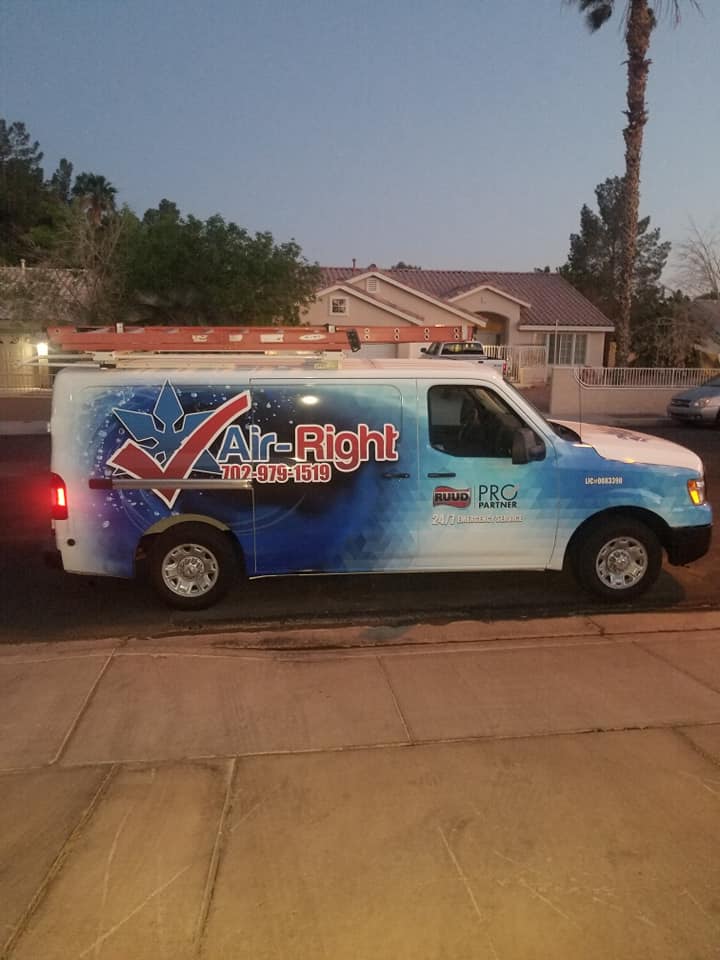
Is It a True Emergency? When to Call for 24-Hour Air Conditioning Service in Las Vegas, NV
Air-Right

Surviving Late-Summer Heat: Is Your AC Failing or Just Maxed Out? Your air conditioning is running nonstop, but the thermostat refuses to budge. Here at Air-Right, we field countless calls during the August…
Surviving Late-Summer Heat: Is Your AC Failing or Just Maxed Out?
Your air conditioning is running nonstop, but the thermostat refuses to budge. Here at Air-Right, we field countless calls during the August back-to-school transition from homeowners searching for home maintenance tips and troubleshooting to figure out what is wrong. When the house will not cool down during peak afternoon heat, it is easy to assume your system is completely broken. Enduring a struggling AC unit in the middle of a late-summer August heatwave is stressful, especially when indoor temperatures start creeping up to uncomfortable levels.
Before you panic, it is important to understand the core decision point: determining whether your system requires an immediate professional diagnosis or if it is simply operating at its maximum design capacity. Knowing the difference between a system that is maxed out and one that is mechanically failing can save you time, prevent unnecessary worry, and help you make the right call.
Need help now? Learn more about our air conditioning services or request our 24-hour AC repair service in Las Vegas today.
Understanding the 20-Degree Rule in Extreme Desert Climates
To understand how your cooling system performs in the desert, you have to look at how it was engineered. HVAC systems are built around a standard known in the industry as the "20-degree rule" or Delta-T. In accessible terms, standard residential air conditioners are typically designed to cool a home by about 20 degrees Fahrenheit below the outside ambient temperature.
This rule is incredibly important when dealing with continuous 100+ degree ambient temperatures in Las Vegas. In our years of keeping desert homes cool, our team typically sees that if it is 110 degrees outside, an indoor temperature of 85 degrees or 90 degrees might actually mean the system is working exactly as it was designed to work. It is not necessarily failing; it has simply hit its thermal ceiling. The reality of continuous 100+ degree ambient temperatures fundamentally alters standard AC performance expectations. Prolonged heatwaves increase the thermal load on your home, baking the roof and exterior walls, which transfers heat indoors faster than our technicians see standard systems able to remove it.
Design Capacity vs. Mechanical Failure
Understanding the difference between a system at capacity and a broken system comes down to measuring the temperature differential accurately. You can check this by comparing the temperature of the air entering your return vent with the air blowing out of your supply vents. If the air coming out is about 15 to 20 degrees cooler than the air going in, the system is actively cooling. Continuous running isn't always a sign of a broken system during peak afternoon hours. In extreme desert climates, a properly sized unit will run almost continuously during the hottest part of the day just to maintain that 20-degree difference. If it cycles on and off rapidly during a 110-degree afternoon, that is a pattern we see often when there is an underlying problem, such as an oversized unit or restricted airflow.
| Outdoor Ambient Temperature | Maximum Cooling Capacity (Delta-T) | Expected Indoor Temperature Limit |
|---|---|---|
| 95°F | -20°F | 75°F |
| 105°F | -20°F | 85°F |
| 115°F | -20°F | 95°F |
Cumulative Heat Stress: Why Late-Summer Component Fatigue Happens
Even if your system is functioning normally during the early summer, the sheer volume of work it performs takes a toll. By late-summer August, components have been running almost continuously for months. This constant operation leads to cumulative wear and tear, eventually causing parts to break down under the strain. One of the most common issues our Air-Right technicians see is thermal fatigue on capacitors. Capacitors are essentially large batteries that store energy to give the compressor and fan motors the jolt of power they need to start up. When subjected to continuous heat, the dielectric fluid inside these components can degrade, leading to failure.
Blower motors and condenser fan motors are also highly susceptible to overheating. When these motors run non-stop without adequate cooling breaks, their internal windings can break down. For example, our team recently helped a local homeowner who experienced a complete motor failure during the summer heat after their system had been running continuously. Because the situation was urgent, we scheduled and completed a repair the next day, ensuring the motor was repaired professionally and restoring the home's cooling.
The Vulnerability of Capacitors and Motors
When capacitors fail under prolonged thermal stress, they often bulge at the top or leak fluid. Without a functioning capacitor, the motor it serves cannot start. You might notice symptoms of a failing motor, such as a loud humming or buzzing sound from the outdoor unit, but the fan blades refuse to spin. This means the motor is receiving electricity but lacks the torque to turn. If left running in this state, the motor will eventually burn out entirely, turning a relatively simple electrical repair into a major component replacement.
Safe Troubleshooting Steps Before Requesting Immediate Dispatch
If your house is warming up, there are a few safe, non-technical checks we recommend performing to rule out simple airflow issues before calling our professionals. Note: Never attempt to test capacitors, handle refrigerant, or open the electrical panel yourself. These tasks require a licensed professional, as they involve high voltage and pressurized chemicals.
- Check and replace dirty air filters: An extremely dirty filter severely restricts airflow. This lack of air can cause the evaporator coil to freeze solid, completely halting the cooling process. If the filter is gray and clogged, replace it immediately.
- Verify your thermostat settings: Ensure the thermostat is set to "cool" and the fan is set to "auto" rather than "on." If the fan is set to "on," it will blow air constantly, even when the compressor isn't running, which can feel like warm air coming from the vents.
- Inspect your vents: Check that all return and supply vents are fully open. Ensure that heavy furniture, rugs, or curtains are not obstructing the airflow. Closing vents in unused rooms actually increases pressure in the ductwork and makes the system work harder.
- Check the outdoor unit for debris: Ensure there are no leaves, branches, or debris blocking the sides of the outdoor condenser. The system needs clear airflow to dissipate the heat it pulls from your home.
- Look for ice: Check the copper refrigerant lines outside and the indoor air handler for visible ice. If you see ice, turn the system off completely to let it thaw before our technician arrives.
For more detailed guidance on basic checks, read our guide on troubleshooting an AC not cooling in triple-digit heat.
Red Flags That Require 24-Hour Air Conditioning Service
While some issues can wait until regular business hours, others pose immediate health and safety risks, requiring emergency professional intervention. In extreme desert heat, a complete AC failure transitions rapidly from a minor comfort issue to a severe hazard, especially for vulnerable individuals.
Watch for these critical warning signs that our dispatchers prioritize:
- Complete power failure: The system refuses to turn on at all during peak desert heat. For instance, our emergency repair crew recently responded to a customer who experienced a complete AC power failure in 110-degree weather on a weekend. Because of the extreme heat, we provided a major same-day repair to resolve the issue safely and quickly.
- Electrical burning smells: An odor of burning plastic or ozone indicates melting wires or failing electrical components.
- Continuous breaker tripping: If your AC repeatedly trips the circuit breaker, it is pulling too much amperage, often due to a failing compressor. Do not keep resetting it.
- Loud screaming or grinding noises: High-pitched squealing or metal-on-metal grinding from the outdoor condenser indicates imminent mechanical failure, usually a dying compressor or fan motor bearing.
- Warm air blowing constantly: If the compressor is running outside but the vents are blowing warm air, you may have a severe refrigerant leak or a failed compressor valve.
We provide rapid, reliable 24/7 emergency response specifically tailored to protect Las Vegas families from dangerous indoor temperatures when these red flags occur.
When to Shut the System Off
If you notice burning smells, hear grinding noises, or see ice forming on the coils, shut the system off immediately at the thermostat. Continuing to run a failing system can cause catastrophic compressor damage. Shutting the system off protects the expensive equipment from destroying itself while you wait for our technician to arrive and perform a proper diagnosis.

The Danger of Misdiagnosis During Peak Season
When systems fail under heavy load in late-summer August, expert diagnosis is far more valuable than guesswork. Capacity issues related to the Delta-T rule are often incorrectly diagnosed as refrigerant leaks by inexperienced technicians. If a technician assumes the system is low on refrigerant simply because the house is warm, they might overcharge the system, which can permanently damage the compressor.
There is also a significant risk of replacing expensive parts when a smaller electrical issue is the actual culprit. For example, our technicians recently provided a second opinion for a customer whose system was misdiagnosed by another company. An Air-Right technician arrived within 90 minutes, properly assessed the system, and identified that a faulty wiring issue was the true cause. By fixing the wiring instead of replacing the motor, we helped the customer save a substantial amount of money. This highlights the immense value of seeking a transparent, local authority for a proper diagnostic assessment rather than accepting a rushed conclusion during peak season chaos.
Protecting Your System for the Rest of the Season and Beyond
Once the immediate crisis is resolved, it is time to pivot to preventative care. Proactive measures prevent emergency breakdowns across our service area. End-of-season preventative maintenance catches thermal fatigue before it causes a sudden breakdown. A thorough inspection by our team can identify a bulging capacitor or a struggling motor before it fails completely on a 110-degree afternoon.
Having a reliable local HVAC partner like Air-Right covering the entire metro area, including neighboring communities, ensures you are never left waiting days for help. Whether you need an inspection in the city or AC repair in Henderson, a proactive approach keeps your system running efficiently. Furthermore, if your system is constantly struggling to keep up, it might be time to consider a replacement. Upgrading an aging, inefficient system to a modern, high-efficiency unit may qualify you for utility incentives or energy rebates. These programs can help offset the investment of a new system, though you should always verify current federal and local programs with your utility provider or a tax professional.
Stay ahead of the heat by scheduling your preventative AC maintenance before the season ends.
Restore Your Home's Comfort with Expert AC Help Today
Enduring a failing AC in extreme heat is completely unnecessary and potentially unsafe. If you have run through the basic home maintenance tips and troubleshooting steps and your system is still blowing warm air, making strange noises, or refusing to turn on, do not wait for the problem to fix itself. Getting a professional diagnosis from our team ensures your system is accurately assessed and repaired without unnecessary part replacements.
Take control of your indoor comfort today. Reach out to the Air-Right team for rapid 24-hour dispatch or to schedule a preventative inspection, and let us get your home back to a safe, comfortable temperature.
Frequently Asked Questions
What is considered an AC emergency in Las Vegas?
An AC emergency involves total system failure during extreme heat, posing health risks. In Las Vegas, an emergency is typically defined by a complete lack of cooling when ambient temperatures exceed 100 degrees, electrical burning smells, or continuous breaker tripping. These situations require immediate professional intervention to prevent severe equipment damage and protect the safety of the home's occupants.
How do I know if my AC is broken or just working hard?
Check the temperature difference between your return and supply vents. If the air blowing out of the vents is 15 to 20 degrees cooler than the air going into the return vent, your system is likely functioning normally but has reached its maximum design capacity. If the air coming out is warm or the outdoor unit is making grinding noises, the system is broken and needs repair.
How hot does it have to be for a broken AC to be an emergency?
Any temperature that poses a risk of heat exhaustion is an emergency. Generally, when outdoor temperatures consistently exceed 90 to 100 degrees, a broken AC quickly elevates indoor temperatures to dangerous levels. This is especially critical if there are elderly individuals, infants, or pets in the home who are highly vulnerable to heat stress.
Why is my AC running but not cooling the house in 100-degree weather?
Your system may have hit its thermal limit or is suffering from restricted airflow. Due to the 20-degree rule, an AC can only cool a house about 20 degrees below the outdoor temperature. However, if the air is barely cool, you might have a severely clogged air filter, a failing capacitor, or a refrigerant issue that requires a technician's diagnosis.
Should I turn off my AC if it is struggling to cool?
Yes, turning it off can prevent further damage to the compressor. If you notice ice on the refrigerant lines, hear loud mechanical noises, or smell burning, shut the system down at the thermostat immediately. Continuing to force a struggling system to run can turn a minor electrical repair into a catastrophic compressor failure.
How does extreme late-summer heat affect AC capacitors?
Prolonged heat causes the dielectric fluid inside capacitors to break down. After months of continuous operation in high temperatures, capacitors suffer from thermal fatigue, which can cause them to bulge, leak, or lose their ability to hold a charge. When a capacitor fails, the motors it supports will not be able to start, leading to a complete loss of cooling.
Need Help?
Contact us today to discuss your needs. Our team is ready to help.
Related Articles
- Is It a True Emergency? A Triage Guide for 24-Hour Air Conditioning Service in Las Vegas, NV
- Is That Burning Smell an Emergency? Fall Triage Guide for 24 Hour Air Conditioning Service in Las Vegas, NV
- Beyond 24-Hour Air Conditioning Service in Las Vegas: Heat Pump vs. Gas Furnace Options for Fall Upgrades
Related articles


Ready to Get Started?
Whether you need a repair, maintenance, or a new installation, our expert team is here to help.