How to Fix AC Not Cooling in Triple-Digit Heat
Air-Right

<p>Fix AC not cooling properly in triple digit temperatures with proven desert maintenance tips and fast professional solutions before your system fails.</p>
Why Your AC Is Not Cooling Properly in Triple-Digit Temperatures in Las Vegas
If your ac not cooling properly in triple digit temperatures is the problem you’re dealing with right now, here’s the short answer:
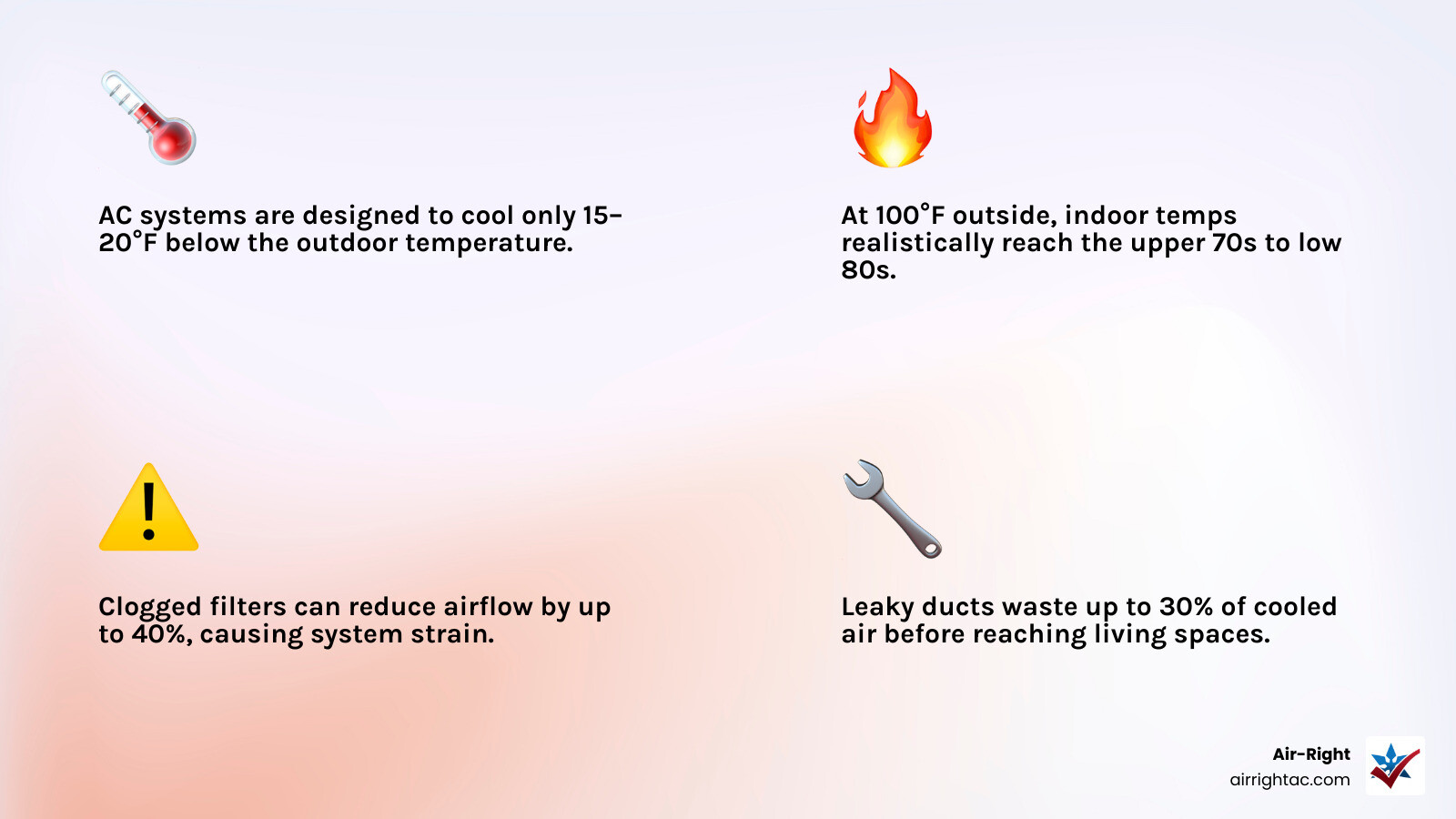
Most home AC systems are designed to cool only 15–20 degrees below the outdoor temperature. At 100°F outside, the best your system can realistically deliver is an indoor temperature in the upper 70s to low 80s. That’s not a breakdown — that’s physics.
But if your home is climbing well above that range, or your system is struggling to maintain even 80°F indoors, something else is likely going on. The most common causes are:
- Clogged air filter – reduces airflow by up to 40%, forcing the system to overwork
- Dirty condenser coils – block heat from escaping the outdoor unit
- Low refrigerant or a leak – prevents proper heat absorption at the evaporator coil
- Failed or weak capacitor – stops the compressor or fan from starting correctly
- Leaky ductwork – wastes up to 30% of cooled air before it reaches your living space
- Thermostat issues – poor placement or miscalibration causes false temperature readings
- Undersized system – simply cannot keep up with the heat load of your home
Las Vegas summers are brutal. Outdoor temperatures regularly push past 110°F, and your AC runs 10–14 hours a day just to keep up. That kind of sustained load exposes every weakness in a system — a marginal filter, a slightly low refrigerant charge, or a capacitor on its last legs can all tip a struggling system into a full breakdown.
The good news: most causes are fixable, and knowing which one applies to your situation is the first step.
Understanding the 20-Degree Rule in Extreme Heat
To understand why your air conditioner feels like it is falling behind, you first have to understand the thermodynamic design limits of residential air conditioning.
HVAC systems are sized using complex calculations (known as Manual J load calculations) that assume “design temperatures” for our region. In Southern Nevada, systems are typically designed to handle standard high temperatures, not record-breaking, sustained heatwaves. The “20-degree rule” is a fundamental principle of HVAC engineering: a standard residential air conditioner is designed to create a maximum temperature difference of about 15 to 20 degrees between the outdoor air and the indoor air.
This means if it is a blistering 105°F outside in Henderson, your indoor system is performing exactly as designed if it keeps your living room at a stable 85°F or 80°F. If it hits 115°F in the middle of a July afternoon, an indoor temperature of 95°F or 90°F actually means the system is working at its absolute physical limit, not necessarily that it is broken.
When homeowners lower the thermostat to 68°F on a 110°F day, the AC does not blow colder air; it simply runs continuously, desperately trying to reach an impossible target. This nonstop operation places immense strain on the compressor and electrical components, often leading to premature system wear or complete failure.
To help you distinguish between normal system limits and actual mechanical distress, review the comparison table below:
| System Behavior | Normal Extreme Heat Behavior | Heatwave Strain / Mechanical Failure |
|---|---|---|
| Run Time | Runs continuously during the hottest afternoon hours (2 PM to 8 PM). | Runs 24/7 without stopping, even during the cool desert night hours. |
| Indoor Temperature | Hovers around 75°F to 78°F when it is 100°F+ outside. | Climbs past 82°F indoors and continues to rise despite system running. |
| Airflow at Registers | Strong, steady airflow that feels cool (roughly 15–20°F cooler than room air). | Weak, barely perceptible airflow, or air that feels lukewarm/warm. |
| Outdoor Unit Noise | Steady, loud hum of the compressor and fan working together. | Loud buzzing, clicking, metallic rattling, or a fan that hums but won’t spin. |
| Coil Appearance | Dry or lightly sweating outdoor pipes; normal condensation at drain. | Solid ice forming on the indoor evaporator coil or the outdoor brass valves. |
Why AC Is Not Cooling Properly in Triple Digit Temperatures Below 77°F
When the outdoor air temperature surges into triple digits, the physics of heat transfer become a steep uphill battle for your cooling system. Air conditioners do not actually “create” cold; they work by absorbing heat from the indoor air and expelling it outside.
This heat exchange process relies on a temperature differential. The hotter it is outside, the harder it is for the outdoor condenser coil to dump the heat absorbed from inside your home. Because the heat transfer process slows down under extreme external pressure, the refrigerant returning to your indoor coil is warmer than normal. Consequently, the system’s overall capacity drops exactly when you need it most.
If you are wondering why your home won’t cool below 77°F during a heatwave, you are experiencing the point where the rate of heat entering your home (through windows, walls, and roof leaks) matches or exceeds the rate at which your AC can remove it. For a deeper look into why extreme desert conditions push cooling systems to their absolute limits, check out our guide on Triple Digit Trouble: Why Your Air Conditioner Is Quitting On You.
Airflow and Maintenance Culprits Restricting Your Cooling
Before assuming your system has a catastrophic mechanical failure, it is critical to look at basic maintenance issues. Airflow is the lifeblood of any HVAC system. If the volume of air moving across your indoor and outdoor coils is restricted, the entire heat transfer cycle collapses.
Clogged Air Filters and Reduced Airflow
The single most common cause of an ac not cooling properly in triple digit temperatures is a dirty, clogged air filter. In the Las Vegas valley, desert dust, windstorms, and pet dander accumulate rapidly.
A heavily soiled filter can reduce system airflow by up to 40 percent. When airflow drops this drastically, two major problems occur:
- Frozen Evaporator Coils: Without enough warm indoor air blowing across the cold evaporator coil, the refrigerant inside the coil drops below freezing. The moisture in the air condenses on the coil and quickly freezes solid, turning your AC into a block of ice and completely blocking all airflow.
- Overworked Blower Motor: The indoor blower motor must work twice as hard to pull air through a clogged filter, leading to overheating, electrical failure, and increased energy consumption.
During peak summer, we highly recommend checking your air filters every 30 days. To keep dust from compromising your system’s performance, read our practical advice on Don’t Let The Dust Settle On Your HVAC Maintenance Routine.
Dirty Condenser Coils and Heat Rejection
The outdoor unit of your air conditioner houses the condenser coil and the compressor. The fan on top of this unit pulls outdoor air through the metal coils to cool down the hot, pressurized refrigerant inside.
However, Las Vegas dust, dirt, and windblown debris act like an insulating blanket over these coils. When condenser coils are dirty, heat cannot escape. This causes the system’s operating pressures and temperatures to skyrocket, forcing the compressor to draw more electrical current. Eventually, the compressor will overheat and shut down via its internal thermal overload switch to prevent permanent damage, leaving you with a system that blows warm air indoors.
Keeping this unit clear of debris and gently rinsing the coils is essential. For step-by-step instructions on desert-specific coil care, see our article on How To Maintain Your AC In Extreme Desert Heat Without Breaking A Sweat.
Leaky Ductwork and Poor Insulation
Even if your air conditioner is running perfectly, the cooled air still has to travel through your ductwork to reach your living spaces. In many Southern Nevada homes, these ducts run through unconditioned attic spaces where summer temperatures can easily exceed 140°F.
The Department of Energy estimates that typical homes lose 20% to 30% of conditioned air through duct leaks. When ducts have cracks, loose connections, or fallen insulation:
- Cold Air Escapes: Cooled air leaks directly into your blazing hot attic instead of cooling your rooms.
- Hot Attic Air Is Sucked In: Return duct leaks can pull superheated attic air and dust directly into your AC system, instantly neutralizing the cooling process.
This loss of efficiency can reduce overall system performance by up to 30 percent, making it impossible to maintain comfortable indoor temperatures during triple-digit heatwaves. To understand how ductwork and attic insulation work together to protect your home from extreme heat, refer to our comprehensive An Essential Guide To Servicing Your AC In The Desert.
Mechanical and Electrical Failures Triggered by Extreme Heat
Extreme heat is an electrical and mechanical stress test. When outdoor temperatures remain in the triple digits for days on end, components inside your AC operate at elevated temperatures, accelerating the breakdown of electrical insulation and mechanical parts.
Weak or Failed Capacitors in High Temperatures
If your AC system is running but blowing warm air, or if you hear a loud humming noise coming from your outdoor unit but the fan isn’t spinning, you are likely dealing with a failed run capacitor.
Capacitors act like temporary storage batteries, delivering the high-voltage electrical “kick” needed to start and run the compressor and condenser fan motors. Unfortunately, high heat is the ultimate enemy of capacitors. Prolonged exposure to extreme temperatures causes the chemical components inside capacitors to degrade, swell, and eventually fail.
A weak capacitor will cause motors to run hot and draw excessive amperage, while a completely failed capacitor will prevent the compressor from starting at all. Running a system with a failing capacitor can quickly overheat and ruin your expensive compressor motor. If your system is blowing air but lacks any cooling power, explore the common causes in My AC Is Ghosting Me: Why Your Unit Blows Air But No Coldness.
Low Refrigerant Levels and System Leaks
Refrigerant is the specialized fluid your AC uses to transport heat out of your home. It operates in a completely closed, pressurized loop; under normal conditions, refrigerant is never “consumed” or used up.
If your system is low on refrigerant, it means you have a leak. In extreme heat, low refrigerant levels cause several major issues:
- Reduced Heat Absorption: There isn’t enough refrigerant to absorb the heat from your indoor air, leading to weak cooling performance.
- Frozen Indoor Coils: Low refrigerant pressure causes the temperature of the evaporator coil to drop below freezing, leading to ice buildup.
- Compressor Overheating: Refrigerant also cools the compressor motor itself. Low levels cause the compressor to run dangerously hot, which can lead to permanent mechanical failure.
Adding refrigerant without finding and repairing the leak is only a temporary fix that can lead to major compressor damage down the road. To prepare your system and ensure refrigerant levels are correct before the next major heatwave, read Why Your AC Needs A Checkup Before The Next Heatwave.
Thermostat Settings and Homeowner Solutions for Desert Heat
Sometimes, the reason your ac not cooling properly in triple digit temperatures comes down to how your thermostat communicates with your system, or how much heat your home is absorbing from the sun.
Optimizing Your Thermostat When AC Is Not Cooling Properly in Triple Digit Temperatures
Thermostat placement and calibration play a massive role in indoor comfort. If your thermostat is mounted on an exterior wall, located in direct sunlight, or positioned near heat-producing electronics, it will read the indoor temperature as much warmer than it actually is. This causes the AC to run unnecessarily long.
Additionally, older thermostats can lose calibration over time, misreading the actual room temperature by several degrees. During extreme heatwaves, setting your thermostat to an ultra-low temperature (like 68°F) will not make the system cool any faster; it only ensures the system runs continuously without a break, increasing the risk of a mechanical breakdown.
For tips on setting up a smart cooling schedule that protects both your comfort and your equipment, check out our guide on Beating The Heat With A Desert Proof Maintenance Plan.
Simple Steps to Reduce Heat Load and Support Your AC
You can significantly reduce the strain on your air conditioner by taking active steps to lower the “heat load” — the amount of heat entering your living spaces.
Here is a practical checklist of steps you can take today:
- Close the Blinds: Up to 30% of unwanted heat enters your home through windows. Keep south- and west-facing blinds, drapes, or solar screens completely closed during the hottest parts of the day.
- Run Ceiling Fans Counter-Clockwise: Create a wind-chill effect that makes the air feel up to 4 degrees cooler to your skin, allowing you to set the thermostat slightly higher without sacrificing comfort.
- Postpone Major Appliances: Avoid running heat-producing appliances like the oven, clothes dryer, or dishwasher until after 8 PM when the outdoor temperature begins to drop.
- Check Your Vents: Ensure at least 90% of your supply registers and return air grilles are open and completely unobstructed by furniture, dust, or heavy drapes. Closing too many vents increases duct pressure and actually reduces system efficiency.
- Seal Air Leaks: Use weatherstripping and caulk to seal gaps around doors and windows to keep hot desert air from whistling into your home.
When to Call a Professional for AC Not Cooling Properly in Triple Digit Temperatures
While cleaning your air filters and keeping your outdoor unit clear are great DIY habits, there comes a point where professional intervention is necessary for your safety and the longevity of your equipment. Working with high-voltage electricity and pressurized refrigerant lines requires specialized training, licensing, and tools.
If your indoor temperatures are climbing past 85°F during a triple-digit afternoon, do not wait for the system to fail completely. To learn when a cooling issue turns into a true emergency, review Don’t Ignore These Red Flags When To Call For Emergency AC Repair.
Signs of Serious Mechanical Wear
If you notice any of the following warning signs, turn off your system at the thermostat immediately and call a professional technician:
- Frequent Short Cycling: The system turns on and off every few minutes without completing a full cooling cycle. This places extreme wear on the compressor clutch and electrical contacts.
- Electrical Odors or Burning Smells: This indicates overheating wires, a seized blower motor, or a failing capacitor.
- Tripped Circuit Breakers: If the AC trips your main electrical breaker, do not repeatedly reset it. A tripped breaker indicates a severe electrical short or a compressor motor that is drawing dangerous levels of current.
- Loud, Unusual Noises: Squealing, grinding, metallic clanking, or loud buzzing noises point to failing bearings, loose fan blades, or internal compressor damage.
Ignoring these warning signs can quickly turn a simple, minor electrical repair into an expensive compressor replacement. If you are trying to decide whether to repair or replace your aging system, read our expert advice on Signs Your AC Needs Replacing Not Just Fixing.
The Value of Professional Desert HVAC Maintenance
A professional HVAC technician does far more than just look at your system. During a comprehensive pre-summer inspection, we perform diagnostic tests that are impossible to do without specialized equipment:
- Static Pressure Testing: Measures the resistance to airflow within your ductwork to find hidden blockages, crushed ducts, or disconnected lines in your attic.
- Electrical Amperage Draw: Checks the exact electrical current being drawn by the compressor and fan motors to catch weak capacitors and failing motors before they leave you stranded in the heat.
- Refrigerant Subcooling and Superheat: Calculates the precise refrigerant charge to ensure maximum heat absorption without risking liquid refrigerant returning to damage the compressor.
Investing in regular professional maintenance keeps your system running at peak efficiency, lowers your summer power bills, and extends the lifespan of your unit. For a complete look at what a professional tune-up entails, explore The Ultimate Desert Dweller Guide To HVAC Maintenance.
Frequently Asked Questions About AC Performance in Extreme Heat
Why does my AC run constantly during a heatwave?
When outdoor temperatures exceed 100°F, your home absorbs heat at an accelerated rate. Your AC must run continuously to remove this constant influx of heat. If the system is maintaining your set temperature (and that temperature is within 15–20 degrees of the outdoor temperature), continuous operation is normal and expected afternoon behavior.
Can I spray my outdoor AC unit with water to help it cool?
Gently rinsing your outdoor condenser coils with a garden hose to remove accumulated dust and dirt is an excellent maintenance practice. However, continuously running a sprinkler on your unit while it is operating is not recommended. Southern Nevada’s hard water contains high mineral levels that will quickly form a hard scale on your aluminum fins, permanently reducing the unit’s heat-transfer capability.
What temperature should I set my AC to when it is 100 degrees outside?
We recommend setting your thermostat to 78°F when you are home during a heatwave. This temperature strikes the ideal balance between indoor comfort, energy efficiency, and reducing mechanical strain on your cooling system. Using ceiling fans in combination with this setting will keep you feeling perfectly cool without forcing your AC to run 24/7.
Conclusion
Surviving a triple-digit summer in Las Vegas, Henderson, or Boulder City requires a cooling system that is operating at its absolute best. When your ac not cooling properly in triple digit temperatures becomes an issue, understanding the physical limits of your system — and keeping up with basic maintenance like filter changes and coil cleanings — can make all the difference between a comfortable home and a summer nightmare.
At Air-Right, we are committed to helping Southern Nevada residents stay safe and comfortable year-round. As a fully licensed, bonded, and insured HVAC contractor, our priority is providing clear, honest, and pressure-free recommendations tailored to your home’s unique needs. Whether you need a quick emergency repair, a seasonal tune-up, or a high-efficiency system replacement, our friendly, expert team is here to help.
Don’t let the desert heat get the upper hand. To keep your home cool and efficient all summer long, visit our AC System Services page or contact us today to schedule your professional system inspection!
Need Help?
Contact us today to discuss your needs. Our team is ready to help.
Related Articles
- Is It a True Emergency? A Triage Guide for 24-Hour Air Conditioning Service in Las Vegas, NV
- Is That Burning Smell an Emergency? Fall Triage Guide for 24 Hour Air Conditioning Service in Las Vegas, NV
- Beyond 24-Hour Air Conditioning Service in Las Vegas: Heat Pump vs. Gas Furnace Options for Fall Upgrades
Related articles


Ready to Get Started?
Whether you need a repair, maintenance, or a new installation, our expert team is here to help.