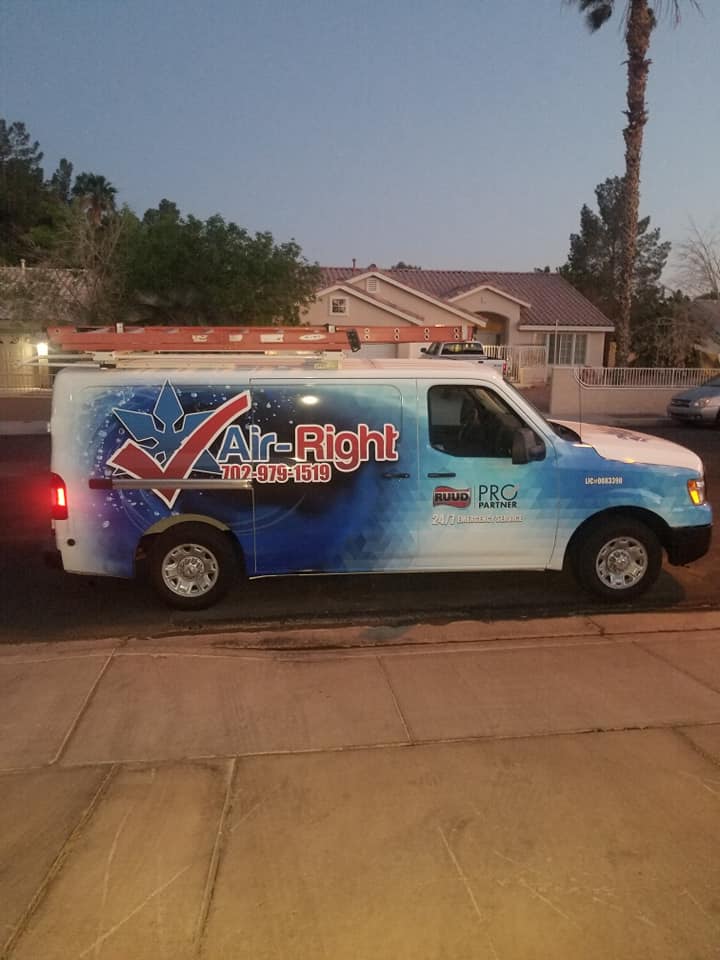
Is It a True Emergency? A Triage Guide for 24-Hour Air Conditioning Service in Las Vegas, NV
Air-Right

Facing a Cooling Failure: Assessing the Urgency of Your HVAC Situation Is your air conditioner actually broken, or is it just struggling to keep up with the residual heat of a late-summer afternoon? When searching for…
Facing a Cooling Failure: Assessing the Urgency of Your HVAC Situation
Is your air conditioner actually broken, or is it just struggling to keep up with the residual heat of a late-summer afternoon? When searching for home maintenance tips and troubleshooting, the most critical step is determining whether you are dealing with a nuisance or a genuine safety hazard. In the Las Vegas desert climate, triple-digit heat creates a unique thermal load on your home. When a system goes down during these extreme temperature spikes, the rapid loss of cooling is not just an inconvenience—it quickly becomes a safety risk. A house can heat up by several degrees an hour, turning your living space into an oven before the sun even sets.
Understanding the difference between a complete system failure and a unit that simply needs routine transition maintenance dictates your next steps. A system that is blowing warm air might require immediate intervention, while a unit that is running constantly but still maintaining a reasonable indoor temperature might just be showing the signs of extreme summer wear-and-tear. Before you panic, you need a technical, expert-led triage process to evaluate the situation accurately.
If you need immediate assistance, explore our Air Conditioning Services or schedule a 24-Hour AC Repair Service in Las Vegas right away.
Defining a True AC Emergency in the Desert Climate
Not every strange noise or warm breeze from a vent requires a midnight service call, but certain situations demand immediate attention. Categorizing what constitutes a true emergency helps you know when to call for 24-hour service versus when a situation can wait for standard business hours. In an arid climate, the stakes are simply higher.
One common scenario involves a total power failure of the AC unit during peak temperature hours. For example, during a 110-degree summer weekend, one local homeowner experienced a complete AC power failure. Because of the extreme heat, this was treated as a high-priority emergency, resulting in a major same-day repair that restored power to the unit before the home reached dangerous temperatures. Fast, reliable 24/7 emergency response is specifically tailored for high-stakes breakdowns like this, where waiting simply is not an option.
When to Call for Immediate Dispatch
Delaying service increases safety risks in specific scenarios. You should request immediate dispatch if you notice any of the following critical warning signs:
- Electrical burning smells: An odor of burning plastic or ozone coming from the vents or the outdoor condenser indicates melting wire insulation or a failing motor.
- Visible sparking or smoke: Any visible electrical malfunction at the condenser or air handler is an immediate fire hazard. Shut off the breaker immediately.
- Vulnerable household members: If elderly individuals, infants, or individuals with compromised health are present during a complete loss of cooling, the situation is automatically an emergency.
- Rapid indoor temperature spikes: If the thermostat climbs significantly within a short period, it indicates a complete cessation of the cooling cycle, meaning the system is generating zero thermal relief.
Weekends and holidays do not negate the necessity of immediate repair in extreme heat. If you hit any of these markers, do not wait for Monday morning.
Safe Homeowner Triage: Steps to Take Before Calling a Professional
Before you request emergency service, there are several safe troubleshooting steps you can take. Providing neutral, expert guidance allows you to rule out simple fixes without crossing into dangerous DIY territory. Never attempt to open the electrical panel of your condenser or handle high-voltage components yourself.
- Check the thermostat settings: Verify that the thermostat is actually set to "cool" and that the temperature setpoint is lower than the current room temperature. If the screen is blank, replace the batteries. A surprising number of "failures" are simply dead thermostat batteries.
- Inspect the electrical panel: Look at your home's main electrical panel for a tripped breaker. If the breaker labeled for the AC is in the middle or "off" position, flip it completely off, then back on. However, if it trips again immediately, stop. Repeatedly resetting a tripping breaker can cause catastrophic electrical damage or start a fire.
- Verify the air filter status: A severely clogged filter restricts airflow so much that the evaporator coil can literally freeze solid. If the filter is caked in dust, replace it immediately. You may need to turn the system off for a few hours to let the ice melt before it will cool properly again.
- Apply the 20-degree rule: Safely check the temperature differential. Place a standard thermometer at the return vent (where air enters the system) and then at the supply vent (where cold air blows out). The air coming out should be roughly 15 to 20 degrees cooler than the air going in. If the difference is significantly less, your system is running but not actually cooling the air.
If these basic checks do not resolve the issue, you likely have a mechanical or electrical failure. For more detailed guidance on handling extreme heat scenarios, you can read our guide on Fixing an AC Not Cooling in Triple-Digit Heat.

The Hidden Toll of Summer: Component Stress and Wear
Even if your system makes it through the peak of summer without a complete breakdown, it rarely escapes unscathed. Prolonged periods of extreme cooling take a massive toll on specific components. A system that "survived" the summer is often operating at a highly compromised efficiency level by the time September arrives.
Continuous operation severely degrades electrical components like capacitors and contactors. The capacitor acts as a massive battery that gives the compressor the jolt of energy it needs to start. After thousands of cycles in extreme heat, the chemical paste inside begins to dry out, causing the capacitor to swell and eventually fail. Similarly, the contactor—a mechanical relay that controls electricity flow—suffers from pitting and burning due to constant electrical arcing. When these components wear down, the compressor has to work much harder, drawing more amperage and risking total motor failure.
Furthermore, the arid conditions and late-summer monsoon dust storms severely clog outdoor coils. The condenser coil's job is to release the heat absorbed from inside your home into the outside air. When monsoon dust cakes onto the aluminum fins, it acts like an insulating blanket. This severely reduces heat transfer, forcing the system to run longer and hotter to achieve the same cooling result.
Because these symptoms often mimic one another, accurate technical diagnosis is vital. In one urgent situation, a system failure was initially suspected to be a dead blower motor. However, upon rapid inspection, a technician properly diagnosed the issue as a faulty wiring connection rather than a bad motor. Fixing the wiring rather than replacing a functional motor resolved the issue quickly and prevented an unnecessary, expensive repair. This highlights why professional diagnostics are critical when components fail after a long, grueling summer.
The September Transition: Preparing Dormant Heating Elements
As the weather eventually begins to shift, homeowners face a new risk: the September fall-prep and post-monsoon transition. Simply switching your thermostat from "cool" to "heat" after months of dormancy is a dangerous gamble. The heating elements in your furnace or heat pump have sat idle, collecting dust and debris since last winter.
Firing up a dormant system without a proper transition inspection carries significant risks. When a gas furnace ignites for the first time, it burns off the accumulated dust, which can cause terrible odors and even trigger smoke alarms. More importantly, it risks operating a system with hidden, dangerous faults.
Safe transition requires several non-DIY checkpoints that must be handled by a licensed professional:
- Testing safety switches: Limit switches and flame roll-out switches must be tested to ensure they will shut the system down if it overheats.
- Inspecting heat exchangers: A cracked heat exchanger can leak deadly carbon monoxide into your home. This metal component expands and contracts with heat, and over time, stress cracks can form. Visual and technical inspections are mandatory.
- Checking burner alignment: Burners must be cleaned and aligned to ensure complete combustion and prevent soot buildup.
- Evaluating flue drafts: The exhaust system must be checked for blockages (like bird nests or debris) to ensure toxic gases vent safely outdoors.
Transition maintenance prevents unexpected early-season heating failures. This is not a generic seasonal chore; it is a critical technical necessity. To ensure your system is ready for the shift in weather, schedule comprehensive AC Maintenance and Tune-Ups before the cold arrives.
Repair vs. Replacement: Evaluating Post-Summer System Health
After a brutal summer, many homeowners are left wondering if their aging system is worth repairing again or if it requires a full replacement. Evaluating post-summer system health requires weighing the frequency of emergency calls against the stability and efficiency of a new installation.
The lifespan of HVAC systems operating under intense desert cooling loads is generally shorter than in milder climates. While a system in the Midwest might last 15 to 20 years, a unit running constantly in Las Vegas often reaches the end of its reliable lifespan closer to the 10-to-12-year mark. The constant thermal stress causes metal fatigue, electrical degradation, and compressor wear.
Long-term, consistent maintenance can significantly extend the life of a unit, but eventual upgrades are inevitable. One local homeowner successfully kept their original air conditioners running for over 20 years through rigorous, consistent maintenance. Eventually, however, the wear became too great, and they upgraded three aging units to high-efficiency SEER VFD DC systems. This transition provided vastly improved cooling power and reliability after decades of service.
| Factor to Consider | Leans Toward Repair | Leans Toward Replacement |
|---|---|---|
| Age of the System | Under 10 years old with a solid maintenance history. | Over 12 years old, especially in harsh desert climates. |
| Frequency of Breakdowns | First major issue in several years. | Multiple service calls required over the last two summers. |
| Type of Failure | Electrical components (capacitors, contactors, fan motors). | Catastrophic failures (compressor death, cracked heat exchanger). |
| Energy Efficiency | System still cools efficiently without running constantly. | System runs non-stop, struggles to cool, and energy bills are spiking. |
If you find yourself constantly patching an old system, it is time to consult with a licensed technician for a comprehensive post-summer health assessment. They can help you determine if you need another repair or if it is time to look into AC Installation and Replacement.
Frequently Asked Questions About Desert HVAC Troubleshooting
What should I check before turning on my heater for the first time?
Before turning on your heater, you should check your air filter, ensure all vents are open, and clear any debris away from the outdoor unit. However, the most critical step is scheduling a professional inspection of the heat exchanger and safety switches. Firing up a dormant heater without a professional check risks carbon monoxide exposure and early-season mechanical failure.
How do I troubleshoot my AC after summer?
Start by checking the thermostat batteries, verifying the breaker hasn't tripped, and inspecting the air filter for heavy dust buildup. You can also safely clean light debris away from the outdoor condenser unit. If the system is still underperforming after these basic checks, you need a professional technician to evaluate internal components like capacitors and refrigerant levels.
Why is fall HVAC maintenance important in a desert climate?
Fall maintenance addresses the extreme wear-and-tear your system endured during months of non-stop summer operation. It also prepares the dormant heating elements for safe use during the September fall-prep and post-monsoon transition. Skipping this step often leads to unexpected breakdowns the first time the temperatures drop.
What constitutes a true AC emergency in Las Vegas?
A true emergency involves situations that pose an immediate safety risk, such as a complete power failure during peak triple-digit heat, electrical burning smells, or sparks. It is also an emergency if vulnerable individuals, like infants or the elderly, are in the home during a total loss of cooling. In these cases, 24-hour dispatch is required to prevent heat-related illness or property damage.
How does late-summer monsoon dust affect my condenser coils?
Monsoon dust acts as a thick insulating blanket when it cakes onto the aluminum fins of your outdoor condenser coil. This buildup severely restricts airflow and traps heat inside the system, forcing the compressor to work much harder. Over time, this leads to reduced cooling capacity, higher energy consumption, and premature component failure.
Can a clogged air filter cause my AC to stop cooling completely?
Yes, a severely clogged air filter can completely halt your system's ability to cool. The heavy dirt buildup blocks warm indoor air from reaching the evaporator coil, causing the coil's temperature to drop rapidly until it freezes solid in a block of ice. Once frozen, the system cannot absorb heat, and you will only feel warm air—or no air at all—coming from the vents.
Secure Your System's Reliability for the Changing Season
Addressing summer-induced component stress is not just about comfort; it is about protecting the long-term health of your HVAC system. The intense thermal load of the desert summer degrades critical electrical and mechanical parts, while monsoon dust chokes airflow. Ignoring these issues guarantees poor performance and unexpected breakdowns.
Proper transition protocols during the September fall-prep and post-monsoon transition ensure that your heating elements are safe, clean, and ready to perform when the cold weather finally arrives. Do not wait for a complete system failure to take action. Reach out to local experts to evaluate your system, clear away the summer wear-and-tear, and secure your home's reliability for the changing season.
Need Help?
Contact us today to discuss your needs. Our team is ready to help.
Related Articles
- Is It a True Emergency? A Triage Guide for 24-Hour Air Conditioning Service in Las Vegas, NV
- Fall HVAC Checklist: Triage Guide for 24-Hour Air Conditioning Service in Las Vegas, NV
- Is Your Fall Heater Startup a True Emergency? A Guide to 24 Hour Air Conditioning Service in Las Vegas, NV
Related articles


Ready to Get Started?
Whether you need a repair, maintenance, or a new installation, our expert team is here to help.