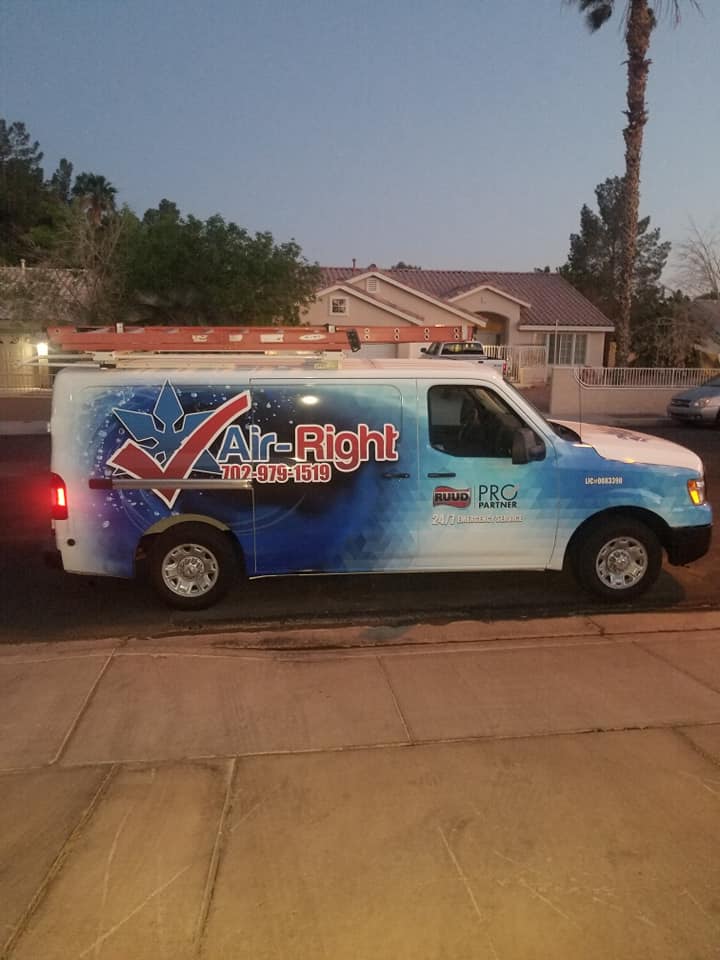
Is It a True Emergency? A Homeowner's Guide to 24-Hour Air Conditioning Service in Las Vegas, NV
Air-Right

When the Desert Heat Won't Quit: Facing a Late-Summer AC Crisis Nearly 80% of residential cooling breakdowns occur during the final stretch of summer, right when systems are most fatigued. At Air-Right, we know that…
When the Desert Heat Won't Quit: Facing a Late-Summer AC Crisis
Nearly 80% of residential cooling breakdowns occur during the final stretch of summer, right when systems are most fatigued. At Air-Right, we know that when you are searching for home maintenance tips and troubleshooting during a late-summer heatwave, finding that your AC is blowing lukewarm air can trigger immediate panic. The dread of an air conditioning system struggling during the peak temperatures of late summer is a highly specific, highly stressful experience we help our customers navigate every year. You are suddenly faced with a central decision: is your system just experiencing normal seasonal fatigue, or do you need immediate after-hours intervention? Making the right diagnostic call protects both your home's safety and your wallet. If you need immediate assistance, our comprehensive Air Conditioning Services cover everything from routine checks to urgent interventions.
The Reality of Las Vegas Heat
In our years serving the Las Vegas valley, we've learned that a broken air conditioner is rarely just a minor inconvenience. With 100°F+ continuous desert heat beating down on your roof, the thermal mass of your house absorbs that energy rapidly. Once the cooling cycle stops, indoor temperatures can reach dangerous levels within hours. This rapid heat accumulation is exactly why making an accurate, calm assessment of your equipment is so important. A system that is simply struggling to keep up might just need one of our professional tune-ups, while a completely dead unit requires our immediate, emergency response.
The Cumulative Toll of August on Your HVAC System
A pattern we see often at Air-Right is that by the time late-summer August arrives, air conditioning components have been under immense, continuous load for three to four months. This nonstop operation takes a physical toll on every moving part, electrical connection, and airflow pathway inside the unit. It is incredibly common for a system that ran perfectly in May to suddenly show signs of exhaustion by the time the back-to-school season begins.
Understanding what this seasonal efficiency loss looks like helps you avoid unnecessary panic. Our technicians typically see standard fatigue manifest as slightly longer cooling cycles, minor performance dips during the hottest part of the afternoon, or a system that takes an extra hour to reach your preferred thermostat setting. These are signs that your equipment is working harder to produce the same amount of cooling.
Recognizing the Wear and Tear
In our daily service calls, there are a few specific areas where this cumulative wear shows up most clearly:
- Thermal fatigue: Compressors run hotter as the summer drags on, especially if the outdoor coils have accumulated layers of desert dust.
- Capacitor stress: The electrical components that jump-start your motors degrade faster under continuous high temperatures.
- Airflow restriction: Months of circulating indoor air means your filters and blower wheels are likely packed with dust, forcing the blower motor to work overtime.
Contrasting this normal fatigue with signs of imminent catastrophic failure is key. While a sluggish system is annoying, a system that repeatedly trips the breaker or makes aggressive grinding noises is crying out for professional help. Scheduling proactive AC Maintenance and Tune-Ups earlier in the season can mitigate these late-summer risks, but even well-maintained systems can succumb to extreme, prolonged heat.
| Symptom | Likely Cause | Urgency Level |
|---|---|---|
| Runs constantly but cools slowly | Standard seasonal fatigue / dirty coils | Moderate (Schedule standard service) |
| Short, rapid cycles (turns off quickly) | Overheating compressor / restricted airflow | High (Turn off to prevent damage) |
| Completely unresponsive | Electrical failure / tripped breaker | Emergency (Requires immediate check) |
Safe Homeowner Triage: Home Maintenance Tips and Troubleshooting Before Calling
Before you decide to pay for emergency after-hours service, our dispatchers recommend several safe, non-DIY observation steps you can take. These quick checks help you evaluate your system's condition and can sometimes resolve minor issues without a service call. If you want more detailed guidance on safe checks, reviewing our guide on troubleshooting an AC not cooling in triple-digit heat is a great next step. However, we must clearly define the boundary between safe observation and dangerous DIY tinkering. Never open the electrical panels of your equipment or attempt to handle refrigerant lines.
The Pre-Call Checklist
- Verify thermostat settings: It sounds incredibly simple, but we frequently see service calls resolved by ensuring the thermostat is explicitly set to "cool" and the fan is switched to "auto" rather than "on." If the fan is set to "on," it will blow air continuously, even when the compressor is resting, which feels like warm air coming from the vents.
- Check the air filters: A severely clogged filter restricts airflow so much that the evaporator coil can actually freeze solid. If the coil freezes, the system will blow warm air because the heat transfer process is blocked. Pull the filter out and hold it up to a light; if you cannot see light through it, replace it immediately.
- Inspect the breaker box safely: Locate your home's main electrical panel and look for the breakers labeled for the AC or HVAC system. If a breaker has tripped, it will rest in the middle position. You can safely flip it fully off, then back on once. If it trips a second time immediately, stop. Do not reset it again, as our electricians note this indicates a serious electrical short.
- Listen and observe: Walk outside to the condenser unit. Is the fan spinning? Is it making a humming noise but not turning? Take note of these details so you can share them with our dispatch team.

Defining a True HVAC Emergency in Triple-Digit Weather
Our team frequently helps homeowners establish the safety and health boundaries that elevate a standard repair to a 24-hour emergency. What might wait until Monday morning in a milder climate is a true emergency in Las Vegas triple-digit heat. The Centers for Disease Control and Prevention (CDC) extreme heat safety guidelines explicitly warn about the dangers of un-air-conditioned spaces for vulnerable populations, including the elderly, infants, and pets.
A rapid indoor temperature rise transforms a frustrating inconvenience into a legitimate health hazard. When the ambient temperature outside is 110 degrees, a home without cooling can see indoor temperatures spike by 10 to 15 degrees in just a few hours. This is especially dangerous if the breakdown happens over a weekend when standard business hours do not apply.
Real-World Emergency Response
A complete power failure to the AC unit during peak weekend heat warrants an immediate response. For example, our Air-Right emergency team recently responded to a local homeowner who experienced a total AC power failure during a weekend of 110° weather. Because of the extreme heat and the rapid rise in indoor temperature, our technician was dispatched for a major same-day repair. We successfully got the system back online and functioning properly before the house became dangerously hot. This is exactly why having access to reliable 24-Hour AC Repair in Las Vegas is critical for your family's safety.
Red Flags That Demand Immediate Professional Attention
Our technicians strongly advise that even if the indoor temperature hasn't reached a critical level yet, certain physical symptoms from your equipment indicate that an emergency call is necessary regardless of the time of day. Ignoring these red flags during late-summer August can turn a manageable repair into a complete system replacement.
- Electrical burning smells or visible smoke: If you smell burning plastic, ozone, or see smoke near the indoor air handler or the outdoor condenser, turn the system off immediately at the thermostat and the breaker. This indicates melting wires or a failing motor and poses a severe fire risk.
- Loud screeching, grinding, or banging noises: Air conditioners should operate with a steady, predictable hum. A loud screeching noise usually points to failing fan motor bearings. Banging or clanking sounds often mean a component has broken loose inside the compressor assembly, indicating severe mechanical failure.
- Rapid cycling combined with no cooling: If your system turns on, runs for two minutes, and shuts off repeatedly without lowering the room temperature, it is "short cycling." This puts massive strain on the electrical components and usually means the compressor is overheating and shutting itself down to prevent destruction.
- Signs of significant refrigerant leaks: Refrigerant is the lifeblood of your cooling system. If you hear hissing sounds near the refrigerant lines, or if you see a thick layer of ice building up on the indoor evaporator coils or the outdoor copper lines, you have a serious issue. Do not attempt to scrape the ice off; turn the system off and call our professionals.
Why Transparent Diagnosis Matters During After-Hours Calls
Making an after-hours emergency call is inherently stressful. You are dealing with 100°F+ continuous desert heat, a rising indoor temperature, and the anxiety of an unexpected expense. It is easy to feel vulnerable when a technician arrives at your home late at night. This is why the Air-Right team prioritizes a thorough, honest diagnostic process. A proper evaluation prevents unnecessary, expensive parts replacements—like swapping out an entire blower motor when the root cause is just a loose wire.
The Value of Honest Troubleshooting
Working with a team that provides fast, reliable 24/7 response times paired with transparent guidance ensures you are never taken advantage of during a heatwave. We believe technicians should always prioritize repairing over replacing when it is safe, effective, and in your best financial interest.
During one urgent after-hours call that required an Air-Right technician on-site within 90 minutes, we discovered another company had previously misdiagnosed a system as needing a completely new motor. Our transparent evaluation revealed that the actual issue was simply faulty wiring. Fixing the wiring instead of replacing the motor saved the customer significant money and restored cooling immediately. Getting a second opinion or relying on trustworthy AC Repair in Henderson guarantees that you get the exact repair you need, nothing more and nothing less.
Navigating the Back-to-School Transition with Reliable Cooling
As the season shifts toward the busy back-to-school transition, the last thing we want your family to experience is the disruption of a major HVAC failure. Bridging the gap between immediate triage advice and longer-term system stability is essential as late-summer August winds down.
If your system is sluggish but not yet in a state of emergency, now is the perfect time to schedule a comprehensive diagnostic with our team. Addressing minor efficiency losses and replacing worn components today prevents those issues from snowballing into catastrophic failures next summer. Proactive care keeps your daily routine uninterrupted.
Additionally, if your system is nearing the end of its lifespan and has struggled through the entire summer, start planning ahead. Take the time to verify any potential energy rebates, federal tax credits, or utility incentive programs that might apply to future high-efficiency upgrades. While you should always confirm current program details with your utility provider or a tax professional, taking advantage of these incentives can make a planned replacement much more manageable than an emergency swap.
Frequently Asked Questions
What is considered an AC emergency in Las Vegas?
At Air-Right, we consider an AC emergency to be any situation where the indoor temperature rises rapidly during extreme heat, posing a health risk. Complete power failures, burning electrical smells, and system breakdowns during triple-digit weather all qualify as true emergencies. Because desert homes heat up so quickly, these situations require immediate 24-hour intervention.
Why is my AC running but not cooling in extreme heat?
When our technicians find an AC running constantly without cooling, it is usually suffering from severe airflow restriction or a refrigerant issue. Dirty air filters, frozen evaporator coils, or a failing compressor can all cause the system to blow lukewarm air. In extreme heat, the system simply cannot overcome these handicaps to lower the indoor temperature.
Is it safe to run my AC if it's blowing warm air?
No, our team strongly advises that it is not safe for your equipment to continue running if it is only blowing warm air. Leaving the system on forces the compressor to run continuously without achieving any cooling, which can lead to permanent mechanical failure. You should turn the thermostat off and call a professional for a diagnostic.
Can I wait until morning for AC repair?
You can wait until morning only if the outdoor temperatures are mild and your family is not in danger from rising indoor heat. However, during a Las Vegas summer heatwave, waiting overnight can allow the home to reach dangerous temperatures. If vulnerable individuals or pets are in the home, you should seek after-hours service from our team.
How quickly does a Las Vegas home heat up without AC in August?
We routinely see homes in Las Vegas heat up by 10 to 15 degrees within just a few hours during an August afternoon. The intense radiant heat from the sun bakes the roof and walls, transferring that thermal energy directly into your living space. Without active cooling, the environment quickly becomes uncomfortable and unsafe.
Will resetting my breaker fix a continuously running AC?
Resetting a tripped breaker will only temporarily restore power; it does not fix the underlying issue that caused the breaker to trip in the first place. Breakers trip to protect your home from electrical overloads or short circuits. If the breaker trips again immediately after resetting it, leave it off and contact our technicians.
Keeping Your Home Safe and Cool
Navigating the relentless desert heat requires vigilance and a reliable support system. By understanding the signs of late-season fatigue and applying these home maintenance tips and troubleshooting strategies, you can protect your equipment and your family. When in doubt, lean on Air-Right's transparent, professional guidance to keep your home safely cooled all summer long.
Need Help?
Contact us today to discuss your needs. Our team is ready to help.
Related Articles
- Is That Burning Smell an Emergency? A Triage Guide for 24 Hour Air Conditioning Service in Las Vegas, NV
- Is It a True Emergency? A Triage Guide for 24-Hour Air Conditioning Service in Las Vegas, NV
- Fall HVAC Checklist: Triage Guide for 24-Hour Air Conditioning Service in Las Vegas, NV
Related articles


Ready to Get Started?
Whether you need a repair, maintenance, or a new installation, our expert team is here to help.