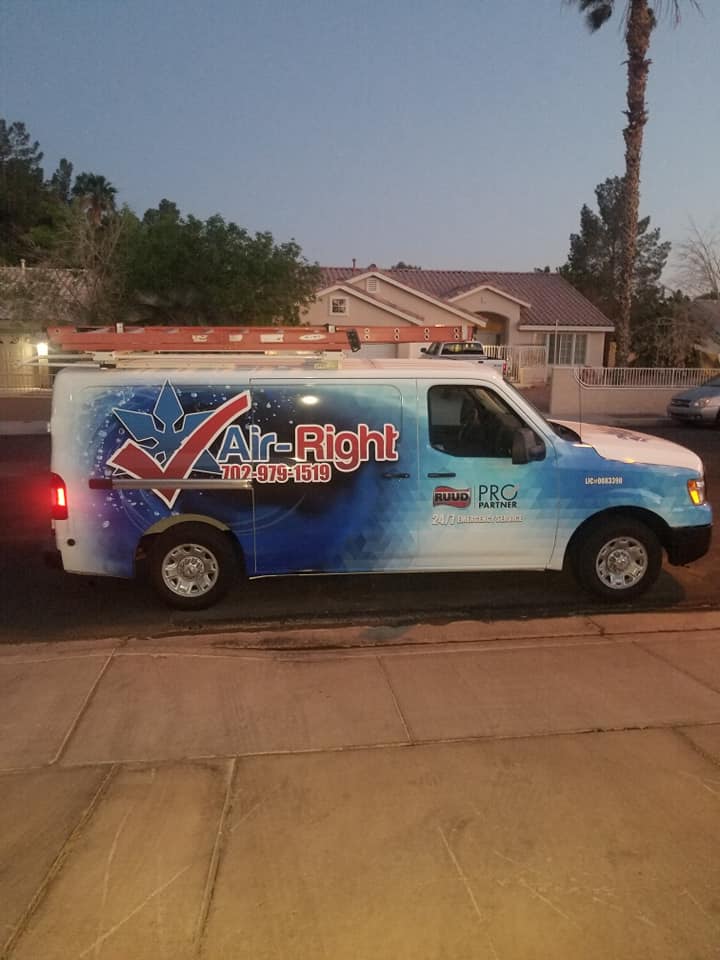
Is It a True Emergency? A Homeowner's Guide to 24-Hour Air Conditioning Service in Las Vegas, NV
Air-Right

Why Is Your AC Struggling? Diagnosing End-of-Season Cooling Issues Are you wondering why your air conditioner is running non-stop, but the house still feels uncomfortably warm? When you are looking for reliable home…
Why Is Your AC Struggling? Diagnosing End-of-Season Cooling Issues
Are you wondering why your air conditioner is running non-stop, but the house still feels uncomfortably warm? When you are looking for reliable home maintenance tips and troubleshooting advice, our team at Air-Right has found that understanding the difference between a broken unit and an exhausted one is the first step. For comprehensive support, explore our air conditioning services to see how professional diagnostics can restore your home's comfort.
By the time late-summer August cooling demands arrive and the back-to-school transition begins, your HVAC system has likely been operating continuously for months. This relentless workload takes a toll on moving parts, electrical components, and airflow dynamics. A pattern we see often is homeowners experiencing the frustration of setting the thermostat to 72 degrees, only to watch the indoor temperature hover stubbornly at 80 degrees during peak afternoon hours. Before assuming the worst, it is helpful to recognize the concept of end-of-season system fatigue.
The objective of this guide is to help you safely determine if you need immediate professional intervention or if your system is simply maxed out by the extreme weather outside. We will walk through the objective criteria that separate a system that is struggling against the elements from one that has suffered a legitimate mechanical failure. You will learn the industry standards for cooling capacity, the specific signs of dangerous electrical or refrigerant issues, and the safe troubleshooting steps you can take right now. By understanding these factors, you can make an informed decision about when to request emergency service and when to simply ride out the afternoon heat.
Understanding the 20-Degree Rule and Extreme Heat Fatigue
To accurately gauge whether your air conditioner is malfunctioning, you first need to understand its design limitations. The Department of Energy outlines standard performance expectations for residential cooling systems, and one of the most important benchmarks is the 20-degree rule. Generally speaking, residential air conditioners are designed to cool a home to about 20 degrees below the ambient outdoor temperature.
When the Las Vegas Valley experiences brutal triple-digit heat waves, this physical limitation becomes highly visible. In our years of servicing local homes, we frequently have to remind homeowners that if the temperature outside climbs to 115 degrees, a perfectly healthy, well-maintained air conditioner may only be able to cool your home to 95 degrees. This is not a mechanical failure; it is simply the absolute limit of the system's thermal transfer capacity. The equipment is pulling as much heat out of the indoor air as physically possible, but the thermal load pressing down on your roof and walls is overwhelming the process.
The key distinction lies in the temperature of the air coming out of your vents. If your system is blowing distinctly warm or room-temperature air, you have a mechanical problem. However, if the system is blowing cool air but still struggling to lower the overall temperature of the house, you are likely experiencing normal extreme heat fatigue. Continuous operation during peak afternoon hours—typically between 2:00 PM and 6:00 PM—is entirely expected under these conditions. The unit is designed to run in long cycles to remove humidity and maintain whatever temperature differential it can achieve.
Comparing Heat Fatigue to Mechanical Failure
| Observation | Normal Heat Fatigue | Likely Mechanical Failure |
|---|---|---|
| Airflow Temperature | Cool to the touch, but not freezing cold. | Blowing distinctly warm or hot air. |
| System Cycling | Running continuously for hours during peak afternoon heat. | Short-cycling (turning on and off every few minutes) or not turning on at all. |
| Indoor Temperature | Hovering around 15-20 degrees below the outdoor temperature. | Rising rapidly, matching or exceeding the outdoor temperature. |
| System Noises | Steady, continuous hum of the fan and compressor. | Grinding, screeching, loud banging, or buzzing sounds. |
Setting realistic expectations for system performance during historic heat waves can save you from unnecessary panic. If your system is maintaining that 20-degree differential, the best course of action is to keep the thermostat set consistently, block out direct sunlight with heavy curtains, and wait for the sun to go down before expecting the indoor temperature to drop significantly.
What Constitutes a Legitimate Mechanical Emergency?
While extreme heat fatigue is normal, actual mechanical failures do happen, and they require urgent attention. When a system breaks down completely during late-summer August cooling demands, the situation escalates quickly from a minor inconvenience to a serious safety hazard. Knowing the objective signs of a true emergency ensures you get the help you need without delay.
If you observe any of the following conditions, it is time to request a 24-hour AC repair service in Las Vegas:
- Complete power failure: If the system refuses to turn on at all during peak heat, and you have verified that the thermostat is calling for cooling, the unit requires professional diagnostics. For example, during a brutal 110-degree weekend, a complete power failure to your cooling system becomes an immediate priority requiring a same-day repair to restore safety.
- Dangerous electrical hazards: Any burning electrical smells, visible sparking, or loud, unusual buzzing noises from the outdoor unit or indoor air handler indicate an immediate safety risk. Turn the system off at the thermostat immediately to prevent fire hazards or catastrophic compressor damage.
- Rapid and dangerous indoor temperature rises: If the indoor temperature is climbing rapidly beyond the 20-degree differential and approaching dangerous levels (e.g., exceeding 90 degrees indoors), this poses an immediate health risk, particularly for vulnerable family members.
- Signs of a frozen evaporator coil: If you notice ice building up on the copper refrigerant lines outside, or if water is actively leaking rapidly from the indoor air handler, your evaporator coil has likely frozen over. This is often caused by severe airflow restriction or a significant refrigerant leak, both of which require professional containment and repair.
- Blowing actively hot air: If the air coming from the supply vents is warmer than the ambient room temperature, the compressor—the heart of the cooling system—may have failed or stopped receiving power, while the indoor fan continues to circulate unconditioned air.

Safe Troubleshooting Steps to Take Before Calling a Technician
Before you pick up the phone to request emergency service, there are several safe, basic checks you can perform. Our Air-Right technicians typically find that what appears to be a major mechanical failure is actually a minor oversight that can be corrected in minutes. Empowering yourself with these basic troubleshooting steps can save you time and restore your comfort quickly. For more detailed guidance, you can review our resources on fixing an AC not cooling in triple-digit heat.
- Verify your thermostat settings. It sounds overly simple, but thermostats are frequently bumped or accidentally reprogrammed. Ensure the system is explicitly set to "Cool" and not "Heat" or "Off." Check that the fan setting is on "Auto" rather than "On." If the fan is set to "On," it will blow air continuously, even when the compressor outside is not running, which can feel like the system is blowing warm air.
- Inspect and replace the air filter. A clogged, dirty air filter is the number one cause of system freeze-ups and reduced cooling capacity. When the filter is choked with dust, airflow is severely restricted. The cold air cannot escape the indoor coil, causing condensation to freeze into a block of ice. This mimics a major mechanical failure. If the filter is dark and coated in debris, replace it immediately.
- Check your indoor vents and returns. Walk through your home and ensure that all supply vents are fully open. Furthermore, check the large return grilles (where the system pulls air in) to ensure they are not blocked by heavy furniture, rugs, or drapes. Your system needs to breathe freely to function properly in the Las Vegas Valley heat.
- Safely check the electrical panel. Locate your home's main electrical panel and look for a tripped circuit breaker labeled for the air conditioner. If the breaker has tripped, you may flip it back to the "On" position exactly once. If it immediately trips again, stop. Repeatedly resetting a tripping breaker can cause electrical fires or permanently destroy the compressor.
A critical warning: Any steps beyond these basic checks—such as opening the outdoor cabinet, handling wiring, or attempting to check refrigerant pressures—require a licensed professional. Attempting DIY repairs on high-voltage electrical components or pressurized refrigerant lines is extremely dangerous and will void your manufacturer warranties.
How Months of Heat Impact Critical AC Components
Understanding exactly how continuous operation impacts your system builds a clearer picture of why breakdowns happen when they do. By the time late-summer August cooling is required, your system has endured thousands of hours of runtime. Our team knows firsthand that this relentless demand accelerates wear and tear on several specific components.
The Dual-Run Capacitor
The capacitor is essentially a large battery that stores electricity to give the compressor and fan motors the massive jolt of energy they need to start up. Continuous electrical load and high ambient temperatures degrade the capacitor's ability to hold a charge over time. When a capacitor fails, the motors cannot start, resulting in a system that hums loudly but never actually engages the cooling cycle. This is one of the most common late-season repair needs we see at Air-Right, and it requires professional Las Vegas AC maintenance to replace safely.
The Blower Motor and Airflow Dynamics
Months of operation mean months of pulling dust, pet dander, and airborne particles through the system. Even with regular filter changes, some microscopic debris bypasses the filter and coats the indoor blower motor and the evaporator coil. This dust buildup acts like an insulating blanket, restricting airflow and forcing the blower motor to work significantly harder to push air through the ductwork. Over time, this added strain can cause the motor to overheat and shut down completely.
The Condenser Fan Motor
Sitting outside in the direct sun, the condenser fan motor has the grueling job of pulling ambient air across the hot coils to exhaust the heat removed from your home. When the system runs non-stop for weeks on end, the bearings inside this motor can dry out and fail. If the fan motor stops spinning, the compressor will rapidly overheat and shut down on a thermal overload safety switch.
Accurate, professional diagnostics are essential when these symptoms appear. A system might appear to have a catastrophic motor failure, but a prompt professional inspection by our team often reveals a simpler wiring issue, saving significant time and expense. Relying on expert testing ensures you only replace the parts that have actually failed.
The Dangers of Waiting: When Immediate Action is Required
Ignoring the signs of a true mechanical failure in extreme heat is never advisable. While it is important not to panic over normal heat fatigue, delaying a necessary repair when the system has actually broken down can lead to severe consequences for both your property and your family's well-being.
The most pressing concern is the health risk associated with extreme indoor temperatures. In the Las Vegas Valley, a home without air conditioning can see indoor temperatures spike by 10 to 15 degrees in a matter of hours. For vulnerable populations—such as the elderly, infants, or individuals with respiratory conditions—these temperatures are not just uncomfortable; they are dangerous. Heat exhaustion and heatstroke are real threats when indoor cooling fails during a triple-digit heat wave.
Mechanically, delaying a repair often causes a cascading failure. A minor issue, if left running, forces other components to compensate until they break as well. For instance, a failing capacitor forces the compressor to pull excessive amperage to try and start. If left unaddressed, the compressor will eventually burn out completely. What could have been a straightforward electrical repair transforms into a massive system overhaul. Prompt action stops the damage from spreading.
There is profound peace of mind that comes from having a professional assess the system promptly. You need a team that understands local climate urgency and provides a fast, reliable, round-the-clock emergency AC response tailored for local homeowners facing extreme heat. Getting a qualified Air-Right technician on-site for a Summerlin AC repair ensures the problem is contained, the diagnostics are accurate, and your home is placed back on the path to safe, reliable cooling.
Frequently Asked Questions About AC Emergencies in Extreme Heat
When extreme weather pushes systems to their breaking point, homeowners naturally have urgent questions. Here are the clear, objective answers to the most common concerns regarding late-summer August cooling issues.
What qualifies as an AC emergency?
A true emergency involves a complete lack of cooling during extreme heat, dangerous electrical hazards, or severe water damage. If your system refuses to turn on, is blowing actively hot air, smells like burning plastic, or is leaking water rapidly through your ceiling, you need immediate 24-hour service. Minor issues, like the system running constantly but still maintaining a 20-degree drop from the outside temperature, are not immediate emergencies and can often wait for standard business hours.
Why is my AC running but not cooling the house?
This is often caused by a severely clogged air filter or a dirty evaporator coil restricting vital airflow. It could also indicate a refrigerant leak or a failing compressor that is no longer pumping refrigerant through the lines. However, if the outdoor temperature is extreme, it may simply be heat fatigue; if it is 115 degrees outside and 95 degrees inside, the system is likely maxed out by the 20-degree differential capacity rather than mechanically broken.
How long can you safely go without AC in Las Vegas?
During a severe heatwave, indoor temperatures can reach dangerous, health-threatening levels within a few hours. Vulnerable individuals, including seniors, young children, and pets, should seek alternative cooling—such as moving to a cooling center or a friend's house—immediately if the system fails completely. Action should be taken to schedule a repair as soon as a true mechanical failure is identified to minimize the time spent without climate control.
Should I turn off my AC if it's not cooling?
Yes, if the system is blowing distinctly warm air, making loud grinding noises, or showing signs of an electrical issue, you should turn it off immediately at the thermostat. Continuing to run a broken system forces the compressor to overwork, which can turn a minor repair into a catastrophic failure. Turning the system off also allows a frozen evaporator coil to thaw completely before the technician arrives, which is necessary for proper diagnostics.
Can late-summer heat cause my AC capacitor to fail?
Yes, continuous operation and high ambient outdoor temperatures severely degrade the capacitor's ability to hold an electrical charge over time. The capacitor acts as a battery to jump-start your motors, and the relentless demand of a long summer often pushes older capacitors past their breaking point. It remains one of the most common late-season repair needs our technicians encounter and is typically a straightforward fix for a licensed professional.
Make the Right Call for Your Comfort and Safety
Navigating cooling issues during the hottest days of the year requires a balanced approach. By understanding the distinction between normal heat fatigue—where your system is simply fighting against the limits of the 20-degree rule—and a legitimate mechanical failure, you can avoid unnecessary panic and make informed decisions about your home's maintenance.
Recognizing the signs of a true emergency, such as complete power loss, burning smells, or a frozen system, puts you in control of your home's comfort and safety in the Las Vegas Valley. You do not have to guess whether your system is exhausted or broken. When you notice these critical warning signs, the safest and most effective step is to reach out to our experts at Air-Right for an honest, objective assessment of your cooling system. Professional diagnostics will provide the exact answers you need to restore your peace of mind and keep your home safely cooled through the end of the season.
Need Help?
Contact us today to discuss your needs. Our team is ready to help.
Related Articles
- Is It a True Emergency? A Triage Guide for 24-Hour Air Conditioning Service in Las Vegas, NV
- Is That Burning Smell an Emergency? Fall Triage Guide for 24 Hour Air Conditioning Service in Las Vegas, NV
- Beyond 24-Hour Air Conditioning Service in Las Vegas: Heat Pump vs. Gas Furnace Options for Fall Upgrades
Related articles


Ready to Get Started?
Whether you need a repair, maintenance, or a new installation, our expert team is here to help.