Is It a True Emergency? A Homeowner's Guide to 24-Hour Air Conditioning Service in Las Vegas, NV
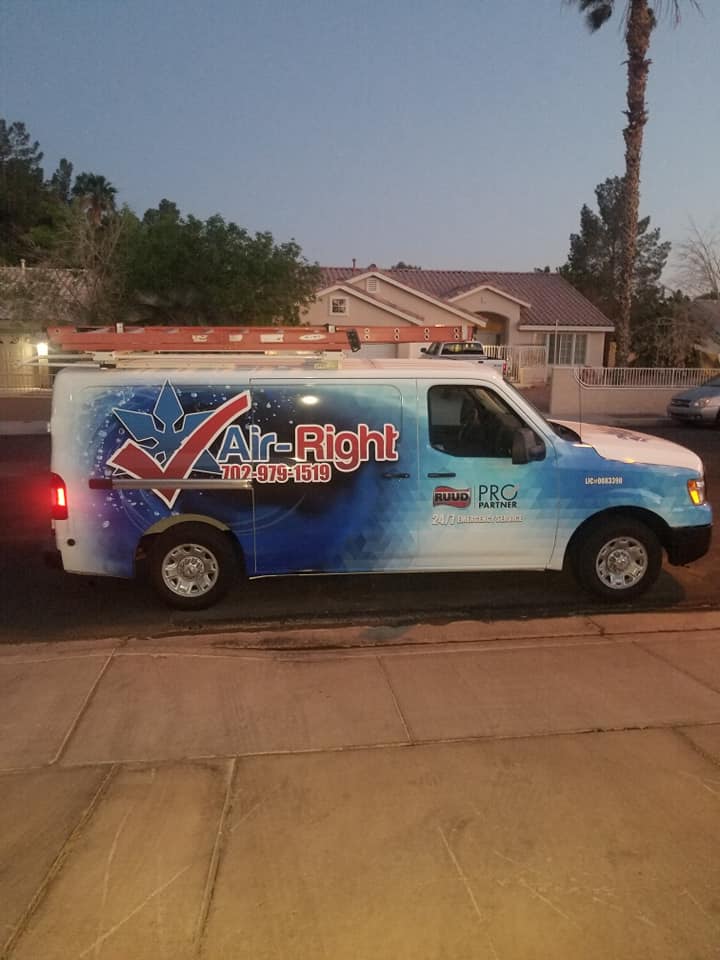
Air-Right

Why Your AC Struggles as Las Vegas Summer Winds Down If your air conditioning system is running nonstop yet the house still feels uncomfortably warm, having reliable home maintenance tips and troubleshooting strategies…
Why Your AC Struggles as Las Vegas Summer Winds Down
If your air conditioning system is running nonstop yet the house still feels uncomfortably warm, having reliable home maintenance tips and troubleshooting strategies is essential as the Las Vegas summer winds down. As families prepare for the back-to-school transition and face late-August end-of-season cooling demands, our team at Air-Right frequently hears from homeowners wondering why a system that performed perfectly in June is suddenly struggling to keep up. When you are relying on your HVAC equipment to combat continuous 100°F+ ambient temperature operation, knowing what to look for can save you from a major breakdown. The challenge lies in identifying exactly what is happening inside your unit. You need to determine whether you are dealing with a simple airflow restriction that can be resolved quickly, or if your system is suffering from severe component fatigue that requires professional diagnosis and immediate intervention.
For comprehensive support, explore our air conditioning services or request 24-hour AC repair service in Las Vegas if you suspect a critical failure.
The Impact of Continuous Desert Heat on HVAC Systems
Air conditioning systems are built to withstand high temperatures, but in our experience serving the Las Vegas valley, the reality of our local climate pushes residential cooling equipment to its absolute design limits. When ambient temperatures remain consistently above 100 degrees for months on end, the physics of heat transfer become incredibly demanding. Your air conditioner cools your home by absorbing indoor heat and releasing it outdoors. However, releasing heat into an environment that is already baking under the desert sun requires the compressor and condenser fan to work much harder and run much longer than they would in milder climates.
This continuous 100°F+ ambient temperature operation creates cumulative wear and tear. A system does not reset its fatigue level every morning; the stress builds up over the entire summer. By the time late August arrives, parts that were borderline in the spring are often pushed past their breaking point, resulting in a sudden drop in performance or a complete system shutdown.
Accelerated Wear on Electrical Components
Our technicians typically see that extreme heat is the primary enemy of electrical components, particularly your system's capacitors. A capacitor acts like a powerful battery that delivers the initial jolt of electricity needed to start the compressor and fan motors. Inside these cylindrical components is a chemical fluid that helps store energy and dissipate internal heat. Under the relentless strain of late-summer desert heat, this fluid can degrade, expand, or leak. When a capacitor begins to fail, the motors draw higher amperage to start, which creates even more heat. This vicious cycle is exactly why electrical failures peak at the end of the cooling season, often leaving homeowners without air conditioning during the hottest part of the day.
Decreased Cooling Capacity Over Time
Beyond electrical strain, continuous heavy operation gradually reduces the overall efficiency of your mechanical parts. Blower motors that run for 16 to 18 hours a day accumulate microscopic wear on their bearings. Condenser coils that have been exposed to high winds and dust for months lose their ability to transfer heat effectively. This cumulative degradation explains why a system that easily maintained a crisp 72 degrees in early June might struggle to keep the house below 78 degrees by late August. The equipment simply loses its peak cooling capacity as the friction and heat exposure take their toll.
Triage Checklist: Is It a True AC Emergency?
When your system begins to falter, panic is a natural reaction, but proper triage is essential for safety and efficiency. Not every cooling issue requires an immediate after-hours dispatch, but certain symptoms indicate a dangerous situation that must be addressed right away. Air-Right is committed to providing a prompt, professional emergency response to restore safe indoor temperatures quickly when these severe triage criteria are met. A pattern we see often is homeowners ignoring early warning signs until a complete breakdown occurs. For instance, our dispatch team recently helped a local homeowner who experienced a complete AC power failure during a 110-degree weekend. Recognizing the severity of the situation in extreme heat, they requested an immediate dispatch, resulting in a major same-day repair that restored their cooling before evening.
Evaluate your system using this triage checklist:
- Complete loss of power: The thermostat is functional, but the outdoor unit and indoor blower are completely unresponsive during peak heat hours.
- Electrical burning smells: An acrid, ozone-like scent or visible sparking from the condenser unit strongly suggests melting wires or a failing motor. Shut off power at the breaker immediately.
- Significant water leaks: Rapidly pooling water around the indoor unit or heavily frozen evaporator coils indicate a severe restriction or refrigerant issue that can cause extensive property damage.
- Vulnerable individuals in the home: If the indoor temperature is rising rapidly and there are elderly residents, infants, or individuals with medical conditions present, the situation is automatically elevated to a safety emergency.

Running Constantly But Not Cooling: Diagnosing Late-Summer Symptoms
One of the most frequent complaints we receive during August end-of-season cooling is a system that runs without stopping but fails to cool the home. This symptom can be incredibly frustrating, as the noise of the system creates the illusion that it is working, while the rising indoor temperature proves otherwise. Diagnosing this issue requires distinguishing between the normal limits of residential cooling equipment and actual mechanical malfunctions. If you are dealing with this exact scenario, understanding how to fix AC not cooling in triple-digit heat begins with observing how the system behaves during its cycles.
Understanding Normal Long Cycles in Las Vegas Heat
It is important to clarify that continuous operation is sometimes by design when fighting triple-digit exterior heat. Most residential air conditioners are sized to maintain a 20-degree temperature differential between the outdoors and the indoors. If it is 115 degrees outside, your system may run continuously just to keep the house at 80 degrees. You can safely check the temperature differential by placing a thermometer near the return vent (where air is pulled in) and then near a supply register (where cold air blows out). If the air coming out is 15 to 20 degrees cooler than the air going in, the system is actively cooling; the house is simply gaining heat through the walls and windows faster than the AC can remove it.
When Constant Operation Indicates a Malfunction
However, if the air blowing from your vents is only marginally cooler than the room temperature—or if it feels completely lukewarm—constant running is a clear sign of component fatigue. This often points to a struggling or failing compressor, which is the heart of the refrigeration cycle. You might also hear a distinct humming or buzzing sound from the outdoor unit while the fan spins, indicating the compressor is trying to start but failing. Another potential cause is a loss of refrigerant. Because air conditioners use a sealed chemical loop, low refrigerant means there is a leak somewhere in the system. These internal component issues cannot be resolved with DIY methods and require a licensed professional to diagnose and repair safely.
Simple Airflow Restrictions vs. Critical Component Failure
Before assuming your system has suffered a catastrophic failure, it is crucial to rule out basic airflow restrictions. The dry, dusty conditions of the Las Vegas valley accelerate filter clogging, and in our years of field experience, a neglected filter by late summer can completely choke an otherwise healthy air conditioner. When airflow is restricted, the evaporator coil gets too cold and freezes into a block of ice, blocking air from entering your home and mimicking the symptoms of a major mechanical breakdown. Catching these minor issues early can save you from unnecessary panic and emergency dispatch fees. Staying on top of AC maintenance and tune-ups is the best way to prevent these exact scenarios.
Problem: The AC is running, but airflow from the vents is extremely weak.
Cause: The most common culprit is end-of-season dust accumulation severely restricting the air filter, or a buildup of dirt on the indoor blower motor wheel.
Solution: Safely inspect your air filter. If it is gray, opaque, and coated in debris, replace it immediately. Ensure all return vents are unblocked by furniture or rugs. If airflow does not improve after a filter change, a professional will need to inspect the blower assembly.
Problem: The thermostat screen is blank, and the system won't turn on.
Cause: This can be caused by dead thermostat batteries or a tripped condensate float switch. When the AC removes humidity, water drains outside. If that drain line clogs with late-summer algae or dust, the float switch shuts off the system to prevent flooding.
Solution: Check and replace the batteries in your thermostat. If the screen remains blank, check the emergency drain pan near your indoor unit. If it is full of water, the system has locked itself out for your protection and requires professional clearing of the drain line.
Emergency vs. Next-Day Service: Making the Right Call
Making the final decision between demanding a 24-hour dispatch and scheduling a next-day repair comes down to assessing safety, weather forecasts, and the specific symptoms of your equipment. While continuous 100°F+ ambient temperature operation makes any AC issue feel urgent, certain non-critical failures can often be safely addressed with a next-day appointment. Consider a situation involving a failing blower motor. One customer noticed their system struggling and requested a prompt evaluation from our team. Because the home was maintaining a marginal but safe temperature overnight, the motor failure was addressed with a scheduled repair the very next day, saving them from after-hours fees while still resolving the issue quickly. If you determine your situation is stable enough for standard scheduling, you can easily arrange AC repair service in Henderson or the surrounding valley.
| Condition / Symptom | Safety Risk Level | Recommended Action |
|---|---|---|
| Electrical burning smell or sparking at the condenser | High (Fire Hazard) | Shut off breaker immediately; call for 24-hour emergency service. |
| Complete system failure with vulnerable residents indoors | High (Health Hazard) | Call for 24-hour emergency service; seek alternative shelter if temps spike. |
| AC running but blowing lukewarm air (overnight) | Low to Moderate | Turn system off to prevent compressor damage; schedule next-day service. |
| Unusual grinding or squealing noise from outdoor unit | Low (Mechanical issue) | Monitor indoor temperatures; schedule next-day service to replace motor/bearings. |
| Water actively leaking through ceiling from attic unit | Moderate (Property Damage) | Turn off system; clean up water; schedule next-day service to clear drain lines. |
Frequently Asked Questions About Las Vegas AC Emergencies
What is considered an AC emergency in extreme heat?
An AC emergency is generally defined as any situation where a cooling failure poses a direct threat to health, safety, or property. In the extreme heat of Las Vegas, a complete loss of cooling when indoor temperatures rapidly exceed 85 degrees is treated as an emergency, particularly if elderly individuals, infants, or immunocompromised people are in the home. Additionally, any signs of electrical failure, such as burning smells, smoke, or sparking from the equipment, represent an immediate fire hazard and warrant an emergency call. Significant water leaks that threaten to collapse ceilings or ruin flooring also fall into the emergency category.
Why is my AC running constantly but not cooling in late summer?
When an AC runs continuously without cooling the home, it usually indicates that the system has lost its heat transfer capacity due to late-summer fatigue. This is frequently caused by a thick layer of dust on the evaporator or condenser coils, which insulates the metal and prevents it from absorbing or releasing heat. It can also point to a slow refrigerant leak that has finally depleted the system's charge to a critical level. Finally, a failing compressor may run but fail to pump refrigerant efficiently, resulting in endless cycles that produce only lukewarm air.
When should I call for 24-hour AC service?
You should call for 24-hour service when your system completely shuts down during peak daytime heat and the indoor temperature becomes unsafe. It is also the right call if you detect any electrical burning odors, hear loud metallic screeching that indicates a motor is tearing itself apart, or if your system freezes into a solid block of ice that is rapidly melting into your home's structure. If the failure occurs late at night and the overnight low is manageable, it is often more cost-effective to turn the system off, open windows, and schedule a first-thing-in-the-morning repair.
Can a dirty filter cause the AC to stop cooling completely?
Yes, a severely clogged air filter can absolutely cause an air conditioning system to stop cooling completely. When the filter is blocked by months of desert dust, the blower motor cannot pull enough warm return air over the indoor evaporator coil. Without that warm air, the coil drops below freezing, causing the condensation on it to turn to ice. Eventually, the entire coil becomes encased in a block of ice, blocking all airflow into the home and potentially causing liquid refrigerant to flow backward into the compressor, which can destroy the unit.
Is it safe to stay in a house with no AC in Las Vegas?
Staying in a Las Vegas home without air conditioning during the summer is generally unsafe if the outage lasts for more than a few hours. Modern homes are heavily insulated to keep cool air in, but once that cooling is lost, the insulation traps the heat, turning the house into an oven. Indoor temperatures can easily exceed 90 degrees within a single afternoon. If your AC fails during a heatwave, it is highly recommended to seek shelter at a cooling center, a hotel, or a friend's house until a professional can restore your system.
How do I know if my AC compressor is failing or just fatigued?
Distinguishing between a fatigued system and a failing compressor requires observing the specific sounds and behaviors of the outdoor unit. If the unit sounds normal but is just taking longer to cool the house, it is likely suffering from general late-summer fatigue, such as dirty coils or minor airflow restrictions. However, if you hear a loud clicking followed by a deep humming or buzzing sound—and the outdoor fan is spinning but the air blowing out the top isn't hot—the compressor is likely locked up and failing to start. A professional electrical diagnosis is required to confirm if the compressor itself is dead or if a failed capacitor is simply preventing it from turning on.
Restoring Safe Indoor Temperatures in the Desert Heat
Surviving August end-of-season cooling in the desert requires recognizing the signs of system fatigue before they escalate into total breakdowns. Whether your equipment is struggling against continuous 100°F+ ambient temperature operation or you are dealing with a simple clogged filter, prompt attention is the key to maintaining a safe, comfortable home. Never ignore a system that runs constantly without cooling, and always prioritize safety if you suspect electrical issues. By relying on our team's professional diagnosis for late-summer system fatigue, you can avoid the stress of unexpected outages. If your air conditioner is struggling to keep up, reach out to Air-Right for an expert evaluation today to ensure your home remains a cool, safe refuge from the desert heat.
Need Help?
Contact us today to discuss your needs. Our team is ready to help.
Related Articles
- Is It a True Emergency? A Triage Guide for 24-Hour Air Conditioning Service in Las Vegas, NV
- Is That Burning Smell an Emergency? Fall Triage Guide for 24 Hour Air Conditioning Service in Las Vegas, NV
- Beyond 24-Hour Air Conditioning Service in Las Vegas: Heat Pump vs. Gas Furnace Options for Fall Upgrades
Related articles


Ready to Get Started?
Whether you need a repair, maintenance, or a new installation, our expert team is here to help.