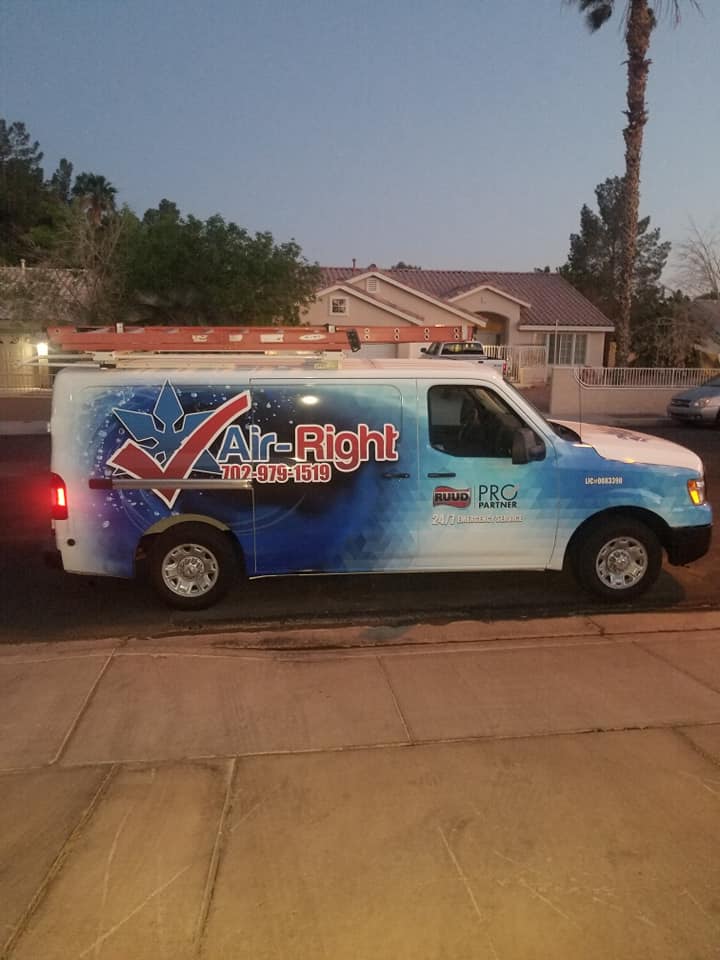
Is It a True Emergency? A Homeowner's Guide to 24-Hour Air Conditioning Service in Las Vegas, NV
Air-Right

Is Your AC Breakdown a True Emergency? Is your system suddenly blowing warm air, leaving you searching for home maintenance tips and troubleshooting advice just as the season changes? You are not alone. When your air…
Is Your AC Breakdown a True Emergency?
Is your system suddenly blowing warm air, leaving you searching for home maintenance tips and troubleshooting advice just as the season changes? You are not alone. When your air conditioner runs non-stop all summer long, a sudden breakdown can feel incredibly overwhelming. At Air-Right, our team regularly sees homeowners assume that once they make it through the brutal heat of July and August, their cooling system is in the clear. However, the reality our technicians encounter every September is that surviving peak heat does not guarantee system health. Hidden wear and tear often reveals itself right as the weather begins to shift.
For immediate assistance with your system, explore our air conditioning services or request AC repair service in Las Vegas to restore your comfort today.
Living with 110°F+ summer peak temperatures pushes every mechanical component in your home to its absolute limit. Over months of continuous operation, electrical parts degrade, motors strain, and internal wiring faces immense thermal stress. When your system suddenly stops working, your first step is diagnosing the severity of the problem. Some issues are minor inconveniences that can wait until morning, while others pose immediate safety risks that require a professional right away. By understanding how extreme heat impacts your equipment, you can make an informed decision about when to call for emergency help and when to schedule standard service.
Understanding the Toll of Las Vegas Heat on Your HVAC System
It is easy to think of a cooling system as a simple appliance that turns on and off. In reality, it is a complex network of electrical and mechanical parts working together under extreme pressure. The continuous extreme thermal load of the Las Vegas desert degrades components over months of non-stop operation. Our technicians at Air-Right know firsthand that when the temperature outside refuses to drop below 90 degrees even at night, your air conditioner never truly gets a break. This relentless cycle stresses the system's internal mechanisms far beyond what a typical unit experiences in a milder climate.
Making it through the peak heat season often leaves systems pushed to the absolute brink. By the time the September post-summer transition arrives, your equipment is exhausted. The internal wiring has been subjected to constant high temperatures, the motors have run for thousands of hours, and the electrical capacitors have been drained and recharged endlessly. Everything is stretched thin.
Interestingly, breakdowns frequently happen during the fall transition rather than just in the middle of summer. Sudden temperature drops expose these weak points. When the metal and electrical parts inside your outdoor unit experience rapid shifts in ambient temperature, materials expand and contract. A component that was barely holding on during the steady heat of August will often snap or short out when the cooler September evenings arrive.
| Season | System Stress Factor | Common Result on HVAC Components |
|---|---|---|
| Peak Summer | Continuous run times, zero cooldown periods | Gradual degradation of electrical parts and motor strain |
| Late Summer | Accumulated thermal fatigue over 90+ days | Components operate at maximum capacity but are highly fragile |
| Fall Transition | Sudden ambient temperature fluctuations | Weakened parts snap, crack, or fail upon startup |
Understanding this timeline helps explain why that unexpected failure happened right when you thought you were safe. It is not bad luck; it is the natural consequence of accumulated wear and tear from a harsh desert environment.
Triage Checklist: When to Call for 24-Hour Air Conditioning Service
When your system fails, panic is a natural reaction. However, taking a moment to assess the situation can save you stress and help you determine if you need an immediate 24-hour emergency dispatch or if the issue can wait until regular business hours. Because 110°F+ summer peak temperatures create dangerous indoor environments rapidly, knowing what to look for is critical to your family's safety.
Consider the vulnerability of your household. If you have elderly family members, infants, or individuals with medical conditions, a complete loss of cooling during a heat wave is an immediate emergency. In one recent case our Air-Right dispatchers handled, a local homeowner experienced a complete AC power failure during an extreme 110-degree summer weekend. Knowing how quickly indoor temperatures rise, our team stepped in to assist with a major same-day repair, getting the system back online and functioning before the house became dangerously hot. We specifically equip our 24/7 emergency response vehicles for these exact extreme thermal load failures in the valley.
If you are unsure whether your situation qualifies as an emergency, reviewing a few key symptoms can guide your decision. If you need professional eyes on the problem quickly, a Summerlin AC repair technician can evaluate your system's status.
Signs It Can Wait Until Morning
Not every cooling issue requires a midnight service call. If you notice the following symptoms, you can typically turn the system off and wait for normal business hours:
- Minor increases in indoor humidity: The air feels a bit sticky, but the temperature is still manageable.
- Slightly reduced airflow: The vents are blowing cool air, just not as forcefully as usual.
- Unusual but non-grinding noises: A slight rattle or hum during startup that does not sound like metal scraping.
- Thermostat discrepancies: The house is a few degrees warmer than the set temperature, but the system is still actively cooling.
Signs You Need Immediate Service
Certain symptoms indicate a severe mechanical failure or a direct safety hazard. Do not ignore these warning signs:
- System is completely unresponsive: The thermostat is blank, or adjusting it produces absolutely no response from the equipment.
- Acrid or burning electrical odors: Smelling melting plastic or burning wires from the vents or the outdoor unit is a major fire hazard.
- Loud screeching or metal-on-metal grinding: This usually points to a failing motor or compressor that will destroy itself if left running.
- Water pouring from the ceiling: A severely clogged condensate drain can cause massive water damage to your drywall and flooring in a matter of hours.

Hidden Component Fatigue: Capacitors and Contactors
To truly understand why your system struggles during the September post-summer transition, you have to look inside the outdoor condensing unit. Two specific electrical parts bear the brunt of the desert heat: the capacitor and the contactor. While you should never attempt to service these parts yourself due to the high voltage involved, knowing how they work explains why sudden failures are so common.
The Role of Capacitors
A capacitor acts like a massive, high-powered battery. Its job is to send a massive jolt of electricity to jump-start the compressor and the fan motors every time the thermostat calls for cooling. Because motors require much more energy to start than they do to keep running, the capacitor stores and releases this energy continuously. When operating in extreme ambient heat, the chemical components inside the capacitor break down. Over time, it loses its ability to hold a charge. When a capacitor fails, your system might hum loudly, but the fan or compressor will refuse to spin.
The Role of Contactors
The contactor is a heavy-duty mechanical switch that manages the high-voltage electrical connections powering the outdoor unit. Every time your system turns on, a magnetic coil pulls the contactor closed, allowing electricity to flow. Every time it closes, a tiny electrical arc occurs. After thousands of cycles throughout a Las Vegas summer, this arcing causes the metal contact points to suffer from pitting and wear. Our technicians frequently pull contactors during early fall maintenance that are so scarred and burnt that electricity can no longer pass through, or worse, the contactor has welded itself shut, causing the system to run continuously until it burns out.
Continuous operation in extreme ambient heat accelerates the degradation of these specific electrical components. The heat radiating from the sun combined with the heat generated by the equipment itself creates an oven-like environment inside the metal cabinet. This is why a system that ran flawlessly in August can suddenly refuse to start on a cool morning in late September.
Why Professional Diagnosis Matters More Than Guesswork
When faced with a broken air conditioner, it is tempting to look up a quick fix online. However, modern HVAC systems are highly complex, and interacting with high-voltage components is incredibly dangerous. Guessing at the problem not only risks severe electrical shock but can also cause catastrophic damage to your equipment.
The dangers of interacting with high-voltage HVAC components cannot be overstated. The capacitors mentioned earlier store enough electricity to cause serious injury even after the main power has been shut off. Without the proper training and tools to safely discharge these components, opening the service panel is a massive risk. Professional technicians spend years learning how to navigate these electrical systems safely.
Furthermore, symptoms in an HVAC system can be highly deceptive. What appears to be a ruined, expensive part might actually be a simple, inexpensive fix. For example, a system that refuses to turn on might seem like a dead compressor. However, during a recent urgent service call our team responded to, a homeowner suspected a major motor failure. Our technician arrived quickly and, using specialized diagnostic tools, correctly identified the problem as a simple faulty wiring issue. This accurate assessment saved the customer a significant amount of money and resolved the issue quickly without unnecessary component replacements. If you find yourself in a similar situation, seeking Henderson emergency AC repair ensures you get a correct diagnosis the first time.
An accurate professional assessment prevents you from throwing parts at a problem. Technicians use multimeters, psychrometers, and manifold gauges to measure exactly what the system is doing. They test the microfarad readings on capacitors, check the voltage drop across contactors, and measure the amp draw on motors. This data-driven approach ensures that the root cause of the 110°F+ summer peak temperatures' damage is addressed, rather than just treating a symptom.
Immediate Steps While Waiting for Your HVAC Technician
Once you have decided to call our Air-Right team for professional help during the September post-summer transition, there are several safe, non-DIY actions you can take to protect your system and prepare for the technician's arrival. These steps help prevent further damage and make the repair process smoother.
- Turn off the system at the thermostat: If your air conditioner is making strange noises, blowing warm air, or smelling like burning plastic, turn the thermostat to the "Off" position immediately. Continuing to run a struggling system can turn a minor electrical issue into a major mechanical failure, such as a burnt-out compressor.
- Check the main breaker panel once: Go to your home's main electrical panel and look for the breaker labeled for the AC or HVAC system. If it has tripped, you can try resetting it exactly one time. If it trips again immediately, do not reset it a second time. A repeatedly tripping breaker is a critical safety mechanism indicating a severe short circuit or grounded wire.
- Inspect the air filter: A severely clogged air filter can cause the system to overheat and shut down. If the filter is completely caked in dust and debris, replace it with a clean one. Sometimes, restoring proper airflow is enough to resolve minor performance issues.
- Clear the area around the equipment: Ensure the indoor air handler (often in a closet, garage, or attic) is easily accessible. Remove any boxes or stored items blocking the unit. Outside, check the condenser unit for heavy debris, but do not attempt to open the cabinet or hose down the internal electrical parts.
Taking these precautions keeps your home safe while you wait. If you want to learn more about safe visual inspections, you can read more on how to troubleshoot an AC not cooling in triple-digit heat before the technician arrives.
Frequently Asked Questions About Emergency AC Repair in Las Vegas
Navigating sudden breakdowns after enduring 110°F+ summer peak temperatures leaves many homeowners with questions. Here are clear, professional answers to the most common concerns regarding emergency service and seasonal maintenance.
What does fall HVAC maintenance include?
Fall HVAC maintenance focuses on inspecting electrical connections stressed by summer heat and preparing the system for winter. When our Air-Right technicians perform a fall tune-up, we test capacitors and contactors for voltage drops, ensuring they haven't degraded over the summer. We also clean the internal components, check safety sensors, and prepare the system for a safe transition to heating mode.
What are the signs of a failing AC capacitor?
The most common sign of a failing AC capacitor is a distinct clicking noise coming from the outdoor unit when it tries to start. You may also notice the system struggles to start, or the outdoor unit hums loudly without the fan blade spinning. Unexpected shutdowns during operation or warm air blowing from the vents are also strong indicators of capacitor fatigue.
Why did my AC stop working after summer?
Your AC likely stopped working because accumulated wear and tear finally reached a breaking point. Sudden temperature shifts in the fall cause stressed metal and electrical parts to expand and contract, leading them to fail upon startup. Furthermore, a lack of mid-season maintenance allows minor issues to compound until the system simply cannot function anymore.
How do I troubleshoot my HVAC system safely?
Safe troubleshooting involves checking thermostat settings, ensuring the batteries are fresh, and verifying it is set to "cool." You should also inspect and replace dirty air filters to ensure proper airflow. Verify the circuit breaker hasn't tripped, but beyond these basic visual and external checks, you should always call a professional for anything mechanical or electrical.
Is a burning smell from my AC an emergency?
Yes, an electrical burning smell from your AC is an absolute emergency. These acrid odors indicate overheating components, melting wires, or a failing motor, which pose a severe fire hazard to your home. You must shut off the system immediately at the thermostat and call for 24-hour emergency service to investigate the source.
Get Fast, Reliable Help for Your AC Emergency
The extreme climate of the Las Vegas valley is unforgiving on home comfort systems. When the September post-summer transition arrives, the hidden fatigue inside your air conditioner often makes itself known at the worst possible time. At Air-Right, we always tell our customers that proactively addressing heat-induced wear is the best way to protect your investment. Ignoring minor symptoms or hoping a struggling system will fix itself usually leads to much more expensive, catastrophic failures down the road.
If you are experiencing any of the warning signs discussed, do not wait for the system to fail completely. Getting a clear, regionally specific explanation of how extreme desert heat has impacted your specific equipment gives you peace of mind. Talk to our local experts today or schedule an emergency diagnostic visit to ensure your home remains comfortable and safe all year long.
Need Help?
Contact us today to discuss your needs. Our team is ready to help.
Related Articles
- Fall HVAC Checklist: Triage Guide for 24-Hour Air Conditioning Service in Las Vegas, NV
- Is Your Fall Heater Startup a True Emergency? A Guide to 24 Hour Air Conditioning Service in Las Vegas, NV
- Fall HVAC Triage: When to Call for 24-Hour Air Conditioning Service in Las Vegas, NV
Related articles


Ready to Get Started?
Whether you need a repair, maintenance, or a new installation, our expert team is here to help.