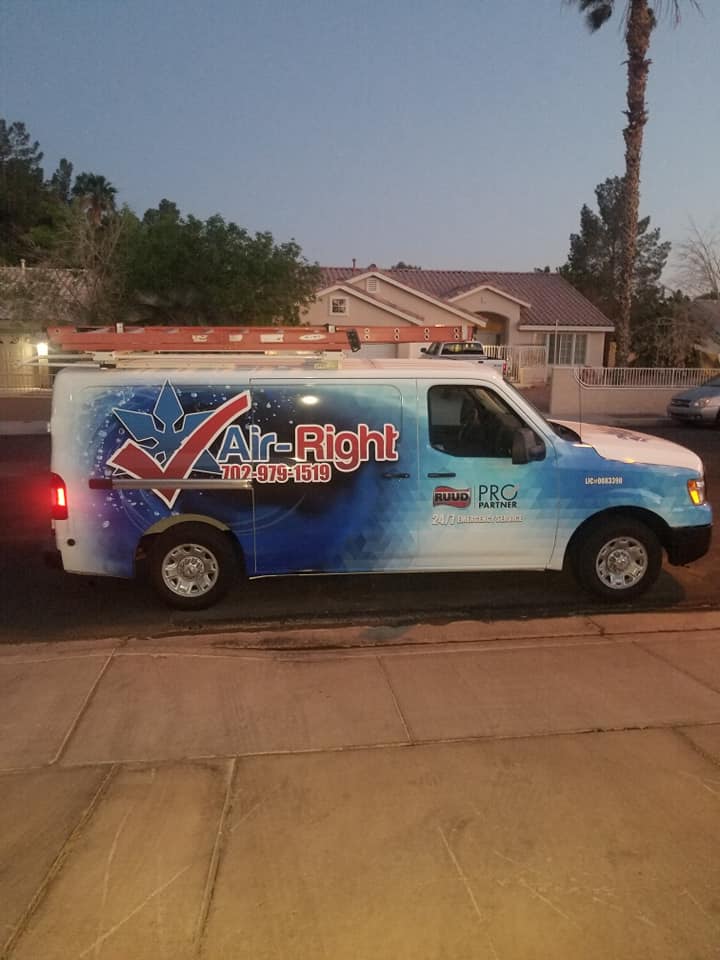
Is It a True Emergency? A Homeowner's Guide to 24-Hour Air Conditioning Service in Las Vegas, NV
Air-Right

When Your AC Won't Stop Running: Triage Before You Panic Here at Air-Right, we know the feeling: your air conditioner is running nonstop, but the house still feels uncomfortably warm, leaving you searching for common…
When Your AC Won't Stop Running: Triage Before You Panic
Here at Air-Right, we know the feeling: your air conditioner is running nonstop, but the house still feels uncomfortably warm, leaving you searching for common homeowner questions answered about sudden cooling failures. With your thermostat struggling to drop below 80 degrees during peak afternoon heat, it is easy to assume the entire system is on the verge of a catastrophic breakdown. Before you panic and assume you need an entirely new unit, our team wants you to understand exactly what your air conditioner is doing under extreme thermal stress.
For immediate assistance, explore our Air Conditioning Services or request a Las Vegas AC Repair Service today.
The immediate anxiety of hearing your condenser roar for hours on end is completely understandable. However, in our years of servicing Las Vegas homes, we've found that a system running continuously without reaching the set temperature is not always experiencing a mechanical failure. In many cases, it is simply dealing with a severe airflow restriction or fighting an overwhelming environmental load. The most important step you can take right now is to triage the situation calmly. Triage means assessing the symptoms to decide whether your equipment needs a simple adjustment, routine upkeep, or an immediate emergency intervention from our technicians.
Understanding normal behavior under extreme environmental conditions prevents unnecessary panic and saves you from placing an emergency service call for a system that is actually operating exactly as designed. To help you evaluate what is happening, here is a quick breakdown of how our Air-Right experts interpret your system's behavior:
| System Symptom | Likely Cause | Immediate Action Required |
|---|---|---|
| Running constantly, air is cold | Extreme thermal load / high outside temperatures | Monitor the system; avoid lowering the thermostat further. |
| Running constantly, air is weak/lukewarm | Airflow restriction (suffocation) or dirty coils | Check the air filter and ensure all indoor vents are fully open. |
| System making grinding or squealing noises | Failing blower motor or compressor issue | Turn the system off to prevent damage and call a professional. |
| System is completely unresponsive | Electrical failure or tripped safety switch | Verify the breaker has not tripped; request emergency service. |
By pausing to evaluate these basic signs, you can make an informed decision about your next steps. The desert environment puts unique demands on residential cooling systems, and knowing how to read those demands is your first line of defense.
The Cumulative Toll of Extreme Desert Heat on HVAC Systems
To truly understand why your system might be struggling, our technicians at Air-Right always look at the environment it operates in. Extreme triple-digit desert heat drastically increases the thermal load on your home, especially as the season drags on. By the time late-summer August arrives and kids are heading back to school, your air conditioner has likely been running for months with very few breaks. This continuous operation creates peak cumulative wear on moving parts, electrical contacts, and filtration systems.
One of the most important concepts our team shares with homeowners is the Department of Energy's standard 15 to 20-degree temperature drop rule. Residential air conditioning systems are engineered to cool the indoor air by approximately 15 to 20 degrees compared to the outside temperature. When the ambient temperature outside spikes to 105 or 110 degrees, an indoor temperature of 80 degrees means your system is actually functioning at its absolute maximum design capacity. It is extracting as much heat as physically possible.
Factors that amplify thermal load:
- Radiant heat absorption: Your roof, walls, and windows absorb solar radiation all day, turning your house into a thermal battery that constantly releases heat inward.
- Inadequate insulation: Poorly insulated attics allow extreme heat to press down on your living spaces, forcing the air conditioner to work harder to maintain a baseline temperature.
- Ductwork heat gain: If your air ducts run through a 140-degree attic, the chilled air inside them warms up before it ever reaches your vents.
Furthermore, the desert environment introduces a massive amount of ambient dust and particulate matter into the air. Over the course of the summer, this fine grit gets pulled into your return vents and coats your evaporator coils. Even a thin layer of dust acts as an insulator, preventing the refrigerant inside the coils from properly absorbing heat from your home's air. Therefore, a system running constantly in late summer is not necessarily broken—it is simply fighting a grueling battle against peak temperatures and accumulated desert debris.
Suffocating vs. Dying: Understanding Continuous Operation
When an air conditioner fails to cool the house, the problem usually falls into one of two categories: the system is suffocating, or the system is dying. In our experience serving the Las Vegas Valley, the Air-Right team has found that learning to differentiate between these two states is vital for homeowners, as our harsh climate accelerates both issues.
A "suffocating" air conditioner is one that is mechanically sound but starved for air. Air conditioning is fundamentally a heat transfer process; it requires a specific volume of air to move across the indoor coils to function. When that airflow is restricted, the system suffocates. The most common culprit we see in the field is a severely clogged air filter. According to industry data, a dirty filter can reduce your system's efficiency by up to 15 percent. This forces the blower motor to work harder, consumes more electricity, and drastically reduces the amount of cold air reaching your rooms.
Signs your system is suffocating:
- The air coming from the vents is cold, but the airflow is noticeably weak.
- The system runs for exceptionally long cycles but barely changes the room temperature.
- Ice begins to form on the indoor evaporator coil or the outdoor refrigerant lines (caused by a lack of warm air moving over the coil to prevent freezing).
In contrast, a "dying" system is experiencing a mechanical or electrical failure. Symptoms of a dying unit include loud grinding, screeching, or buzzing noises, frequent tripped circuit breakers, or a complete lack of cold air (the system blows warm or room-temperature air). While a suffocating system can often be remedied by restoring airflow, a dying system requires immediate professional intervention.
If you ignore a suffocating system, the consequences can be severe. The continuous strain of pulling air through a blocked filter forces the blower motor to overheat. Worse, if the indoor coil freezes solid due to low airflow, liquid refrigerant can flow backward into the outdoor compressor. This phenomenon, known as liquid slugging, can cause total compressor burnout. Staying proactive with routine upkeep, such as scheduling AC Maintenance in Las Vegas, is the best way to prevent airflow suffocation before it escalates into a catastrophic failure.
Safe Homeowner Checks Before Calling for Help
Before you pick up the phone to schedule an emergency repair with our dispatchers, there are several safe, straightforward troubleshooting steps you can perform yourself. If your thermostat is struggling to drop below 80 degrees during peak afternoon heat, running through this checklist can help you determine if the issue is a simple oversight or a complex mechanical problem.
These checks are designed to rule out basic airflow and control issues without putting you at risk. For a deeper dive into troubleshooting, you can also review how to Fix AC Not Cooling in Triple-Digit Heat.
- Verify thermostat settings and power: Start at the control center. Ensure the thermostat is set to "Cool" and the fan is set to "Auto" rather than "On." If the screen is blank or unresponsive, replace the batteries with fresh ones. Our technicians resolve a surprisingly high number of service calls simply by swapping out dead thermostat batteries.
- Inspect and replace the air filter: Locate your return air filter and pull it out. Hold it up to a light source; if you cannot see light shining through the material, it is clogged with accumulated desert dust and must be replaced immediately. Install a fresh filter with the airflow arrows pointing toward the equipment.
- Check all indoor vents and registers: Walk through your home and ensure every single supply vent and return register is fully open. Many homeowners mistakenly close vents in unused rooms to "save energy." In reality, closing vents increases static pressure inside the ductwork, forcing the blower motor to work against heavy resistance and severely reducing overall system efficiency. Move any furniture, rugs, or curtains that might be blocking the grilles.
- Clear the area around the outdoor unit: Go outside and inspect the condenser. Ensure there is at least two feet of clear space around the entire unit. Remove any windblown debris, tumbleweeds, or patio furniture that might be restricting the exhaust fan or the side intake fins.
A critical warning from our team: While these steps are perfectly safe, you must draw a hard line at the equipment cabinet. Never attempt DIY repairs on electrical components, capacitors, or wiring. Furthermore, checking or adding refrigerant requires specialized gauges, EPA certification, and a licensed professional. Opening the electrical panel or tampering with refrigerant lines poses severe risks of electrocution, chemical burns, and permanent damage to your equipment.

Identifying a True Emergency: When to Request 24-Hour Dispatch
If you have completed the safe homeowner checks and your system is still failing to cool, you must decide how urgently you need help. Our Air-Right emergency response team knows that not every air conditioning issue requires a technician to arrive in the middle of the night, but certain scenarios demand immediate, round-the-clock professional intervention to protect your property and your well-being.
During late-summer August, a complete loss of cooling is more than an inconvenience; it is a significant safety risk. Indoor temperatures can rapidly climb to dangerous levels, posing health threats to infants, the elderly, and household pets. Recognizing the critical warning signs of a true emergency ensures you get help exactly when you need it.
Signs you need immediate 24-hour dispatch:
- Complete power failure to the unit: The thermostat is calling for cooling, but neither the indoor blower nor the outdoor condenser will turn on, and resetting the breaker has no effect.
- Burning electrical smells: If you detect an acrid, burning plastic odor coming from your vents or the equipment cabinet, turn the system off immediately at the thermostat and the breaker. This indicates melting wires or a failing motor.
- Warm air blowing during extreme heat spikes: If the system is running continuously but blowing unmistakably warm air, the compressor may have failed or the system has suffered a massive refrigerant leak.
When these situations arise, you need a team with a fast, reliable 24/7 emergency response specifically equipped for the demands of the desert climate. Rapid professional response is designed to mitigate disaster. For example, during a brutal 110-degree weekend heatwave, our technicians helped a local homeowner who experienced a sudden and complete AC power failure. Because they recognized the severity of the situation, we dispatched a technician for a major same-day repair, successfully restoring the cooling system before the home's interior reached dangerous temperatures. Keep in mind that depending on your equipment, federal tax credits may apply to qualifying heat pump or high-efficiency system installations if a full replacement is required.
If your system is cooling poorly but still maintaining a tolerable indoor temperature (e.g., holding at 78 degrees instead of your preferred 72), it is often safe to schedule a next-day appointment. However, if you are facing zero airflow, electrical odors, or a total breakdown during a heatwave, you need 24 Hour AC Repair immediately.
The Importance of Accurate Diagnosis in Extreme Conditions
When your air conditioner breaks down in the Las Vegas Valley, the urgency to get it running again is intense. However, our philosophy at Air-Right is that speed should never come at the expense of accuracy. Extreme heat and continuous operation can cause minor component failures to mimic the symptoms of massive, catastrophic breakdowns. This is why professional expertise and precise diagnostic testing are absolutely essential.
Consider the symptoms of a failing capacitor. A capacitor is a small electrical component that provides the initial jolt of energy needed to start the outdoor fan motor and the compressor. When a capacitor dies, the outdoor unit will sit silently and hum, refusing to start. To an untrained eye, this looks exactly like a dead compressor or a seized motor—both of which require significant repairs. Our certified Air-Right technicians use specialized multimeters to test the microfarad readings of the capacitor, quickly identifying that a minor electrical part is the true culprit.
Accurate diagnosis prevents unnecessary expenses and provides immense peace of mind. In one recent instance, a local homeowner feared they were facing a complete motor failure. One of our technicians arrived for an urgent service call within 90 minutes and thoroughly tested the system. We correctly identified that a simple faulty wiring connection was preventing the motor from operating, saving the homeowner from an unnecessary replacement.
Why professional diagnosis matters:
- Prevents recurring breakdowns: Fixing a symptom without addressing the root cause guarantees the system will fail again. Proper diagnosis ensures the right fix is applied the first time.
- Protects system longevity: Slapping a temporary bandage on a struggling system forces other components to overcompensate, accelerating wear and tear across the entire HVAC unit.
- Ensures safety: Electrical and refrigerant systems are complex and dangerous. A transparent, honest evaluation by a certified technician keeps your home safe from fire hazards and chemical exposure.
Common Homeowner Questions Answered: Surviving the Desert Heat
When the late-summer August heat pushes your air conditioner to its limits as kids head back to school, it is natural to have concerns about how your system is performing. Below, our Air-Right experts have compiled authoritative answers to the most frequent inquiries we receive during extreme weather events, helping you navigate these cooling challenges safely.
Why is my AC struggling to cool below 80 degrees in the afternoon?
The short answer is that your system is likely hitting its maximum design capacity. Air conditioners are engineered based on a 15 to 20-degree temperature differential rule. This means the system is designed to cool the indoor air by about 20 degrees compared to the outdoor ambient temperature. When outside temperatures soar past 105 degrees, an indoor temperature of 80 degrees indicates the system is actually functioning perfectly and extracting as much heat as physics allows.
Should I turn my AC off if it's running constantly?
You should not turn the system off completely during peak heat unless you suspect an electrical fire or mechanical failure. If you shut the system down, your home's walls, floors, and furniture will rapidly absorb thermal energy. Once you turn the unit back on, it will have to work twice as hard for much longer to remove that deep-set heat. Instead, we suggest raising the thermostat a few degrees to give the system a brief rest while maintaining a baseline level of comfort.
What are the signs I need emergency AC repair?
The most critical warning signs include burning electrical odors, a complete loss of power to the unit that cannot be reset, or the system blowing completely warm air during a severe heatwave. Additionally, if the system is making loud, metal-on-metal screeching noises, it indicates a failing motor or compressor. In these scenarios, turn the system off at the thermostat and request our emergency dispatch immediately to prevent further damage.
Is it normal for my AC to run constantly in 100-degree weather?
Yes, continuous operation is completely normal under extreme thermal load, provided the air coming from your supply vents is cold. In 100-degree weather, the heat gain on your home is immense, and the system must run continuously just to keep pace with the thermal energy pressing in through the roof and windows. As long as the indoor temperature is holding steady and the air feels chilled, constant running is not a sign of failure.
How often should I change my air filter during the summer?
Our team strongly recommends checking your air filters at least once a month during the peak cooling season. The high ambient dust and particulate matter in the desert environment drastically accelerate filter clogging when the system runs non-stop. You should replace the filter as soon as it appears visibly dirty or gray to prevent severe airflow restriction, which can lead to frozen coils and overheated blower motors.
Restore Your Comfort with Confidence and Expert Support
When your thermostat is struggling to drop below 80 degrees during peak afternoon heat, knowing how to interpret your system's behavior is the key to maintaining your peace of mind. By distinguishing between normal extreme-heat operation, simple airflow suffocation, and the urgent warning signs of a mechanical breakdown, you can confidently take the right steps to protect your home.
If you have checked your filters and verified your thermostat settings but your system is still failing to keep you comfortable, you do not have to endure the heat alone. A local expert from Air-Right can help you navigate these cooling challenges safely, ensuring your equipment is accurately diagnosed and properly repaired. We are highly dedicated to getting common homeowner questions answered and restoring your comfort swiftly. Reach out to Air-Right today for a thorough inspection or professional repair, and let us ensure your system is ready to handle whatever the desert climate brings.
Need Help?
Contact us today to discuss your needs. Our team is ready to help.
Related Articles
- Is That Burning Smell an Emergency? A Triage Guide for 24 Hour Air Conditioning Service in Las Vegas, NV
- Is It a True Emergency? A Triage Guide for 24-Hour Air Conditioning Service in Las Vegas, NV
- Fall HVAC Checklist: Triage Guide for 24-Hour Air Conditioning Service in Las Vegas, NV
Related articles


Ready to Get Started?
Whether you need a repair, maintenance, or a new installation, our expert team is here to help.