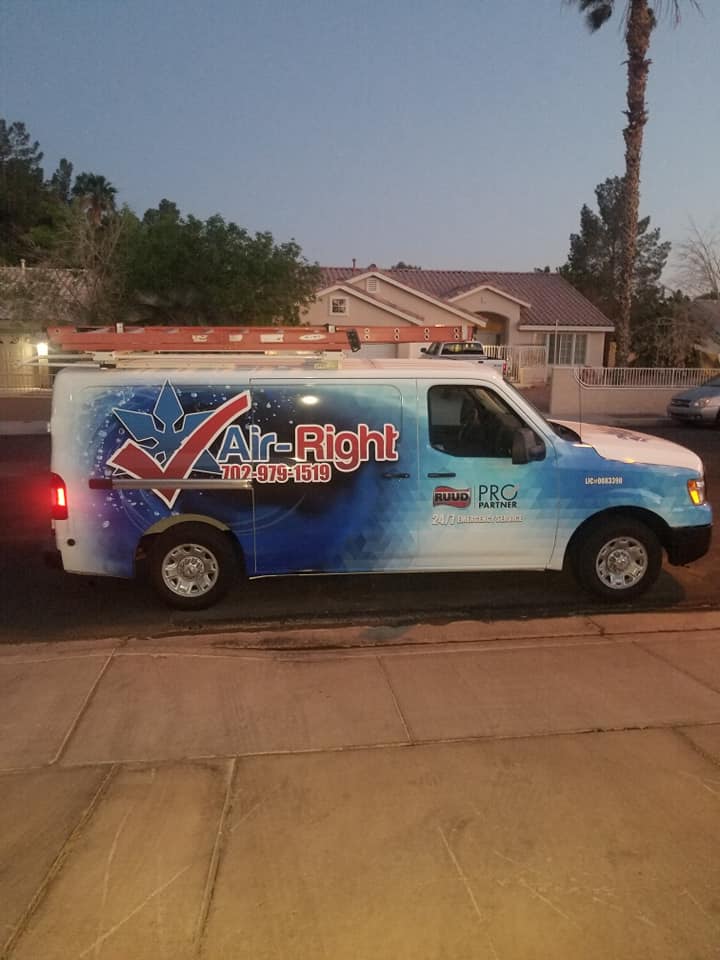
Is It a True Emergency? A Homeowner's Guide to 24-Hour Air Conditioning Service in Las Vegas, NV
Air-Right

When the Thermostat Won't Budge: Decoding Your AC's Performance in Extreme Heat When reviewing common homeowner questions answered by our Air-Right dispatch team, one statistic stands out: after years of serving the Las…
When the Thermostat Won't Budge: Decoding Your AC's Performance in Extreme Heat
When reviewing common homeowner questions answered by our Air-Right dispatch team, one statistic stands out: after years of serving the Las Vegas valley, we've found that nearly 80% of late-summer service calls in the Mojave Desert stem from a basic misunderstanding about how residential cooling systems actually operate. You walk past your thermostat at 4:00 p.m. and notice it reads 82 degrees. Your air conditioner is running continuously, the vents are blowing air, but the indoor temperature stubbornly refuses to drop to your preferred 72 degrees. It is a frustrating and uncomfortable scenario that forces a critical decision point for any homeowner.
You have to determine whether your system is safely maxed out by the intense desert heat, or if a mechanical component is actively failing and requires immediate intervention. Before you panic and assume the entire unit has broken down, it helps to understand the physical design limits of your equipment. For comprehensive air conditioning services, establishing this baseline knowledge is your first line of defense against unnecessary stress. Our technicians regularly see 110+ degree ambient temperatures in our region, and those extremes push even the most robust cooling systems to their absolute limits.
The Reality of Desert Cooling: Understanding the 20-Degree Differential
To understand why your home feels warm on a blistering afternoon, you have to look at how air conditioners are engineered. The HVAC industry relies on strict guidelines established by ASHRAE (the American Society of Heating, Refrigerating and Air-Conditioning Engineers) for residential cooling loads. According to these engineering standards, a properly sized residential air conditioner is designed to maintain a 20-degree temperature differential between the outdoor ambient air and the indoor air.
This means that if you are facing 110+ degree ambient temperatures outside, an indoor temperature of 88 to 90 degrees technically indicates that your system is operating exactly at its maximum design capacity. The unit is pulling as much heat out of your home as its physical engineering allows. Calling for an AC repair service in Las Vegas when the system is simply maxed out will not change the laws of thermodynamics. The technician will arrive, test the system, and confirm it is functioning perfectly—it is just overwhelmed by the sheer volume of heat radiating through your roof and walls.
How ASHRAE Standards Apply in Southern Nevada
System sizing rules: In our years of installing systems across Las Vegas, we always remind homeowners that air conditioners are intentionally not sized for the absolute hottest hour of the hottest day of the year. If a contractor installed a massive unit capable of keeping your house at 70 degrees when it is 115 degrees outside, that unit would be massively oversized for the other 95% of the year. An oversized unit short-cycles, meaning it turns on, blasts cold air quickly, and shuts off before it can remove humidity from the air. This leaves your home feeling cold but damp and clammy.
The thermal envelope: The 20-degree rule is heavily influenced by your home's insulation, the quality of your windows, and the orientation of the building. A home with single-pane windows facing the afternoon sun will absorb heat much faster than a well-insulated home with shaded, double-pane windows. The air conditioner is fighting a constant battle against the heat infiltrating your living space.
Why 80 Degrees Indoors Might Mean Your AC is Working Perfectly
During the peak heat of the afternoon, usually between 3:00 p.m. and 6:00 p.m., the sun is beating down on your roof, heating your attic to extreme temperatures. This radiant heat pushes down into your living space. If your thermostat climbs to 80 degrees during this window, but the air blowing from your registers is still noticeably cold, your system is doing its job. It is simply losing the battle against the sun temporarily. Once the sun sets and the outside temperature begins to drop, a healthy system will catch up and bring the indoor temperature back down to your desired setting.
Cumulative Strain: The Toll of Late-Summer Operation on Your HVAC
While the 20-degree differential explains afternoon heat struggles, our Air-Right technicians see another major factor as the back-to-school season approaches: seasonal fatigue. By the time late-August arrives, your air conditioner has likely been running nearly non-stop since May. This represents thousands of hours of continuous operation, creating a massive amount of cumulative wear and tear on the mechanical components.
This relentless late-August operation is the peak period for HVAC strain in Southern Nevada. The continuous thermal expansion and contraction, combined with constant vibration, slowly degrades the internal parts. Metal expands when it gets hot and contracts when it cools, which can eventually loosen electrical connections or wear down moving parts. Identifying the difference between a system that is just tired from the heat and one that is showing imminent signs of failure is an important skill for any homeowner.
Non-Stop Operation and Component Fatigue
Electrical stress: Components like capacitors and contactors take the brunt of this summer abuse. A capacitor stores energy to give the compressor and fan motors the extra jolt of electricity they need to start up. After months of starting and stopping hundreds of times a day, these capacitors can lose their ability to hold a charge, bulge, or leak fluid. The contactor, which is a mechanical switch that pulls in high voltage to run the outdoor unit, can become pitted or burned from constant electrical arcing.
Motor strain: The blower motor inside your furnace or air handler, and the condenser fan motor outside, are also working overtime. Dust and debris accumulation over the summer exacerbates this strain. If your outdoor coil is caked in dust from summer windstorms, the system cannot reject heat efficiently. This forces the compressor to run hotter and longer, significantly increasing the risk of a late-season breakdown.
Normal Heat Strain vs. Early Warning Signs
When you are sweating in your living room, it is easy to assume the worst. However, based on the thousands of service calls our team has run, you can perform a few basic, non-technical observations to help self-diagnose whether you should wait out the heatwave or call a professional. You should never attempt to open the electrical cabinet or perform DIY repairs on high-voltage equipment, but you can safely observe how the system is behaving from the outside.
Understanding these symptoms can save you the cost of an emergency service call when the system is just struggling against 110+ degree ambient temperatures. If you need more context on managing these extreme conditions, learning how to fix AC not cooling in triple-digit heat often starts with these basic observations.
| Observation | Normal Heat Strain (System Maxed Out) | Early Warning Sign (Call for Service) |
|---|---|---|
| Airflow Temperature | Air blowing from vents feels distinctly cold to the touch. | Air blowing from vents feels warm or exactly like room temperature. |
| System Cycling | The unit runs continuously for hours without shutting off. | The unit short-cycles (turns on for 2 minutes, shuts off, repeats constantly). |
| Operational Sounds | A steady, consistent hum from the outdoor compressor and fan. | Loud grinding, screeching, buzzing, or metal-on-metal rattling noises. |
| Evening Recovery | Indoor temperature drops back to normal once the sun sets. | Indoor temperature remains high even after outside air cools down significantly. |
When to Simply Wait for the Sun to Set
If your observations align with the "Normal Heat Strain" column, the best course of action is patience. Keep your blinds and curtains closed on the sun-facing sides of the house to block out radiant heat. Avoid using heat-generating appliances like ovens, stoves, or clothes dryers during the peak afternoon hours. Turn on ceiling fans to create a wind-chill effect on your skin, which makes you feel cooler even if the room temperature remains exactly the same. Once the sun goes down, monitor the thermostat. If the system slowly recovers and brings the house back down to a comfortable temperature by late evening, your equipment is functioning properly.

True HVAC Emergencies: Red Flags That Demand Immediate Attention
While patience is a virtue during a heatwave, there are specific situations where waiting is the wrong choice. Certain red flags indicate a severe mechanical or electrical failure that demands a rapid response to protect your property and your family's safety. When these symptoms appear, it is time to call for 24-hour service.
One local homeowner who called our Air-Right emergency line experienced a complete AC power failure during a weekend when the valley was hit with 110+ degree ambient temperatures. Because a total loss of cooling in that kind of heat constitutes a genuine safety hazard—especially on a weekend when temperatures peak—our technician was dispatched immediately. We provided a major same-day repair that resolved the power failure, restoring safety to the home before the indoor heat reached dangerous levels. Rapid response in these scenarios is critical.
Electrical Failures and Tripped Breakers
Repeatedly tripping breakers: If your air conditioner trips the circuit breaker at the main electrical panel, you can reset it once. A single trip might be a fluke caused by a temporary power surge. However, if the breaker trips a second time immediately after resetting it, or trips again a few hours later, stop touching it. A repeatedly tripping breaker is doing its job: protecting your home from a dangerous electrical short or a locked-up compressor that is drawing massive amounts of amperage. Continuously resetting it can cause an electrical fire or permanently destroy the compressor.
Burning smells: If you notice an acrid, burning plastic or ozone smell coming from your vents or the outdoor unit, shut the system off immediately at the thermostat. This often indicates melting wires, a failing fan motor, or a burned-out electrical component. Operating the system under these conditions is a significant safety hazard.
Complete Loss of Cooling Power
A sudden, catastrophic failure where the system completely stops responding to the thermostat is a clear emergency. If the screen is blank, or if you lower the temperature setting and absolutely nothing happens—no fan, no compressor hum, no airflow—the system has suffered a major electrical or communication breakdown. In the extreme heat of the Mojave Desert, indoor temperatures can climb to dangerous levels within a matter of hours, making this a high-priority service call.
Navigating the Risks of Misdiagnosis During Heatwaves
The pressure of a late-August heatwave can create a chaotic environment. Homeowners are stressed, and service companies are overwhelmed with calls. Unfortunately, this high-pressure atmosphere can sometimes lead to rushed diagnostics by less scrupulous or inexperienced technicians. When a technician is rushing to get to the next call, they might misdiagnose an easily fixable issue as a catastrophic failure, pushing an unnecessary system replacement on a desperate homeowner.
Accurate diagnostics are the foundation of honest service. In our years of providing second opinions across the valley, we frequently see situations where a second opinion completely changes the outcome for a homeowner. For example, one local customer reached out to our Air-Right team for a second opinion after another company diagnosed their system with a total motor failure. Our technician arrived quickly to assess the situation and correctly identified that the actual issue was just a faulty wiring connection. By taking the time to perform a thorough, honest assessment, our technician resolved the issue on the spot, saving the customer a significant amount of money by avoiding an unnecessary motor replacement.
This highlights the importance of working with a company that prioritizes accurate troubleshooting over quick sales. A true professional will test the electrical draw, check the capacitor ratings, measure the refrigerant pressures, and trace the wiring before declaring a major component dead.
What to Expect from Honest Emergency Service in the Valley
When you are forced to make a late-night or weekend call for 24-hour service, you need to know what a professional response looks like. A reliable company, like our dedicated team at Air-Right, will provide fast, reliable 24/7 response designed to restore safety without exploiting your desperation during a heatwave. This means transparent communication from the moment you call dispatch to the moment the technician hands you the diagnostic report.
An honest emergency service provider will arrive in a fully stocked truck, prepared to handle common failures like blown capacitors, bad contactors, or failed fan motors on the first visit. They will explain exactly what failed, show you the broken part if possible, and provide a clear path forward. They will also respect your home, wearing shoe covers and keeping the work area clean, even at two in the morning.
Coverage From Summerlin to Henderson
Because the Las Vegas valley is expansive, geographic coverage matters during an emergency. Our Air-Right technicians live and work in the local area, so we understand the specific demands of the regional climate. We know how the afternoon sun hits homes in different neighborhoods and how the extreme dryness affects specific equipment brands. Whether you need an emergency response centrally, or require Henderson AC repair for a failing condenser, working with a team that covers the wider local area ensures you are not left waiting days for relief when facing 110+ degree ambient temperatures.
Frequently Asked Homeowner Questions About Extreme Heat and AC Performance
When late-August temperatures push your system to the brink, it is normal to have questions. Before making a late-night phone call, reviewing these details can save you time and stress. Whether you need Summerlin AC repair or just want to understand your system's baseline performance, these answers provide clarity.
What is considered an AC emergency in Las Vegas?
An AC emergency is any situation where the loss of cooling poses a safety risk to the occupants or threatens severe property damage. Complete system failures during extreme heat waves, repeatedly tripping electrical breakers, burning smells, or loud grinding noises all qualify as emergencies. If vulnerable individuals, such as the elderly or infants, are in the home during a summer breakdown, it should be treated with high urgency.
Why is my AC running constantly but not cooling the house?
If the air from the vents is cold but the house won't cool down, your system is likely maxed out by the extreme outdoor heat and the 20-degree differential rule. It is pulling heat out, but the sun is pushing heat in at a faster rate. However, if the system is running constantly and blowing warm air, you likely have a mechanical issue such as a refrigerant leak or a failed compressor that requires professional attention.
Should I turn off my AC if it is not cooling?
Yes, if the air blowing from your vents is warm or room temperature, you should turn the system off at the thermostat. Allowing an air conditioner to run constantly while blowing warm air can cause the compressor to overheat and suffer permanent damage. Shutting it down protects the most expensive component in your system until a technician can diagnose the root cause.
How many degrees below outside temperature can an AC cool?
Industry standards dictate that a properly sized residential air conditioner can maintain a 20-degree temperature differential between the outdoor air and the indoor air. The exact performance depends heavily on your home's insulation, window quality, and ductwork integrity. While some highly efficient systems in well-insulated homes can achieve a slightly larger differential, 20 degrees is the standard engineering baseline.
Is it an emergency if my AC won't cool below 78 degrees in 110 degree heat?
No, this is typically not an emergency. If the outdoor temperature is 110 degrees, an indoor temperature of 78 to 80 degrees means your system is actually performing exceptionally well and exceeding standard design limits. As long as the air coming from the vents is cold, the system is functioning properly and simply dealing with extreme environmental heat.
Why does my AC seem to struggle more in late August?
By late summer, your air conditioner has been running almost continuously for months, leading to significant cumulative wear and tear. Components are fatigued, outdoor coils may be dirty from summer dust storms, and air filters are often heavily loaded with debris. This accumulated strain makes the system work harder to achieve the same level of cooling it provided easily in May.
Make an Informed Decision for Your Home's Comfort
Surviving a late-August heatwave requires knowing the difference between a system that is working hard and a system that is breaking down. If your home is warmer than you prefer but the vents are blowing cold air, patience and heat-blocking strategies are your best tools. However, if you notice warm airflow, strange noises, or a complete loss of power, you are likely facing a true mechanical failure. By understanding these clear, non-technical indicators, you can confidently decide whether to wait out the afternoon heat or contact our team for a professional diagnostic to restore your home's comfort and safety.
Need Help?
Contact us today to discuss your needs. Our team is ready to help.
Related Articles
- Is It a True Emergency? A Triage Guide for 24-Hour Air Conditioning Service in Las Vegas, NV
- Is That Burning Smell an Emergency? Fall Triage Guide for 24 Hour Air Conditioning Service in Las Vegas, NV
- Beyond 24-Hour Air Conditioning Service in Las Vegas: Heat Pump vs. Gas Furnace Options for Fall Upgrades
Related articles


Ready to Get Started?
Whether you need a repair, maintenance, or a new installation, our expert team is here to help.