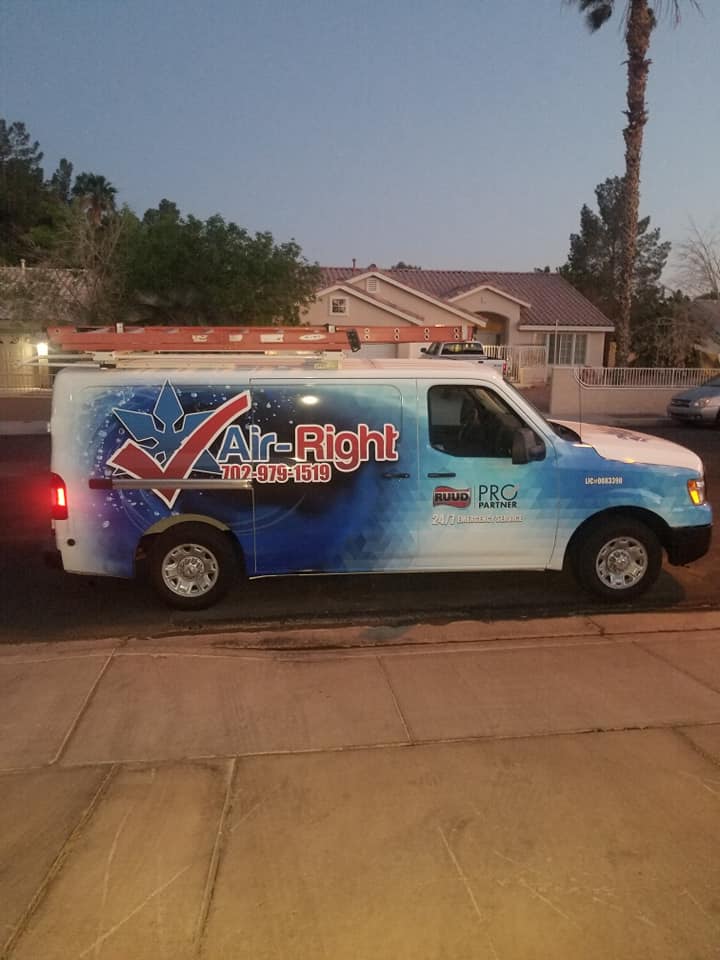
AC Blowing Warm Air? Troubleshooting Before Calling 24 Hour Air Conditioning Service in Las Vegas, NV
Air-Right

When Peak Summer Heat Overwhelms Your Cooling System Peak summer in Las Vegas is unforgiving, and when your system stops blowing cold, having a solid grasp of home maintenance tips and troubleshooting can save you from…
When Peak Summer Heat Overwhelms Your Cooling System
Peak summer in Las Vegas is unforgiving, and when your system stops blowing cold, having a solid grasp of home maintenance tips and troubleshooting can save you from an uncomfortably hot afternoon. Here at Air-Right, our team has seen firsthand how a cooling failure rapidly elevates from a minor inconvenience to a serious safety hazard when desert temperatures regularly exceed 100°F. The radiant heat absorbed by your roof and windows quickly transfers inside, causing indoor temperatures to spike within hours of a system shutdown.
The critical decision point you face right now is identifying whether the issue stems from a simple, easily correctable airflow restriction or a severe mechanical failure that requires immediate professional intervention. Jumping straight to worst-case scenarios can cause unnecessary panic, but ignoring the problem can lead to catastrophic equipment damage. By following a logical sequence of diagnostic steps we recommend to all our customers, you can safely rule out the basics before making a call. If you need immediate professional help, you can explore our comprehensive Air Conditioning Services or schedule a Las Vegas AC Repair Service right now.
The Physics of a Desert Heat Breakdown
To understand why your system is struggling, it helps to understand how it works under load. Air conditioners do not actually "create" cold air; they remove heat from the indoor air and transfer it outside. When the ambient temperature outside is extreme, the system has to work significantly harder to reject that heat into an already scorching environment. Our Air-Right technicians frequently see how this immense thermal load puts extreme stress on electrical components, motors, and the refrigerant cycle during July heatwaves.
What to watch for: The speed at which your home heats up after a failure depends on your home's insulation and sun exposure. If your system is blowing noticeably warm air from the vents, the heat transfer process has completely stopped, and the blower is merely circulating hot indoor air.
The Diagnostic Checklist: Safe DIY Checks to Perform First
Before you assume the worst, walk through this safe triage checklist. In our years of servicing Las Vegas homes, we've designed these steps to separate minor homeowner oversights from mandatory professional repairs. When 110°F+ ambient temperature puts your system under maximum strain, even a minor airflow restriction can cause the entire system to shut down to protect itself.
- Verify your thermostat settings and power: Start at the control center. Ensure the thermostat is set to "Cool" and the fan is set to "Auto" rather than "On." If the fan is set to "On," it will blow air continuously, even when the outdoor compressor cycles off, which feels like warm air coming from the vents. Additionally, replace the batteries if the display is blank or flashing.
- Inspect and replace the indoor air filter: According to the U.S. Department of Energy, replacing a dirty, clogged filter with a clean one can lower an air conditioner's energy consumption by 5% to 15%. During peak summer operation, systems run almost continuously. This high duty cycle means our team recommends checking your filters every 30 days instead of the standard 90 days. A blocked filter suffocates the system, leading to frozen coils and warm air.
- Check the electrical panel for a tripped breaker: High heat means high electrical draw. Locate your main electrical panel and look for the breaker labeled for your AC or HVAC system. If it is tripped (sitting in the middle position), flip it fully off, then firmly back to the on position. The golden rule: Only reset a tripped breaker once. If it trips again immediately, you have a direct short or a failing component, and forcing it on will cause an electrical fire.
- Ensure the outdoor condenser unit is unobstructed: Walk outside and look at the large metal cabinet (the condenser). It needs a minimum of two feet of clear space in all directions to exhaust the heat it pulls from your home. Clear away any overgrown bushes, accumulated leaves, or debris blocking the metal fins.
Staying on top of these basic checks is the foundation of good AC Maintenance in Las Vegas, preventing many of the common faults our technicians see from occurring in the first place.

Decoding the Symptoms of a Failing Air Conditioner
If you have completed the basic checklist and the system is still failing, you need to differentiate between a simple airflow restriction and a severe mechanical or refrigerant failure. Recognizing these symptoms early saves our dispatchers and technicians valuable time during an emergency call.
Symptom 1: System Runs But Blows Warm Air
If you hear the indoor blower fan running and feel air coming from the vents, but the air is decidedly warm, the indoor unit is working, but the outdoor unit is not doing its job. This often points to a failed compressor, a bad capacitor preventing the compressor from starting, or a severe loss of refrigerant. The system is trying to cool, but the chemical heat transfer process has failed.
Symptom 2: Rapid On-and-Off Cycling (Short-Cycling)
If your system turns on, runs for two to three minutes, and immediately shuts down, it is short-cycling. This is a protective mechanism. It indicates potential overheating in the compressor, a failing run capacitor, or a malfunctioning low-pressure sensor. Allowing a system to short-cycle continuously will eventually destroy the compressor motor.
Symptom 3: Complete Loss of Power
A complete lack of response from the thermostat, the indoor unit, and the outdoor unit indicates a total power failure. One of our Air-Right customers reached out during a weekend of 110° weather when their AC suffered a complete power failure overnight. Because they recognized the total loss of power quickly, we were able to reroute a technician the same afternoon, providing a major same-day repair to get the system back online before the house reached dangerous temperatures.
| Observed Symptom | Likely Underlying Cause | Action Required |
|---|---|---|
| Warm air from vents | Refrigerant leak or compressor failure | Turn system off, call for repair |
| System turns on/off rapidly | Overheating, bad capacitor, or sensor fault | Turn system off to protect motor |
| No response from thermostat | Tripped breaker, blown fuse, or dead batteries | Check breaker/batteries, then call pro |
| Ice on indoor/outdoor pipes | Clogged filter or low refrigerant | Turn to FAN ONLY to thaw, replace filter |
When to Step Back: High-Voltage and Refrigerant Risks
While checking a filter or resetting a breaker is perfectly safe, there are clear boundaries on what you should never attempt to DIY. Modern HVAC systems combine high-voltage electricity, high-pressure chemicals, and complex circuitry. As licensed professionals, we must stress that crossing the line from basic troubleshooting into mechanical repair is dangerous and often illegal.
- Lethal high-voltage risks: Never attempt to open the electrical cabinet on your outdoor condenser. The dual-run capacitor inside stores a lethal electrical charge, even when the power is completely disconnected at the breaker. Testing or replacing these components requires specialized meters and discharging tools.
- EPA refrigerant regulations: Handling, recovering, or charging refrigerant requires Section 608 certification from the Environmental Protection Agency. DIY "top-offs" are illegal, dangerous, and physically impossible without specialized manifold gauges. Furthermore, an air conditioner is a closed-loop system; if it is low on refrigerant, there is a leak that must be brazed and sealed.
- The cost of misdiagnosis: Incorrect diagnosis by untrained individuals often leads to replacing the wrong parts, wasting money and delaying the return of cold air. Recently, another Las Vegas customer called the Air-Right team for a second opinion after an untrained individual incorrectly diagnosed a faulty wiring issue as a bad motor. Our professional technician arrived quickly, correctly identified the wiring problem, and ultimately saved the customer money by fixing the root cause rather than replacing an expensive, perfectly good motor.
Professional diagnostics from our team not only protect you from physical harm but also protect your equipment warranty, ensuring the system operates safely for years to come.
Understanding Continuous Operation in Extreme Desert Environments
Before you panic about a broken system, it is crucial to understand how extreme heat alters standard system behavior. A pattern we see often is homeowners assuming a system that runs continuously during peak summer is broken, when it may simply be operating at its maximum design capacity.
The 20-Degree Differential Rule
Residential air conditioning systems are generally sized and designed to maintain a 20-degree to 25-degree temperature differential between the outdoor ambient air and the indoor conditioned air. When 110°F+ ambient temperature hits the valley, your system is working flawlessly if it maintains an indoor temperature of 85°F to 90°F. If your thermostat is set to 72°F during a 115°F heatwave, the system will never reach that setpoint. It will run continuously, 24 hours a day, trying to achieve the impossible.
How to tell the difference:
- Normal under extreme load: The system runs non-stop, the air coming from the vents feels cool (about 15-20 degrees cooler than the room temperature), but the house temperature slowly climbs during the hottest part of the afternoon.
- Actual system failure: The system runs non-stop, but the air coming from the vents is room temperature or warm, and the indoor temperature matches the outdoor temperature.
If your system is simply struggling against the physics of extreme heat, there are lateral strategies you can employ to stay safe. For comprehensive tips on managing extreme temperatures when the equipment is maxed out, read our survival guide for when your AC quits during a heatwave.
Frequently Asked Questions About Emergency Cooling Failures
When the heat is rising, you need fast answers. Here are the most common questions our Las Vegas customers ask during a cooling crisis.
What should I check before calling for AC repair?
You should always verify your thermostat settings, check the condition of your air filter, and inspect your electrical panel before calling a professional. Start by ensuring the thermostat is set to "Cool" and replace the batteries if the screen is dim. Next, pull your indoor air filter; if it is completely caked in gray dust, replace it immediately, as restricted airflow mimics a mechanical breakdown. Finally, check the main breaker panel and the disconnect switch near the outdoor unit to ensure the system actually has power.
Why is my AC running but not cooling?
An AC that runs without cooling usually suffers from dirty evaporator coils, low refrigerant levels, or a malfunctioning compressor. The indoor fan will continue to circulate air, but if the outdoor compressor isn't running, the heat extraction process stops. If the system is low on refrigerant due to a leak, the air will feel lukewarm. Alternatively, a thick layer of dirt on the indoor coil acts as an insulator, preventing the system from absorbing heat from your home.
Is a broken AC considered an emergency?
Yes, a broken AC is absolutely considered a life-safety emergency when outdoor temperatures reach dangerous highs. During peak summer, a house without air conditioning can quickly exceed 100°F indoors, creating a hazardous environment. This rapid indoor temperature spike is particularly critical for vulnerable populations, including the elderly, infants, and household pets, making immediate repair a top priority.
How do you troubleshoot an air conditioner that is not cooling?
Troubleshoot by verifying airflow at the vents, checking the outdoor unit's operation, and looking for signs of ice. First, hold your hand up to the indoor vents; if the airflow is exceptionally weak, you likely have a blower motor issue or a severely clogged filter. Next, walk outside and listen to the condenser—both the fan blade and the humming compressor should be running. Finally, check the large copper line wrapped in black insulation outside; if it is covered in ice, turn the system off immediately.
Why does a dirty filter cause the system to freeze?
A dirty filter restricts the necessary airflow that prevents the indoor evaporator coil from dropping below freezing. Your AC requires a constant volume of warm indoor air passing over the cold coil to keep the chemical reaction balanced. When a blocked filter starves the system of air, the coil temperature plunges, turning natural condensation into a solid block of ice. This ice block further restricts airflow, eventually leading to a complete system shutdown and potential compressor damage.
Fast, Reliable Solutions When Troubleshooting Isn't Enough
If you have walked through the basic diagnostic steps—checking the thermostat, replacing the filter, and verifying the breakers—and your system is still blowing warm air, you have reached the limit of safe DIY troubleshooting. Continuing to run a malfunctioning system in 110°F+ ambient temperature will only cause further damage to the compressor and internal components.
Working with our local emergency dispatch team means you are relying on professionals who understand the life-safety aspect of desert heat breakdowns and prioritize rapid response. When temperatures are soaring, you don't have time to wait days for a diagnosis. Trust the experts at Air-Right to safely handle the high-voltage and refrigerant repairs, restoring your home's comfort quickly and correctly. When troubleshooting isn't enough, rely on our Las Vegas AC Repair Service to get your system back online, ensuring you have a clear, actionable solution and a safely cooled home.
Need Help?
Contact us today to discuss your needs. Our team is ready to help.
Related Articles
- Is It a True Emergency? A Fall Triage Guide for 24-Hour Air Conditioning Service in Las Vegas, NV
- Emergency AC Repair Signs: Navigating Heating-Startup and Fall Maintenance
- Is That Burning Smell an Emergency? Triaging Fall Heating and 24-Hour Air Conditioning Service in Las Vegas, NV
Related articles


Ready to Get Started?
Whether you need a repair, maintenance, or a new installation, our expert team is here to help.