The Ultimate Survival Guide for When Your AC Quits During a Heatwave
Air-Right

<p>Don’t sweat! Learn what to do when your ac breaks down in extreme heat. Stay safe, cool, and prepare for repairs in Las Vegas.</p>
When Your AC Breaks Down in Extreme Heat: What Las Vegas Homeowners Must Do First
What to do when your ac breaks down in extreme heat comes down to a few fast, critical steps:
- Turn off the AC at the breaker to prevent further damage
- Check the basics – thermostat batteries, circuit breaker, and air filter
- Move vulnerable household members (elderly, infants, pets) to a cooler location immediately
- Close all blinds and curtains to slow heat gain
- Call a licensed HVAC technician for emergency service as soon as possible
- Use fans, cold water, and wet towels to stay cool while you wait
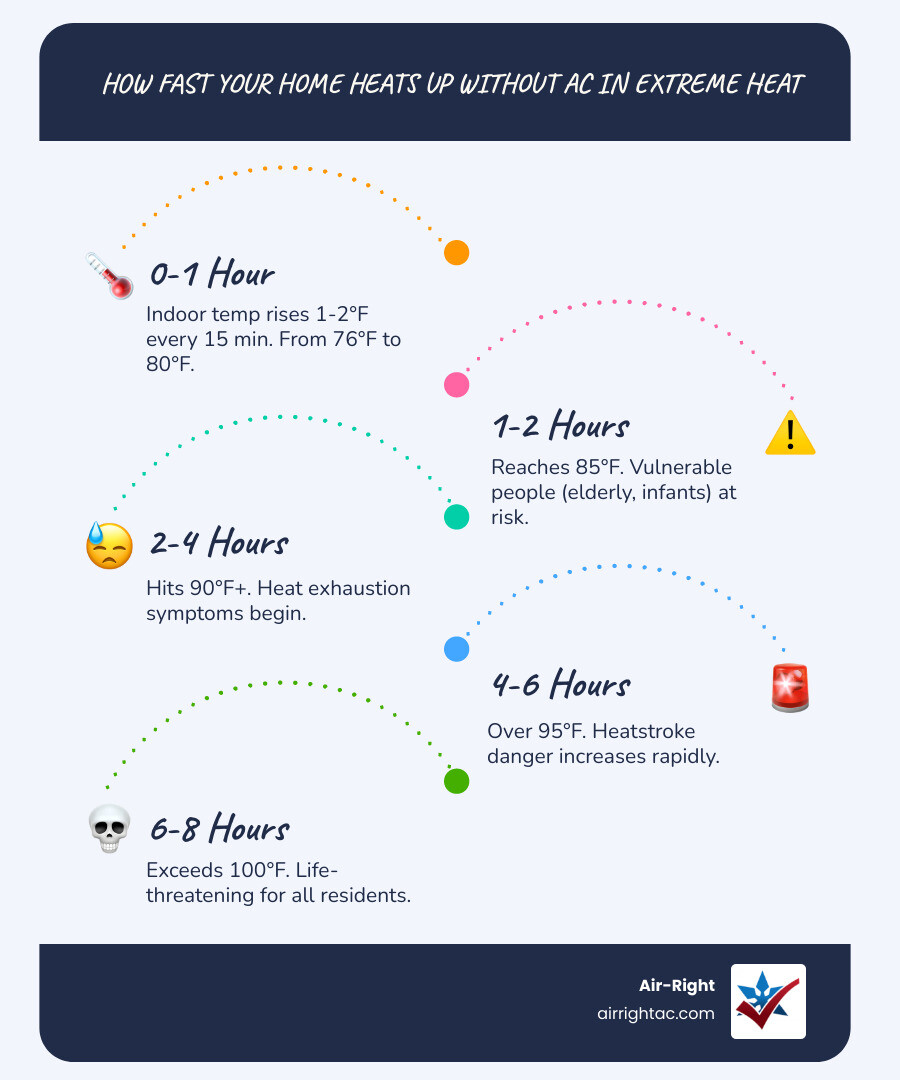
A broken AC in Las Vegas is not just an inconvenience – it is a genuine emergency. Indoor temperatures in a Southern Nevada home can rise one to two degrees every 15 minutes without cooling running. A house that starts at a comfortable 76°F can reach over 90°F in just four hours. In a city where summer temperatures routinely push past 110°F, that timeline is dangerously short.
The stakes are real. In 2023 alone, extreme heat was linked to more than 11,000 deaths and roughly 120,000 emergency room visits across the United States. Heat waves are the deadliest natural disaster in the country, and Las Vegas sits squarely in one of the most extreme heat zones on the planet.
The good news? Knowing exactly what to do – and what not to do – in the first few minutes after your AC fails can protect your family and your system until help arrives. This guide walks you through every step.
Immediate Steps to Take When Your AC Breaks Down in Extreme Heat
When the silence of a dead AC unit hits you in the middle of a 110-degree afternoon, panic is a natural response. However, a systematic approach is your best defense. The very first thing we recommend is a quick safety and power assessment.
Start at your thermostat. Is the screen blank? If so, the issue might be as simple as dead batteries. If the screen is on, ensure it hasn’t been accidentally bumped to “Heat” or “Off.” If the settings look correct but the air coming from the vents is warm, turn the system off at the thermostat immediately. Forcing a struggling unit to run can turn a simple repair into a total compressor failure—a mistake that can add thousands to your repair bill.
Next, check your electrical panel. Air conditioners draw massive amounts of power during a heatwave, which can occasionally trip a circuit breaker. If you find the AC breaker has flipped to the “Off” or middle position, flip it fully to “Off” and then back to “On.” Warning: If it trips again immediately, do not try a third time. This indicates a serious electrical short or a grounded compressor, and continuing to reset it could cause an electrical fire.
Finally, take a look at your air filter. A severely clogged filter restricts airflow so much that the internal coils can actually drop below freezing, turning into a block of ice even when it’s 110°F outside. If you see ice on the copper lines leading to your outdoor unit, turn the system off and switch the fan setting to “On” to help it thaw. For a full list of what we can do to get your air moving again, explore our AC System Services.
Quick DIY Checks Before Calling for Service
Before you pick up the phone, perform these three checks. Statistics show that simple issues like thermostat batteries, tripped breakers, and dirty filters account for about 15% of emergency calls and can be fixed in under five minutes:
- Battery Replacement: If your thermostat uses batteries, swap them for fresh ones. A low battery can prevent the signal from reaching your cooling unit.
- The Switch Check: Many local homes have a secondary “kill switch” near the indoor air handler (it looks like a light switch). Ensure it hasn’t been flipped off by mistake.
- Filter Inspection: Pull your filter out and hold it up to a light. If you can’t see light through it, it’s blocking the “breath” of your system. Replace it immediately.
For more detailed signs that your system is struggling, check out our guide on How to Tell When Your Air Conditioner Needs Repair.
Critical Actions to Avoid During a Cooling Emergency
In the heat of the moment, some common “fixes” can actually make things worse.
- Avoid Repeated Resets: As mentioned, flipping a breaker over and over can fry sensitive electronics.
- No DIY Electrical: Unless you are a licensed professional, do not open the electrical cabinet of your outdoor condenser. The capacitors inside hold a lethal electrical charge even when the power is off.
- Don’t Ignore Smells: If you smell burning plastic or ozone, shut the power off at the main breaker immediately.
- Keep Windows Shut: It’s tempting to open windows for a breeze, but in Las Vegas, the outdoor air is almost certainly hotter than your indoor air. Keep the house sealed like a thermos.
If you’ve run through these checks and the air is still stagnant, it’s time to Contact Us for professional intervention.
How to Stay Safe and Cool While Waiting for Repair
Once you’ve called for service, your focus shifts from the machine to the people inside. During peak April and summer months in the valley, wait times for technicians can stretch as companies triage emergency calls. You need a survival plan for the next few hours.
Hydration is your primary goal. Drink 2-4 glasses of cool water every hour, even if you don’t feel thirsty. Avoid caffeine and alcohol, as these act as diuretics and can speed up dehydration. If your home’s temperature climbs past 90°F, it’s time to consider “room consolidation.” Move everyone into the smallest, coolest room—usually a ground-floor room with the fewest windows—and seal it off to preserve what’s left of the cool air.
If the indoor temperature becomes unbearable, do not “grin and bear it.” Las Vegas, Henderson, and Boulder City offer numerous public cooling centers, libraries, and malls. Sometimes, a trip to a movie theater or a local grocery store is the smartest medical decision you can make. If you are in the Henderson area and need urgent help, we provide Expert AC Repair in Henderson, NV to get your home back to a safe temperature.
Protecting Vulnerable Residents When Your AC Breaks Down in Extreme Heat
Certain members of your household are at much higher risk. Infants, the elderly, and those with chronic medical conditions (especially hypertension or heart disease) cannot regulate their body temperatures as effectively as healthy adults.
Even an indoor temperature of 80°F can be considered excessive heat for pets, babies, and the immunocompromised. If the house hits this threshold, prioritize moving these individuals to a friend’s house or a hotel. Don’t forget your pets; ensure they have plenty of cool water and never leave them in a room without airflow. For a deeper dive into managing these risks, see The Ultimate Las Vegas AC Repair Survival Guide.
Effective Temporary Cooling Hacks for Desert Homes
The Mojave Desert’s low humidity gives us a unique advantage: evaporative cooling. While “swamp coolers” aren’t a permanent fix for a 110-degree day, small-scale versions can provide temporary relief:
- The Fan-and-Wet-Towel Trick: Hang a damp, cool towel over a box fan. As the water evaporates, it can drop the air temperature in the immediate vicinity by 5 to 10 degrees.
- Pulse Point Cooling: Apply ice packs or cold, wet cloths to your wrists, neck, and behind your knees. This cools the blood circulating through your body.
- Strategic Fan Placement: Don’t just point a fan at a wall. Place it where it can circulate air across the room. If you have ceiling fans, ensure they are rotating counter-clockwise to push a cooling downdraft toward the floor.
- Blackout Curtains: Solar heat gain through windows accounts for up to 40% of your home’s heat. Close every blind and curtain. If you don’t have blackout curtains, hanging a thick blanket over south-facing windows can make a massive difference.
For residents in our outlying areas, check out our Local’s Guide to AC Repair in Boulder City for more regional tips.
Common Reasons for System Failure in High Temperatures
Why do AC units always seem to quit on the hottest day of the year? It isn’t just bad luck; it’s physics. When the temperature hits 110°F, your AC has to work significantly harder to “dump” the heat from your home into the scorching outdoor air.
The most frequent culprit we see is capacitor failure. The capacitor is like a large battery that gives the motors the “kick” they need to start. High heat causes these components to expand and eventually pop. Another common issue is overworked compressors. If a system is low on refrigerant or has a dirty coil, the compressor has to run longer and hotter, eventually tripping its internal thermal overload switch or seizing up entirely.
If you suspect your system is struggling, don’t wait for the total “clunk.” You can Schedule Residential Service now to catch these issues before they become emergencies.
Why Mechanical Stress Increases When Your AC Breaks Down in Extreme Heat
In April 2026, as we look at the upcoming summer forecast, it’s important to understand the “110-degree strain.” In our desert climate, AC units often run for 12 to 18 hours a day without a break. This constant cycling leads to:
- Electrical Spikes: As the power grid struggles during a heatwave, voltage fluctuations can damage sensitive AC control boards.
- Dust Accumulation: Las Vegas dust storms coat outdoor condenser fins, acting like a wool sweater on the unit and preventing it from releasing heat.
- Refrigerant Leaks: The high pressure of a system working at full capacity can turn a tiny pinhole leak into a major failure.
Our team is trained to handle these desert-specific challenges. View Our Services to see how we fortify systems against the Nevada heat.
Repair vs. Replacement: Making the Right Choice in 2026
When our technician arrives, the big question is often: “Can you fix it, or do I need a new one?” In 2026, this decision involves more than just the age of the unit.
| Feature | Repair | Replacement |
|---|---|---|
| Initial Cost | Lower | Higher |
| Lifespan | Extends current unit | 10-15 new years |
| Efficiency | Remains the same | 30-50% improvement |
| Refrigerant | May use expensive R-22 | Uses modern, 2025-compliant fluids |
| Reliability | Possible future repairs | Maximum reliability |
AC systems typically last between 10 and 15 years. If your unit is over a decade old and faces a major repair—like a failed compressor or a leaking evaporator coil—replacement is often the smarter financial move. Furthermore, national refrigerant standards changed in 2025, making older types of refrigerant significantly more expensive and harder to find. Modern systems are not only more reliable but can cut your summer energy bills by nearly half. We offer several Financing Options to make a necessary replacement manageable for your family budget.
Signs Your Unit is Nearing a Total Breakdown
Your AC usually tries to warn you before it dies. Watch for these red flags:
- Frequent Cycling: The unit turns on and off every few minutes.
- Strange Noises: Grinding, squealing, or loud banging from the outdoor unit.
- Weak Airflow: You can feel cold air, but it’s barely puffing out of the vents.
- Spiking Bills: Your energy usage is climbing even though the weather hasn’t changed.
If you notice these, refer back to How to Tell When Your Air Conditioner Needs Repair and call us before the unit quits entirely.
Preventing Future HVAC Emergencies in Las Vegas
The best way to handle an AC breakdown is to ensure it never happens. A professional spring maintenance tune-up catches 95% of the component failures that cause heat-wave breakdowns. During a tune-up, we clean the coils, check refrigerant levels, and test those “weak” capacitors before they have a chance to pop in July.
Beyond the machine itself, your home’s efficiency plays a role. Better attic insulation means your AC doesn’t have to work as hard, extending the life of the system. To understand why pros recommend this, read our Reasons to Keep Your HVAC Unit Maintained by Experts.
Creating a Heatwave Emergency Preparedness Plan
Don’t wait for the next heatwave to prepare. A “Heat Emergency Kit” should include:
- Backup Fans: At least two high-powered floor fans.
- Emergency Contacts: Keep our number and your power company’s number printed out.
- Portable Units: Some homeowners keep a small 8,000 BTU window or portable unit in a closet just for emergencies.
- Water Storage: Keep extra jugs of purified water on hand.
By being proactive with AC System Services, you can rest easy knowing your home is ready for the desert’s worst.
Frequently Asked Questions
How fast will my house heat up if the AC fails in Las Vegas?
In extreme heat (105°F+), a Las Vegas home can gain 1 to 2 degrees every 15 minutes. Within four hours, a house set at 76°F will likely be over 90°F. Factors like poor insulation or large west-facing windows can accelerate this even further.
Is it safe to stay in a house that is 90 degrees?
For healthy adults, 90°F is uncomfortable but manageable for a short period with heavy hydration. However, for infants, seniors, and pets, 90°F is dangerously hot. If the indoor temperature exceeds 85°F and you have vulnerable residents, we recommend finding a cooler location immediately.
What information should I have ready for the HVAC technician?
To speed up the repair, try to have the following ready:
- The age of the unit (often found on a sticker on the outdoor unit).
- Any strange noises or smells you noticed before it stopped.
- Whether the outdoor fan is spinning or the indoor blower is moving air.
- When the air filter was last changed.
Conclusion
At Air-Right, we know that a broken air conditioner in Southern Nevada is more than just a repair job—it’s a mission to restore safety and comfort to your family. Whether you are in Las Vegas, Henderson, or Boulder City, our licensed and insured technicians are ready to provide clear, honest, and high-pressure-free recommendations.
From emergency repairs to high-efficiency installations and attic insulation, we are your partners in home comfort. Don’t let the desert heat win. If your system is struggling, contact us today to experience the professional diagnostics and reliability that our community trusts. Explore our full range of AC System Services and let us help you keep your cool, no matter how high the mercury climbs.
Need Help?
Contact us today to discuss your needs. Our team is ready to help.
Related Articles
- Is It a True Emergency? A Triage Guide for 24-Hour Air Conditioning Service in Las Vegas, NV
- Is That Burning Smell an Emergency? Fall Triage Guide for 24 Hour Air Conditioning Service in Las Vegas, NV
- Beyond 24-Hour Air Conditioning Service in Las Vegas: Heat Pump vs. Gas Furnace Options for Fall Upgrades
Related articles


Ready to Get Started?
Whether you need a repair, maintenance, or a new installation, our expert team is here to help.