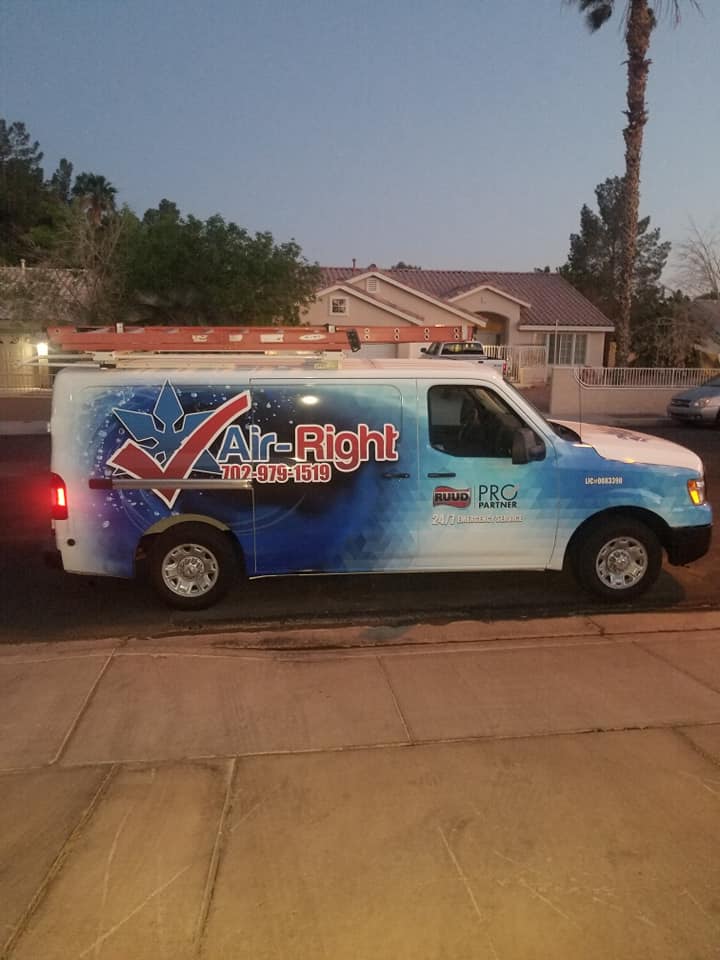
Should You Turn It Off? Securing 24 Hour Air Conditioning Service in Las Vegas, NV
Air-Right

Is Your AC Blowing Warm Air? The Immediate Triage Decision Are you dealing with an air conditioner that suddenly started blowing warm air in the middle of a July heatwave? In our years of keeping Las Vegas homes cool,…
Is Your AC Blowing Warm Air? The Immediate Triage Decision
Are you dealing with an air conditioner that suddenly started blowing warm air in the middle of a July heatwave? In our years of keeping Las Vegas homes cool, the team at Air-Right has found that navigating emergency home maintenance tips and troubleshooting often comes down to one critical decision: do you leave the struggling system running in hopes it starts cooling again, or do you shut it down completely to prevent further damage? For homeowners facing extreme summer temperatures, making the wrong choice can turn a simple fix into a total system failure.
During the Las Vegas summer peak, rapid indoor heat accumulation creates a false sense of urgency. When the thermostat reads 85 degrees and climbing, the natural instinct is to leave the air conditioner on, hoping it will eventually catch up. However, the mechanical reality is that an air conditioner blowing warm air is actively failing. Continuing to run a compromised system compounds the damage, forcing struggling components to work harder without delivering any cooling relief.
If you find yourself in this situation, securing professional air conditioning services is the only safe next step. Before our Air-Right technicians arrive, you must decide how to handle the equipment. Understanding the difference between leaving the unit on versus turning it off can save your entire system.
| Action Taken | Immediate Result | Long-Term Mechanical Impact |
|---|---|---|
| Leaving the AC On | System continues blowing unconditioned, warm air into the home. | Severe mechanical strain, potential electrical burnout, and high risk of permanent compressor death. |
| Turning the AC Off | System stops circulating air, requiring fans or closed blinds to manage heat. | Protects the compressor from overheating, thaws frozen coils, and preserves the equipment for repair. |
The short answer is always to turn the system off at the thermostat. Prioritizing immediate, albeit futile, comfort attempts over equipment protection always leads to more expensive consequences.
Why Running a Compromised AC Causes Catastrophic Damage
To understand why a struggling air conditioner must be shut down, we always tell our customers to look at how the system actually works. An air conditioner does not create cold air; it removes heat from the indoor air and pumps it outside. The heart of this entire process is the compressor, a heavy-duty motor located in the outdoor unit that pressurizes the refrigerant.
The Compressor's Reliance on Cool Refrigerant
The compressor works incredibly hard, especially during extreme desert heat. Because it is a powerful motor, it generates a massive amount of internal heat. Unlike a car engine that uses liquid coolant and a radiator to prevent overheating, an AC compressor relies entirely on the cold, returning refrigerant gas to cool its internal windings. When your system is blowing warm air, it usually means the heat transfer process has failed. Consequently, the refrigerant returning to the compressor is no longer cold.
The Path to Total Failure
When the compressor runs without that cooling return gas, it begins to overheat rapidly. Most modern compressors have an internal thermal overload switch designed to shut the motor down if it gets too hot. However, if the thermostat continues calling for cooling, the system will keep trying to turn the compressor back on as soon as the switch resets. This vicious cycle of overheating, shutting down, and hard-starting places immense electrical and mechanical strain on the unit.
What begins as a minor issue—such as a dirty filter causing a frozen coil, or a small refrigerant leak—quickly escalates. The continuous thermal stress breaks down the electrical insulation inside the motor windings. Eventually, the windings short out, or the mechanical components seize completely. This progression from a minor fault to a costly catastrophic compressor replacement can happen in a matter of hours if the system is left running. This is why securing a professional Las Vegas AC repair service is so urgent, and why shutting the unit down is the most protective action a homeowner can take.
Step-by-Step Triage: What to Do While Waiting for 24-Hour Service
When your system fails during the Las Vegas summer peak, the gap between the breakdown and the technician's arrival can feel agonizing. Taking the right steps immediately will protect your equipment and help you manage the indoor environment safely.
- Turn the thermostat to OFF: Do not just turn the temperature up; switch the system mode from "Cool" to "Off." This cuts the signal to the outdoor unit and immediately stops the compressor from overworking. Leave the fan setting on "Auto" rather than "On" to prevent circulating warm air.
- Check the circuit breaker: Sometimes, a power surge or a momentary overload can trip the dedicated breaker for the AC unit. Go to your main electrical panel and look for a breaker that has moved to the middle position. If it is tripped, you can try resetting it once. If it trips again immediately, leave it alone—this indicates a serious electrical short that requires a licensed professional.
- Inspect the air filter: A severely clogged air filter restricts airflow across the indoor evaporator coil. Without enough warm air blowing over it, the coil drops below freezing, turning the condensation into a solid block of ice. If your filter is caked in dust, remove it. If you suspect the coil is frozen, the system must remain off for several hours to thaw safely.
- Prepare the home environment: While waiting for dispatch, focus on minimizing heat gain. Close all blinds, shades, and curtains on sun-facing windows. Avoid using the oven, stove, or dryer, as these appliances generate significant indoor heat. Turn on ceiling fans to keep air moving, which helps evaporate sweat and makes the room feel slightly cooler.
Following these steps prevents further damage. Our Air-Right dispatchers frequently take calls from panicked homeowners experiencing complete AC power failure during weekends when temperatures hit 110 degrees. By advising them to immediately shut down the system and call for emergency dispatch rather than continually trying to force the unit to run, we help secure a major same-day repair that gets the system back online without destroying the compressor. For more strategies on handling extreme temperatures, review our survival guide for when your AC quits during a heatwave.

Common Culprits Behind Warm Air and Rapid System Failure
Understanding what causes an air conditioner to blow warm air helps underscore why professional intervention is necessary. These systems are highly complex, pressurized chemical loops connected to high-voltage electrical networks. When they fail, the root cause is rarely something that resolves itself.
- Refrigerant Leaks: Air conditioners do not consume refrigerant like a car consumes gas. The system is entirely sealed. If the refrigerant level is low, there is a physical leak in the copper lines or coils. Running a system with low refrigerant starves the compressor of its cooling gas, leading directly to a costly catastrophic compressor replacement.
- Frozen Evaporator Coils: When airflow is severely restricted, or refrigerant is low, the indoor coil drops below freezing. The moisture in the air freezes to the metal fins, eventually forming a thick block of ice. This ice acts as an insulator, preventing the system from absorbing heat. The air blowing out of the vents will feel warm because the air is bypassing the frozen coil entirely.
- Failed Capacitors: The capacitor is a small electrical component that stores energy to jump-start the compressor and outdoor fan motor. If the capacitor fails, the fan might run, but the compressor will not start. The system will blow unconditioned air into the house while the compressor hums and overheats outside.
- Electrical and Wiring Faults: Wires can chafe, burn out, or disconnect due to constant vibration. Electrical faults are frequently misdiagnosed by untrained eyes. In one recent instance, our Air-Right rapid-response team arrived within 90 minutes to provide a second opinion for a local homeowner who had been told their system had a bad motor. We correctly identified the problem as a simple wiring issue—saving the homeowner from an unnecessary and expensive motor replacement.
Because the symptoms of a bad capacitor, a wiring fault, and a dead compressor can look identical to a homeowner, guessing is dangerous. Professional AC inspection and testing is the only way to correctly identify the root cause using specialized diagnostic meters.
The Importance of True 24/7 Rapid Response in Desert Heat
Not all emergency services are created equal. When your air conditioner fails during the Las Vegas summer peak, the difference between a true 24/7 rapid dispatch and a standard answering service becomes glaringly obvious.
Answering Services vs. Active Dispatch
Many companies advertise emergency service, but after hours, your call goes to a third-party answering service that simply takes a message for the next business day. During extreme July heat in Clark County, where ambient temperatures frequently exceed 104 degrees, next-day service is a severe health and safety risk. The thermal mass of a home absorbs intense solar radiation all day. Without active cooling, that heat radiates inward, causing indoor temperatures to spike dangerously high within hours.
At Air-Right, true 24/7 rapid response means that our actual technicians are on call, in fully stocked trucks, ready to be dispatched to your home regardless of the hour. Prompt intervention stops progressive equipment damage in its tracks. If a failing capacitor is caught at 2:00 AM, our technicians can replace it immediately, restoring cooling before the compressor sustains thermal damage.
The Role of Preventive Care
While rapid response is the ultimate safety net, the best way to handle midnight emergencies is to prevent them entirely. Routine AC maintenance and tune-ups allow our technicians to test electrical tolerances, measure refrigerant pressures, and clean critical components before the peak summer heat arrives. However, when the unexpected does happen, having a contractor who guarantees true 24-hour availability ensures you are never left waiting in dangerous conditions.
Frequently Asked Questions About Emergency AC Failure in Las Vegas
Should I turn off my AC if it is blowing warm air?
Yes, we highly recommend you turn it off immediately at the thermostat. Running an air conditioner that is blowing warm air risks severe and permanent damage to the compressor. The warm air indicates that the heat transfer process has failed, meaning the system is overworking without providing any cooling benefit. Shutting it down protects the equipment while you wait for a professional diagnosis.
Is a broken AC an emergency in Las Vegas?
Yes, a broken AC is considered a true emergency due to the extreme triple-digit temperatures common in the region. Indoor heat accumulation poses rapid health risks, particularly for the elderly, young children, and pets, as a house can quickly reach dangerous temperatures. Because of these severe environmental factors, a complete cooling failure requires immediate 24-hour dispatch.
What to do if the AC goes out in 100-degree weather?
First, turn off the cooling function at the thermostat to prevent mechanical damage. Next, close all blinds, shades, and curtains to block out direct sunlight and minimize solar heat gain inside the house. Finally, call for emergency 24-hour service immediately, as waiting overnight in extreme heat is unsafe.
How long can a compressor run without cooling before it fails?
Failure can happen rapidly under peak load, sometimes in just a few hours. Continuous operation without the cooling effect of returning refrigerant overheats the system, breaking down internal electrical insulation. Prevention requires immediate shutdown to avoid a costly catastrophic compressor replacement.
Can a frozen evaporator coil cause warm air?
Yes, a frozen coil blocks the necessary airflow through the system. When ice encapsulates the metal fins, the indoor blower motor cannot push air through the cold coil, resulting in the system blowing unconditioned, ambient air out of the vents. The unit must be turned off completely to allow the ice to thaw safely before a technician arrives to diagnose the underlying cause.
Secure Fast, Reliable Emergency Cooling Solutions Today
When your air conditioner starts blowing warm air during the Las Vegas summer peak, the most effective action you can take is to turn the system off immediately. By cutting the power at the thermostat, you avoid making the mechanical problem worse and protect your equipment from permanent damage. Do not wait for the indoor temperature to become unbearable. Take control of your home's comfort and safety by reaching out to our Air-Right team for rapid, 24-hour emergency intervention and a precise professional diagnosis.
Need Help?
Contact us today to discuss your needs. Our team is ready to help.
Related Articles
- Is It a True Emergency? A Fall Triage Guide for 24-Hour Air Conditioning Service in Las Vegas, NV
- Emergency AC Repair Signs: Navigating Heating-Startup and Fall Maintenance
- Is That Burning Smell an Emergency? Triaging Fall Heating and 24-Hour Air Conditioning Service in Las Vegas, NV
Related articles


Ready to Get Started?
Whether you need a repair, maintenance, or a new installation, our expert team is here to help.