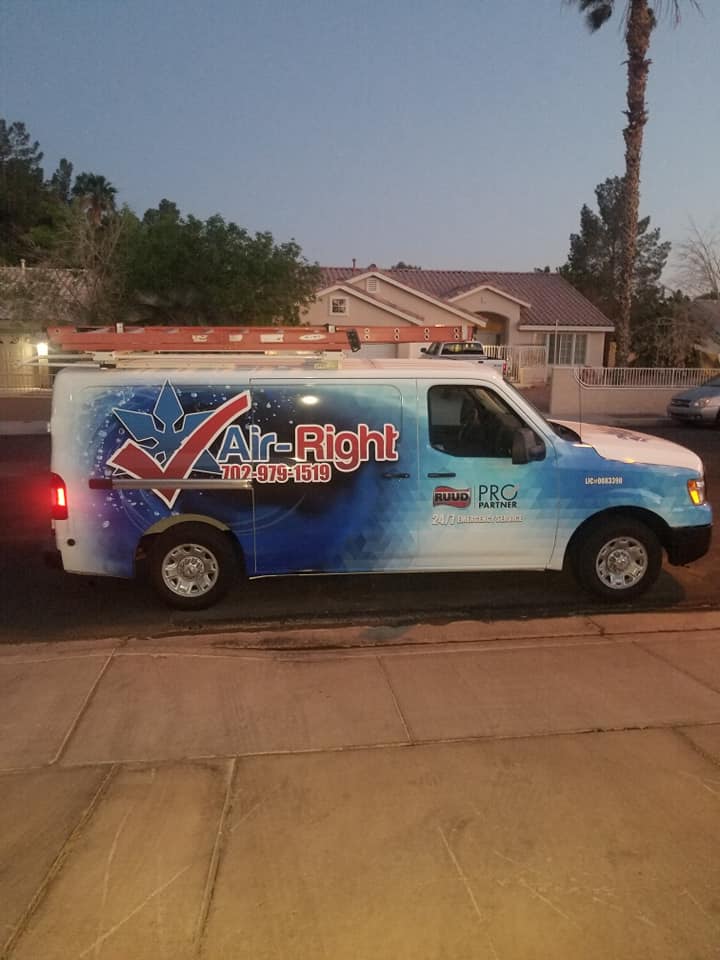
Repair or Replace? Options Comparisons for Homeowners Navigating 24 Hour Air Conditioning Service in Las Vegas, NV During Late Summer
Air-Right

Facing a Late-Summer AC Breakdown in the Desert? Your air conditioner is running nonstop, but the house still feels uncomfortably warm—a frustrating scenario where objective options comparisons for homeowners become…
Facing a Late-Summer AC Breakdown in the Desert?
Your air conditioner is running nonstop, but the house still feels uncomfortably warm—a frustrating scenario where objective options comparisons for homeowners become absolutely critical to restoring your family's comfort. Here at Air-Right, we know firsthand that dealing with a struggling or completely failing cooling system just as August ends and the back-to-school transition begins is one of the most stressful experiences you can face in the desert. You are immediately confronted with a difficult decision: do you pay for an immediate, potentially expensive fix, or is it time to invest in a brand-new system?
When you are battling extreme desert temperatures, you need objective information to make the right call. Evaluating the differences between standard air conditioners and modern heat pumps is the first step toward long-term relief. For immediate help, explore our Air Conditioning Services or schedule a Las Vegas AC Repair Service.
The late-summer reality: By the time August late-summer cooling wear sets in, your equipment has already endured months of relentless strain. Making a rushed choice now can lead to years of regret, which is why stepping back to compare your options with an experienced team is the smartest move you can make.
Understanding the Toll of Extreme Thermal Loads on Your AC
Most national averages suggest an HVAC system should last 15 to 20 years, but our team at Air-Right constantly reminds customers that those numbers rarely apply here. The extreme thermal loads of the Las Vegas Valley differ drastically from national averages, requiring a unique approach to HVAC longevity. When you understand what your system actually endures, the reasons behind an end-of-season breakdown become much clearer.
The 24/7 workload of July: During the peak of summer, your air conditioner rarely gets a break. In milder climates, temperatures drop significantly at night, allowing the compressor and condenser fan to power down and cool off. In our region, elevated nighttime temperatures prevent HVAC systems from resting and recovering. The ambient air remains hot, meaning the system must continue working hard just to maintain a baseline indoor temperature.
Why late summer is the danger zone:
- Component fatigue: After 60 to 90 days of near-continuous runtime, mechanical parts like motors, capacitors, and contactors are pushed to their absolute limits.
- Heat saturation: The equipment physically cannot shed heat fast enough, leading to internal overheating.
- Lubrication breakdown: Continuous operation degrades the oil inside the compressor, increasing friction and wear.
This relentless cycle makes late summer the peak time for catastrophic component failure. When a unit has been running essentially non-stop since May, the accumulated August late-summer cooling wear finally takes its toll, turning minor inefficiencies into complete system shutdowns.
Identifying a True Cooling Emergency
Not every strange noise or warm breeze means your system is dead, but knowing how to identify a genuine emergency is vital for your family's safety. There is a massive difference between a minor performance drop—like a clogged air filter restricting airflow—and a complete mechanical failure.
The danger of extreme heat: A complete AC power failure during 110-degree weather is a serious safety risk, especially over a long weekend. A home in the Las Vegas Valley can reach dangerous indoor temperatures in a matter of hours without active cooling. Because of this, rapid response teams prioritize service calls based on indoor temperature dangers, ensuring that vulnerable families receive help first.
We see this frequently at Air-Right. For instance, one homeowner reached out when their AC suffered a complete power failure over a weekend with temperatures soaring to 110 degrees. Because of the extreme heat, our team was dispatched for a major same-day repair, getting the system back online and functioning safely before the house became dangerously hot. This highlights why our rapid response 24-hour emergency availability is designed to protect families from dangerous indoor temperatures.
How to safely shut down a failing system:
- Turn off the thermostat: If the unit is blowing warm air or making grinding noises, switch the thermostat to the "off" position immediately.
- Check the breaker: Look for a tripped breaker, but do not repeatedly reset it if it continues to trip.
- Call for help: Forcing a failing system to run can cause further electrical damage or completely destroy the compressor. Leave it off until a professional arrives.
The End-of-Season Band-Aid vs. Long-Term Reliability
When your system breaks down in late August, you face the primary decision point: throwing money at a failing unit versus making a smart long-term investment. It is incredibly tempting to authorize a quick fix just to get through the next few weeks, but this often leads to a cycle known as "repair fatigue."
The trap of the band-aid fix: A pattern we see often at Air-Right is repair fatigue, which happens when you find yourself fixing an aging unit year after year. You might replace a fan motor this season, only to have the compressor fail next spring. An end-of-season fix might successfully get you through September, but it leaves you entirely vulnerable for the following summer. The August late-summer cooling wear has already compromised the other aging components inside the cabinet.
The role of maintenance: Your system's professional maintenance history plays a massive role in determining its remaining viable lifespan. A unit that has received regular AC Maintenance and Tune-Ups will naturally survive longer than one that has been neglected. If your system has a history of skipped tune-ups and escalating repairs, a band-aid fix is likely a waste of funds.
Instead of panicking, use an emergency service call as an opportunity for an objective system evaluation. A thorough inspection by our technicians will tell you exactly what condition the core components are in, allowing you to weigh the cost of the repair against the lasting reliability of a new installation.
Comparing Replacement Options: Standard ACs vs. Heat Pumps
If an evaluation reveals that your current unit is beyond saving, you need a clear, regionally specific comparison framework to choose your next system. Today's high-efficiency options are vastly superior to the equipment installed even ten years ago. For homeowners in the Las Vegas Valley, positioning heat pumps as a viable year-round solution for the specific climate profile of the region is changing how we think about home comfort.
| System Feature | Standard Air Conditioner | Modern Heat Pump |
|---|---|---|
| Primary Function | Cooling only (requires separate furnace) | All-in-one heating and cooling |
| Energy Efficiency | High SEER2 ratings available | High SEER2 (cooling) and HSPF2 (heating) |
| Climate Suitability | Excellent for extreme desert heat | Excellent for desert heat and mild winters |
| Incentive Potential | Standard utility rebates may apply | Often eligible for broader federal tax credits |
Standard Air Conditioners
Standard high-efficiency air conditioners are designed specifically to handle extreme thermal loads. They offer proven reliability for extreme desert temperatures, utilizing advanced scroll compressors and multi-stage cooling to manage indoor humidity and temperature precisely. Furthermore, they offer straightforward integration with existing gas furnaces, making them a simple swap if your heating system is still in great shape.
Modern Heat Pumps
Modern heat pumps work by moving heat rather than generating it. In the summer, they pull heat out of your home (just like an AC). In the winter, they reverse the process, pulling available heat from the outside air to warm your home. This all-in-one heating and cooling efficiency makes them incredibly popular. Additionally, generic federal tax credits and utility rebates may apply to qualifying high-efficiency installations, though we always advise readers to verify current programs with their tax professional or local utility provider.
When an AC Repair is No Longer Worth the Investment
Making the call to walk away from your current unit is never easy, but having concrete, objective criteria can take the emotion out of the decision. Based on our extensive experience at Air-Right, if you are experiencing heavy August late-summer cooling wear, use these specific factors to determine when an AC repair is no longer worth the investment.
- Evaluate the age of the equipment: The age of the HVAC unit is a primary factor. Because desert lifespans are notably shorter due to the extreme workload, a unit approaching 10 to 12 years old is often nearing the end of its reliable service life.
- Track your breakdown frequency: Look back at the past 24 months. If you are seeing an escalating repair frequency—calling for AC Repair Service in Henderson multiple times a year—the system is failing mechanically.
- Compare the repair cost to a new system: Consider the cost of the current required repair relative to the value of a new, warrantied system. If fixing the old unit costs a significant percentage of what a new installation would, the repair is a poor financial investment.
- Factor in your peace of mind: You cannot put a price on knowing your family is safe. We highly recommend prioritizing the peace of mind that comes with a reliable, newly installed system before the next major heatwave hits.

Why Accurate Diagnostics Matter in an Emergency
When your system fails in the middle of a heatwave, you need a technician who brings technical competence and honesty to the table. Emergency service shouldn't mean rushed or inaccurate diagnoses. Complex HVAC systems can often show symptoms that mimic catastrophic failure, leading inexperienced technicians to recommend a full replacement when a simple repair would suffice.
The danger of misdiagnosis: A faulty wiring issue can easily be misdiagnosed as a bad compressor motor. If a technician does not take the time to correctly identify the root cause, you could end up paying for major components you do not need. This is why accurate diagnostics during a late-summer breakdown are so crucial—they save money and prevent unnecessary replacements.
For example, one local homeowner needed an urgent service call within 90 minutes because they were previously told they had a bad motor. An Air-Right technician arrived quickly, took the time to properly test the electrical components, and correctly identified the problem as a simple faulty wiring issue. This accurate diagnosis saved the customer from paying for an entirely new motor. If you want to learn more about troubleshooting these sudden failures, check out our guide on How to Fix AC Not Cooling in Triple-Digit heat.
A true professional will always provide honest recommendations and photographic evidence of the issue. We remain committed to providing honest, pressure-free options comparisons even during a 24-hour emergency call in the Las Vegas Valley.
Make the Right Choice for Your Home's Comfort Today
Surviving the brutal end of summer means making smart, objective choices about your HVAC system's future. Whether you are dealing with severe August late-summer cooling wear or a sudden midnight breakdown, having a clear, regionally specific comparison framework makes the decision infinitely easier. You do not have to guess whether a repair or a replacement is the right move.
When you need reliable options comparisons for homeowners, lean on the professionals at Air-Right who understand the unique demands of the desert climate. Do not let repair fatigue drain your wallet or leave your family sweating through the end of the season. Promptly secure professional, 24-hour assistance for your immediate cooling needs and take the first step toward long-term, worry-free comfort.
Frequently Asked Questions
How do I choose between repairing or replacing my AC?
Choosing between repair and replacement comes down to the age of the unit, the cost of the repair, and the system's recent breakdown history. If your unit is over 10 years old in a desert climate and the repair is costly, replacement is usually the smarter financial move. An Air-Right professional technician can provide an objective evaluation to help you weigh the long-term costs of both options.
Are heat pumps a good option for Las Vegas homeowners?
Yes, modern heat pumps are an excellent, highly efficient option for the desert climate. They provide powerful cooling during the extreme summer months and reverse their operation to offer energy-efficient heating during our mild winters. Because they handle both heating and cooling in one unit, they are a very popular upgrade for local homeowners.
When is an AC repair no longer worth it?
An AC repair is no longer worth it when the system suffers from frequent, escalating breakdowns or when a single repair bill approaches half the cost of a new system. Additionally, if the unit uses outdated refrigerant or has suffered a catastrophic compressor failure late in its lifespan, investing in a new, warrantied system provides much better long-term value.
What is the true life expectancy of an AC unit in the desert?
In extreme desert climates like ours, the true life expectancy of an air conditioner is typically between 10 and 12 years. The near-constant runtime required to combat triple-digit summer temperatures accelerates mechanical wear far beyond national averages. Regular professional maintenance can help a system reach the higher end of that lifespan.
Does 24-hour emergency AC repair cost more than regular service?
Emergency after-hours dispatch often carries a different service fee than standard daytime appointments due to the rapid response required. However, a reputable company will always be fully transparent about their dispatch fees before they arrive at your home. Once the technician diagnoses the problem, they will provide clear, upfront repair options before any work begins.
Can a late-summer complete breakdown be prevented?
While no system is immune to mechanical failure, the vast majority of late-summer breakdowns can be prevented through proactive spring maintenance. A professional tune-up addresses minor wear and tear before the extreme heat sets in, ensuring the system is prepared for the grueling workload of July and August.
Need Help?
Contact us today to discuss your needs. Our team is ready to help.
Related Articles
- Is It a True Emergency? A Fall Triage Guide for 24-Hour Air Conditioning Service in Las Vegas, NV
- Emergency AC Repair Signs: Navigating Heating-Startup and Fall Maintenance
- Is That Burning Smell an Emergency? Triaging Fall Heating and 24-Hour Air Conditioning Service in Las Vegas, NV
Related articles


Ready to Get Started?
Whether you need a repair, maintenance, or a new installation, our expert team is here to help.