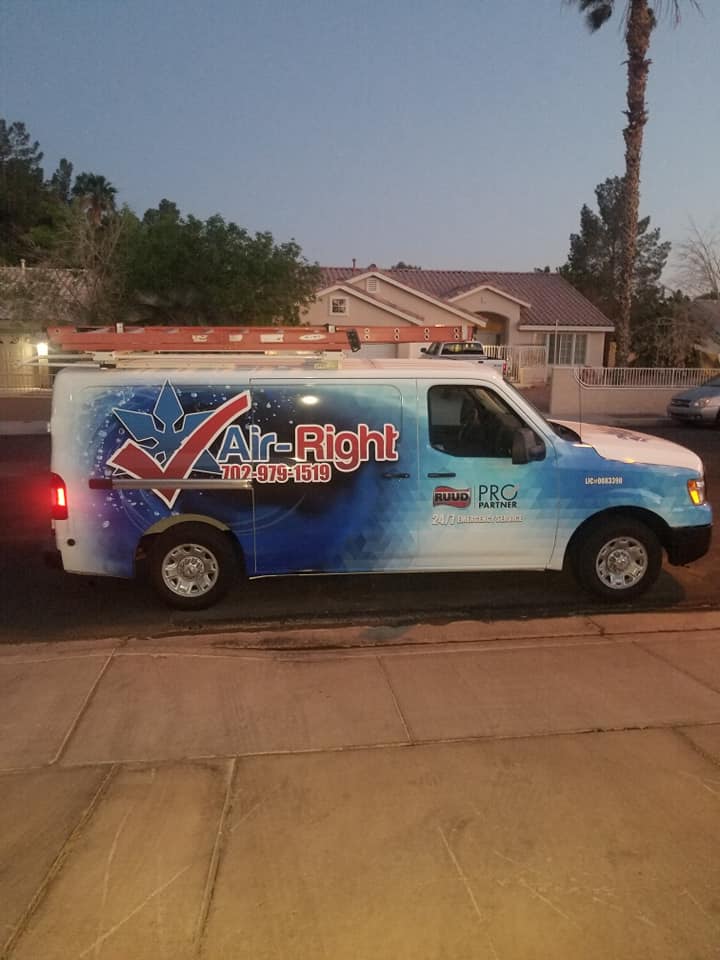
Is It a True Emergency? A Homeowner's Guide to 24-Hour Air Conditioning Service in Las Vegas, NV
Air-Right

Are You Facing a True Late-Season Cooling Crisis? Is your air conditioning unit suddenly struggling to keep up, just as the evening temperatures finally start to drop? When evaluating your system's health, relying on…
Are You Facing a True Late-Season Cooling Crisis?
Is your air conditioning unit suddenly struggling to keep up, just as the evening temperatures finally start to drop? When evaluating your system's health, relying on local service expertise and area tips is the best way to determine if you are facing a minor hiccup or a major component failure. After years of serving the community, our team at Air-Right knows firsthand that Las Vegas HVAC systems have run non-stop through brutal 110°F+ summer days, making them incredibly vulnerable to delayed breakdowns right now. The September transition from extreme summer to cooler fall nights exposes the immense wear and tear your equipment has endured over the past several months.
The decision point for many homeowners right now is whether to simply flip the thermostat from "cool" to "heat" as the weather shifts, or to have a professional assess summer-induced component strain first. In our experience, making the wrong choice can turn a minor maintenance need into a catastrophic system failure.
To ensure your equipment is ready for the changing season, explore our comprehensive air conditioning services or schedule an expert Las Vegas AC repair service today.
The Hidden Toll of Extreme Desert Heat on Your System
Most homeowners assume that if their air conditioner survived August, it is safe for the rest of the year. We see this misconception often, but the reality of the Las Vegas Valley climate is much more complicated. Continuous operation in extreme heat fundamentally weakens electrical and mechanical parts, making them highly susceptible to failure right when the weather begins to shift.
This phenomenon is known as thermal load fatigue. When your system operates in triple-digit temperatures for weeks on end, the internal components never get a chance to cool down completely. Metal expands and contracts, wire insulation degrades, and lubricants inside moving parts slowly break down. During a weekend of 110°F extreme heat this past summer, our Air-Right dispatchers fielded a call from a Las Vegas Valley homeowner who experienced a complete AC power failure. We quickly dispatched a technician for a major same-day repair, resolving the power issue and getting the system back online safely. That level of operational stress does not simply vanish when the calendar turns to September.
For more context on handling these extreme situations, read about how to fix AC not cooling in triple-digit heat.
Why Breakdowns Peak During the Seasonal Shift
Understanding why parts fail during the transition requires looking at how your system cycles. Here is a breakdown of the delayed degradation process our technicians see every fall:
- Continuous Operational Stress: Throughout July and August, the system runs almost constantly. This steady state actually prevents some types of mechanical shock, but it bakes the electrical components.
- Fluctuating Temperature Demands: As the September transition from extreme summer to cooler fall nights begins, the system is forced to cycle on and off more frequently. The daytime requires heavy cooling, while the night requires the system to shut down completely.
- Thermal Expansion and Contraction: The constant heating up during the day and cooling down at night causes weakened metal parts and electrical connections to expand and contract repeatedly.
- Delayed Component Failure: Weakened parts finally give out under this changing operational stress. A capacitor that was barely hanging on during steady summer operation will often snap during the frequent cycling of early fall.
Triage Checklist: Is It a 24-Hour Emergency or Can It Wait?
When your system starts making strange noises or fails to cool on a warm September afternoon, panic often sets in. However, not every late-season issue requires an immediate, middle-of-the-night dispatch. Knowing how to triage the problem can save you unnecessary stress.
Air-Right offers true 24/7 emergency availability with technicians ready to restore cooling during dangerous heatwaves, even late in the season. We believe in helping homeowners avoid panic by educating them on what constitutes a genuine safety or property-damage emergency.
If you are unsure whether your situation warrants an immediate response, reaching out for AC repair in Summerlin can provide clarity. Use the following triage guidelines our team recommends to evaluate your system's current condition.
| Symptom / Situation | Classification | Recommended Action |
|---|---|---|
| Electrical burning smells or visible sparking near the unit | True Emergency | Shut off power at the breaker immediately and call for 24-hour service. |
| Complete system failure during a 90°F+ September day | True Emergency | Call for priority dispatch to prevent dangerous indoor temperatures. |
| Rapid water pooling around the indoor air handler | True Emergency | Turn off the system to prevent severe drywall and flooring damage. |
| Slightly reduced airflow from the vents | Can Wait Until Morning | Leave the system running if comfortable, and schedule standard service. |
| Minor rattling or humming noises upon startup | Can Wait Until Morning | Monitor the noise and book a next-day diagnostic appointment. |
| System failure during a cool 65°F evening | Can Wait Until Morning | Open windows for ventilation and call first thing the next day. |
How to Safely Shut Down a Struggling System:
- Turn off the thermostat: Switch the system from "Cool" or "Auto" to the "Off" position. This stops the low-voltage signal from calling for air.
- Locate the breaker: If you smell burning plastic or electrical ozone, do not rely on the thermostat alone. Find your main electrical panel and flip the dedicated HVAC breaker to the "Off" position.
- Avoid the outdoor disconnect box: While your outdoor unit has a weatherproof disconnect box mounted nearby, pulling this block to sever high-voltage power can be hazardous. We recommend homeowners stick to flipping the indoor breaker and letting a professional handle the outdoor disconnect.
- Do not attempt repairs: Never open the service panels to inspect high-voltage components yourself. Secure the power at the breaker and wait for a licensed professional from our team.

Recognizing Late-Season Component Fatigue
The Las Vegas Valley climate is notoriously harsh on specific HVAC components. When a system breaks down in September, the culprit is rarely a mystery to our seasoned technicians. The damage was done in July and August, but the symptoms are just now appearing.
Two parts bear the brunt of continuous air circulation and thermal load: the capacitor and the blower motor. Attempting a DIY inspection of these high-voltage components is incredibly dangerous, as capacitors store lethal amounts of energy even when the power is disconnected. Always rely on a trained technician to test and replace these items.
The Vulnerability of Capacitors and Motors
The Run Capacitor: Think of the capacitor as a high-powered battery jump-start for your compressor and outdoor fan motor. Every time your system cycles on, the capacitor delivers a massive jolt of electricity to get the heavy motors spinning. Heat is a capacitor's biggest enemy. Months of operating in direct desert sunlight breaks down the internal insulation and dielectric fluids. The component slowly loses its ability to hold a charge, begins to bulge at the top, or leaks fluid. When it finally fails, your outdoor unit will hum, but the fan and compressor will not start.
The Indoor Blower Motor: This motor is responsible for pushing the conditioned air through your ductwork and into your living spaces. It bears the brunt of continuous operation. If you have neglected filter changes over the summer, the blower motor has been working twice as hard to pull air through a restricted barrier. Over time, this causes the motor windings to overheat and the bearings to wear out. One local homeowner faced an urgent motor failure at the height of summer. The system was completely unresponsive, but after reaching out to Air-Right, the repair was scheduled and completed the very next day, replacing the burned-out motor before the home reached dangerous temperatures. A motor that barely survived the summer will often seize up completely when asked to perform during the variable temperatures of early fall.
The Danger of Simply Flipping the Thermostat to Heat
As the September transition from extreme summer to cooler fall nights progresses, many homeowners make a critical mistake: they simply flip the thermostat from "cool" to "heat" the moment they feel a chill in the air. Doing this without checking the system's overall health can trigger immediate and costly failures.
The Problem: When you switch modes, you are often relying on the exact same internal components that just spent four months running at maximum capacity. In a split system, the indoor blower motor that pushed cold air all summer is the same motor that must now push heated air. In a heat pump system, the reversing valve must physically shift to change the flow of refrigerant—a mechanical action that can easily get stuck if the system is suffering from severe wear and tear.
The Cause: Summer strain on shared components leaves them operating on borrowed time. If a blower motor is overheating due to worn bearings, introducing the intense heat of a furnace burner or heat pump coil into the air handler can push the motor past its breaking point. Furthermore, dust and debris that have settled on heating components during the summer can create burning smells or even pose a fire hazard when ignited for the first time.
The Solution: A professional assessment of summer wear-and-tear is critical before engaging your heating system. An expert diagnosis catches misdiagnosed issues and ensures safe operation. Accurate diagnosis is critical here. One homeowner recently called our team for a second opinion after another contractor incorrectly diagnosed a faulty wiring issue as a dead blower motor. Our responding technician arrived quickly, identified the actual wiring problem instead of replacing the expensive motor, and saved the customer from an unnecessary repair expense. If you want to ensure a safe transition between seasons, scheduling Henderson AC repair and maintenance is the most proactive step you can take.
Frequently Asked Questions About Emergency AC Repair in Las Vegas
What is considered an AC emergency in Las Vegas?
A true AC emergency in the desert climate involves situations that threaten your safety or your property. Complete system failure during high daytime temperatures is an emergency, as indoor heat can quickly reach dangerous levels for pets, the elderly, and young children. Additionally, electrical burning smells, sparking from the unit, or rapid water leaks that threaten to collapse drywall are all urgent situations that require our immediate 24-hour dispatch.
Can I wait until morning for AC repair?
Yes, you can often wait until morning if nighttime temperatures have dropped to a safe, comfortable level and there are no underlying electrical hazards. If your system is simply blowing warm air or making a minor rattling noise during a cool 60°F night, turning it off and opening windows is a safe temporary solution. However, you should not wait if the indoor temperature is rising dangerously or if vulnerable individuals are in the home.
Why did my AC stop working suddenly in September?
Sudden September breakdowns are almost always the result of cumulative wear and tear from running continuously all summer long. The extreme thermal load of the Las Vegas Valley degrades internal parts over time. What you are experiencing is the delayed failure of stressed components, like capacitors or blower motors, that finally gave out when the system began cycling differently during the seasonal transition.
Should I turn off my HVAC system if it makes noises during the fall transition?
Yes, unusual grinding, squealing, or heavy banging noises absolutely warrant shutting the system down at the thermostat immediately. In our experience, these sounds indicate severe mechanical distress, such as a failing motor bearing or a loose fan blade striking the housing. Running a noisy system and hoping the sound goes away can turn a minor, easily fixable repair into a catastrophic, full-system failure.
How does extreme summer heat cause delayed capacitor failures?
Heat breaks down the internal insulation and dielectric fluids inside the capacitor over time. Because the capacitor acts as a battery to jump-start the compressor, this degradation means the component slowly loses its ability to hold a sufficient charge. Eventually, usually during the frequent on-and-off cycling of early fall, it fails completely and can no longer provide the voltage needed to start the outdoor unit.
Schedule Your Post-Summer Assessment Today
Navigating the transition from brutal summer heat to cooler fall evenings requires proactive care for your HVAC system. Assessing the hidden wear-and-tear caused by months of continuous thermal strain is the only way to prevent sudden, late-season breakdowns. Whether you need a routine check before flipping your thermostat to heat, or you are facing a sudden failure that requires immediate triage, expert help is always available.
Do not wait for a weakened component to fail when you need it most. Reassure yourself that your home is safe and comfortable by scheduling a thorough inspection, or contact our team at Air-Right immediately for 24-hour emergency assistance. A clear, non-technical explanation of your system's health will ensure you are fully prepared for the season ahead.
Need Help?
Contact us today to discuss your needs. Our team is ready to help.
Related Articles
- Fall HVAC Checklist: Triage Guide for 24-Hour Air Conditioning Service in Las Vegas, NV
- Is Your Fall Heater Startup a True Emergency? A Guide to 24 Hour Air Conditioning Service in Las Vegas, NV
- Fall HVAC Triage: When to Call for 24-Hour Air Conditioning Service in Las Vegas, NV
Related articles


Ready to Get Started?
Whether you need a repair, maintenance, or a new installation, our expert team is here to help.