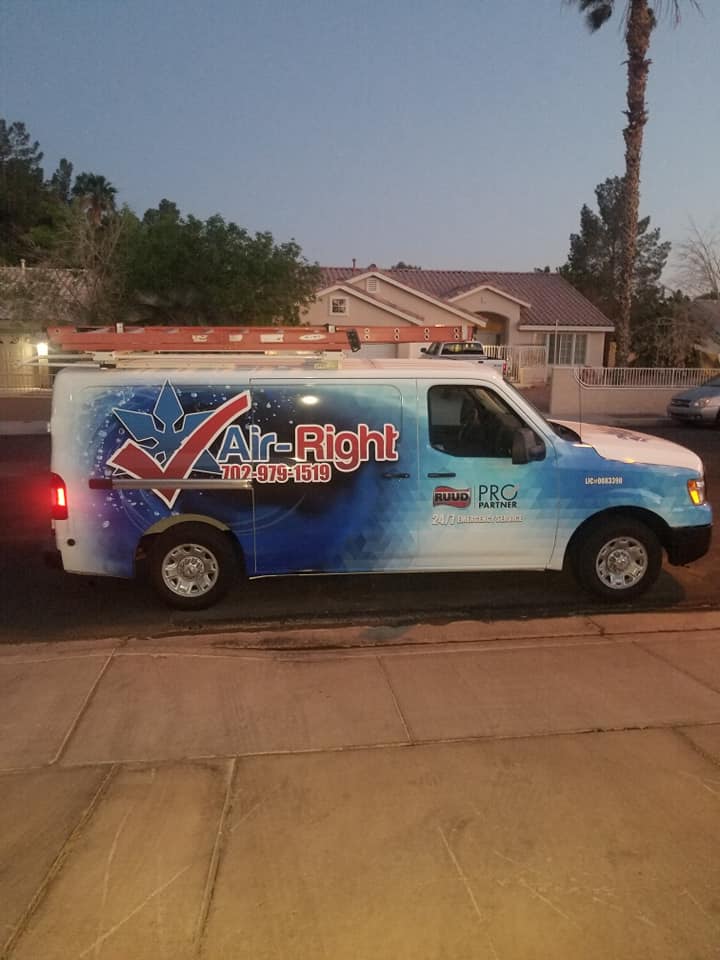
Is It an Emergency? Guide to 24 Hour Air Conditioning Service in Las Vegas, NV
Air-Right

Facing a Sudden Cooling Crisis in the Desert Heat? Is your air conditioning system barely pushing out cool air right when the afternoon temperature peaks? Staying on top of a seasonal home maintenance checklist is…
Facing a Sudden Cooling Crisis in the Desert Heat?
Is your air conditioning system barely pushing out cool air right when the afternoon temperature peaks? Staying on top of a seasonal home maintenance checklist is usually the most effective way to prevent unexpected cooling trouble. However, as our team at Air-Right sees every July, when a 110°F+ Peak Las Vegas Summer hits, a struggling AC unit quickly escalates from a minor household annoyance to a serious safety hazard. Homeowners are often left unsure whether a strange grinding noise or a lukewarm breeze warrants an immediate after-hours call, or if the issue can safely wait until morning. Understanding exactly how your cooling system reacts to extreme desert heat helps you make the right call for your home, your family's safety, and your budget.
If you need immediate help, explore our air conditioning solutions or request professional AC repair service right away to restore your home's comfort.
The Reality of 110°F+ Peak Las Vegas Summer Breakdowns
The thermal stress of continuous operation: Standard air conditioning units are designed to handle warm weather, but the continuous operation required during triple-digit temperatures puts unprecedented thermal stress on mechanical parts. When the outside air refuses to cool down even after the sun sets, your compressor and condenser fan rarely get a chance to cycle off and rest. This constant mechanical friction and electrical load create massive internal heat, accelerating wear and tear on components that might easily survive a milder climate for several more years.
Rapid indoor temperature spikes: A breakdown here is fundamentally different than in milder regions. Because homes in the desert absorb radiant heat all day, indoor temperatures can reach dangerous levels within hours of a total system failure. The July peak heat turns a standard mechanical failure into an immediate health and safety concern, particularly if your home has large west-facing windows or minimal shade.
Protecting vulnerable family members: A fast, professional response is critical when vulnerable individuals, young children, or pets are in the home during an evening power failure. Just last summer, one local homeowner called Air-Right after experiencing a complete AC power failure over a weekend when temperatures spiked to 110 degrees. Because the situation escalated quickly in the intense heat, our dispatch team sent a technician for a major same-day repair, resolving the power issue and getting the system back online before the house became dangerously hot. A reliable, round-the-clock emergency response tailored specifically to the urgent needs of desert dwellers is the only way to prevent a stressful situation from turning into a medical emergency.
Signs You Need Immediate 24-Hour Air Conditioning Service
Not every cooling hiccup requires a midnight dispatch, but certain symptoms indicate that your system is in critical distress. Understanding what qualifies as a true AC emergency helps you protect your equipment from irreversible damage while keeping your family safe in the Las Vegas Valley.
- Complete system failure: The unit refuses to turn on entirely, despite multiple thermostat adjustments and verifying that the circuit breaker has not tripped. If the system is completely dead, it cannot fight the rising indoor temperatures.
- Electrical odors or burning smells: A distinct smell of melting plastic, burning rubber, or ozone coming from your vents or the outdoor unit indicates an active electrical short or a seizing motor. This is an immediate fire hazard.
- Loud, aggressive noises: Heavy grinding, metal-on-metal screeching, or violent banging noises coming from the condenser or air handler usually mean a fan blade is striking the housing or a compressor is tearing itself apart internally.
- Blowing completely warm air: If the system is running constantly but blowing hot air while the outdoor temperature is rapidly climbing, the compressor may have failed or the system may have suffered a massive refrigerant blowout.
We recently helped another Las Vegas Valley customer who faced a sudden motor failure at the height of summer. Because the system was completely unresponsive and producing alarming sounds, our Air-Right team scheduled the repair for first thing the very next day, ensuring the motor was handled professionally and the home was cooled before the afternoon heat peaked again.
When to Shut the System Down Immediately
If you suspect an electrical issue—such as a burning smell, flickering lights when the AC kicks on, or active sparking—turn off the system at the breaker immediately to prevent further damage or fire risks. Never attempt to restart a system that is actively smoking or making aggressive grinding noises. Forcing a failing system to run will only turn a localized part replacement into a full system failure.

Cooling Issues That Can Safely Wait for Standard Business Hours
Emergency dispatch fees can add up, so it pays to know which symptoms are safe to ride out overnight. If your home is maintaining a safe, livable temperature, you can often save money by scheduling a standard service call for the following morning. During a 110°F+ Peak Las Vegas Summer, here are the issues that generally do not require a midnight panic:
- Minor drops in airflow: If the air coming from your vents is still cool, but the pressure feels slightly weaker than normal, your system is likely dealing with a dirty filter or a slowly freezing evaporator coil. As long as the indoor temperature remains safe, if slightly uncomfortable, this can wait until morning.
- Routine condensation drips: Seeing a small amount of water dripping from the primary condensate line outside is normal. Even if the drain pan has a minor clog causing a slow drip in the garage or utility closet, it is not an emergency unless it is actively flooding the floor, threatening drywall, or causing immediate water damage to the property.
- Slight thermostat miscalibrations: If your thermostat reads 74 degrees but the house feels closer to 76, the system is still functioning and removing heat. Minor calibration issues, blank thermostat screens that just need new AA batteries, or the need for seasonal filter replacements are routine tasks for standard business hours.
- Brief cycling delays: Many modern thermostats have a built-in 5-minute delay to protect the compressor from short-cycling. If you adjust the temperature and the system does not kick on immediately, wait ten minutes. If it starts up normally, there is no emergency.
By accurately assessing the severity of the problem, you avoid unnecessary stress and ensure that you only pay premium rates when your health, safety, or property are genuinely at risk.
How Desert Dust and Heat Stress Critical AC Components
The vulnerability of electrical capacitors: The specific local environment of the Las Vegas Valley accelerates wear and tear on mechanical systems in ways that milder climates never experience. Capacitors, which act like large batteries that deliver the massive jolt of electricity needed to start your compressor and fan motors, are highly vulnerable to thermal stress. They frequently fail under the continuous load of extreme heat. When a capacitor bulges or leaks due to heat exhaustion, the motor it serves will stall out, leading to a sudden and complete loss of cooling.
The impact of fine desert particulate matter: Beyond just the temperature, the arid, dusty conditions take a heavy toll on outdoor AC fins compared to the national average. Fine desert sand and dust rapidly clog condenser coils, acting like a thick wool blanket over the very components designed to release heat from your home. This severely restricts airflow across the aluminum fins.
The cascading effect on efficiency: Dirty coils force the compressor to work much harder to achieve the same cooling result, reducing overall system efficiency by up to 30%. This forces the unit to run longer cycles, drawing more electricity and generating more internal heat until it triggers unexpected shutdowns. Combating this specific regional wear requires expert Las Vegas AC repair and a proactive approach to keeping those coils clean.
Why Accurate Diagnostics Matter Under Pressure
The danger of rushed assessments: When your house is heating up rapidly and you are desperate for relief, it is easy to accept the first explanation you are given. However, rushed assessments by inexperienced technicians operating under pressure can easily mistake simple wiring faults for catastrophic motor failures. In our experience, a misdiagnosis not only leads to expensive, unnecessary part replacements, but it also leaves the root cause of the problem unresolved.
The necessity of proper diagnostic tools: Proper diagnostic tools are required to test electrical loads safely and accurately. Our Air-Right technicians always use a multimeter to check the exact microfarad reading of a capacitor, measure the amp draw of a compressor, and test the continuity of the wiring harness before ever condemning a major component. During a severe 110°F+ Peak Las Vegas Summer heatwave, one homeowner called us initially concerned about a catastrophic motor failure based on the sudden loss of power. An Air-Right technician arrived quickly, tested the system thoroughly, and properly identified the problem as a simple wiring fault rather than a bad motor. This accurate diagnosis saved the customer significant money and resolved the cooling issue immediately.
Choosing a trusted local professional: Relying on a trusted professional ensures you only pay for the repairs you actually need. Accurate diagnostics provide peace of mind, proving that the technician is interested in fixing the actual problem rather than just selling you the most expensive replacement part available.
Preventative Steps to Avoid the Midnight AC Panic
The best way to handle an emergency is to prevent it from happening in the first place. Bridging the gap between emergency repairs and daily operation comes down to investing in preventative maintenance. Taking specific actions tailored to the Las Vegas Valley environment will dramatically reduce your risk of a sudden failure.
| The Problem (Symptom) | The Cause (Desert Factor) | The Solution (Action to Take) |
|---|---|---|
| Restricted indoor airflow and frozen evaporator coils | High volume of airborne desert dust quickly clogging standard fiberglass filters | Replacing air filters every 30 days, which is more frequently than the manufacturer recommends, to combat local dust. |
| Overheating outdoor compressor and reduced system efficiency | Wind-blown debris, tumbleweeds, and sand accumulating against the condenser fins | Keeping a two-foot perimeter around the outdoor condenser unit completely clear of debris and vegetation. |
| Sudden electrical failures on the hottest day of the year | Capacitors and contactors degrading invisibly under the constant thermal load of summer | Scheduling comprehensive professional tune-ups before the peak summer heat arrives to test electrical tolerances. |
By scheduling routine AC maintenance in the spring, an Air-Right technician can identify failing capacitors, clean out the fine desert sand from the condenser, and tighten loose electrical connections before they cause a shutdown. Preventative care is the ultimate insurance policy against the midnight AC panic.
Get Fast, Reliable Answers for Your Cooling Needs
Whether you are currently facing a complete system breakdown in the middle of a 110°F+ Peak Las Vegas Summer, or you just want to ensure your equipment is fully prepared for the season ahead, expert help is available. Don't let a struggling system turn into a full-scale emergency that puts your family's comfort and safety at risk. Reach out today to discuss your symptoms, get the right diagnostic support, and receive a straightforward explanation of what fails and a clear checklist of what to do before June.
Frequently Asked Questions
Why is my AC struggling in 110 degree heat?
In our experience serving Las Vegas, air conditioners are designed for a specific temperature differential, and 110-degree heat pushes them to their absolute mechanical limits. When the outdoor air is that hot, the condenser struggles to release the heat it absorbed from inside your home. This forces the compressor to run continuously, which can lead to overheating, tripped breakers, or frozen coils if the system is not perfectly maintained.
How do you maintain an AC unit in the desert?
Maintaining a cooling system in an arid climate requires fighting both extreme heat and fine particulate dust. You must change your indoor air filters every 30 days during peak season, gently wash down the outdoor condenser fins to remove accumulated sand, and ensure the condensate drain line remains clear. Most importantly, professional electrical testing of capacitors is required annually, as they degrade rapidly in desert conditions.
What happens if you skip summer AC maintenance?
Skipping summer maintenance almost guarantees a drop in cooling efficiency and significantly increases your risk of a sudden breakdown. Without a tune-up, dirty coils will force your compressor to work up to 30% harder, driving up your energy bills. Furthermore, minor issues like a weakening capacitor or a loose wire will go unnoticed until they completely fail under the stress of July heat.
Does a burning smell from the AC warrant a 24-hour emergency call?
Yes, a burning smell is one of the few symptoms that always warrants an immediate response. Smells of melting plastic, ozone, or burning rubber indicate an active electrical short, a seizing blower motor, or failing wiring components. You should turn the system off at the breaker immediately and call for emergency dispatch to prevent a potential electrical fire.
How quickly can a technician respond to a Las Vegas Valley cooling failure?
At Air-Right, our response times vary based on the severity of the current heatwave, but we prioritize true emergencies involving complete power failures for rapid dispatch. When temperatures spike and vulnerable individuals are in the home, emergency technicians work around the clock to provide same-day or next-day resolutions. Calling as soon as you notice a severe symptom ensures you get on the schedule before the extreme heat peaks.
Need Help?
Contact us today to discuss your needs. Our team is ready to help.
Related Articles
- Is It a True Emergency? A Fall Triage Guide for 24-Hour Air Conditioning Service in Las Vegas, NV
- Emergency AC Repair Signs: Navigating Heating-Startup and Fall Maintenance
- Is That Burning Smell an Emergency? Triaging Fall Heating and 24-Hour Air Conditioning Service in Las Vegas, NV
Related articles


Ready to Get Started?
Whether you need a repair, maintenance, or a new installation, our expert team is here to help.