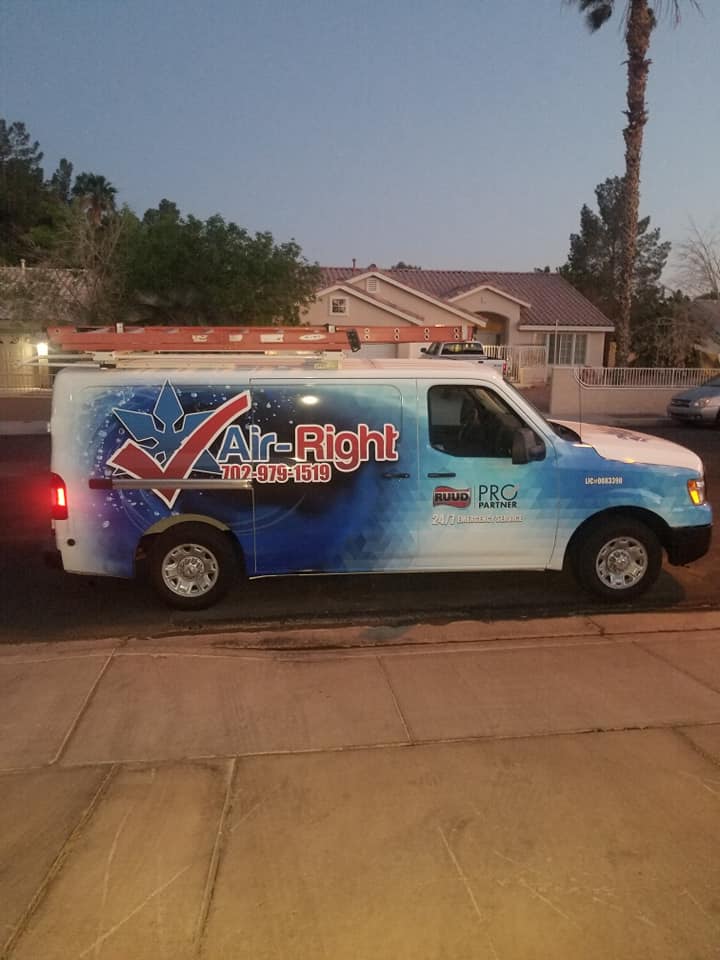
Is It an Emergency? The 20-Degree Rule and 24 Hour Air Conditioning Service in Las Vegas, NV
Air-Right

Facing a Hot House During a Heatwave: Is Your AC Broken or Just Maxed Out? It is four o'clock on a scorching July afternoon in Las Vegas, and despite your best efforts at home maintenance tips and troubleshooting, your…
Facing a Hot House During a Heatwave: Is Your AC Broken or Just Maxed Out?
It is four o'clock on a scorching July afternoon in Las Vegas, and despite your best efforts at home maintenance tips and troubleshooting, your thermostat reads 82 degrees while the air conditioning unit runs continuously. At Air-Right, our dispatch team hears the immediate panic in our customers' voices as they watch the indoor temperature slowly climb against the backdrop of 110+ degree outside temperatures in the Mojave Desert. You are faced with a critical decision: is your HVAC system experiencing a genuine mechanical failure, or is it simply operating at its absolute design limit? When temperatures cross into the triple digits, a cooling issue can quickly escalate from a mild inconvenience to a severe safety hazard.
Many homeowners assume that if the vents are blowing air but the living room is not reaching a comfortable 72 degrees, the compressor is doomed. However, our technicians know that the reality of extreme desert cooling is far more nuanced. Understanding the physical limits of your equipment is vital before you panic or unnecessarily pay for an emergency dispatch. By learning how thermal loads impact your system, you can make an informed decision about when to wait it out and when to call in the professionals at Air-Right.
For immediate professional assistance, explore our air conditioning services or request 24 hour AC repair service in Las Vegas.
The Science of Desert Cooling: Understanding the ASHRAE 20-Degree Rule
To understand why your house feels warm during a heatwave, we have to look at the physics of residential cooling. In our years of installing and servicing systems across the Las Vegas Valley, we rely on strict guidelines set by the American Society of Heating, Refrigerating and Air-Conditioning Engineers (ASHRAE). The golden rule our Air-Right technicians explain to customers daily is the 20-degree temperature differential, commonly known in the industry as the 20-degree rule.
This standard dictates that a properly functioning, correctly sized air conditioner is designed to cool the indoor air by a maximum of 20 degrees Fahrenheit below the outdoor ambient temperature. The compressor and the refrigerant cycle can only move a specific volume of heat out of your home per hour. The compressor pressurizes the refrigerant, which absorbs heat from your indoor air and releases it outside through the condenser coil. When the outdoor air is already superheated, the system struggles to dump that absorbed heat effectively. The laws of thermodynamics dictate a hard ceiling on how much heat transfer can occur.
When we face 110+ degree outside temperatures, expecting your living room to sit at a crisp 72 degrees mathematically exceeds the physical capabilities of standard residential equipment. The system will continue to run, the blower motor will continue to push air, and the compressor will work overtime, but the massive thermal load pressing down on your roof and walls simply outpaces the machine's capacity to remove heat.

When an 80-Degree Living Room Means Your System is Working Perfectly
Let's break down the math during July peak summer conditions. If the thermometer reads 110 degrees outside, an indoor temperature of 90 degrees actually means your air conditioner is achieving its maximum 20-degree drop. When our team arrives at a well-insulated Las Vegas home holding steady at 80 or 82 degrees during the hottest part of the afternoon, we often have the pleasure of telling the homeowner their system is not just functioning properly—it is significantly overperforming.
Our customers often worry because the unit runs constantly during these peak hours without the temperature dropping further. Because the system is fighting a massive, continuous thermal load from the sun radiating through the roof and walls, constant operation is required just to maintain that temperature. As fast as the AC removes heat, the desert environment adds it back. Continuous operation under these specific conditions is not inherently a sign of malfunction; it is the system doing exactly what it was built to do.
This is why NV Energy officially recommends setting thermostats to 78 degrees or higher during peak summer hours in the valley. Managing grid demand is critical, but this recommendation also prevents individual system overload. Attempting to force the thermostat down to 70 degrees during a heatwave will not make the air coming out of the vents any colder. It only ensures the unit never cycles off, increasing wear and tear on the blower motor, the contactor, and the compressor.
| Outdoor Temperature | Max Expected AC Drop | Baseline Indoor Temp |
|---|---|---|
| 95°F | 20°F | 75°F |
| 105°F | 20°F | 85°F |
| 115°F | 20°F | 95°F |
Safe, Non-Technical Ways to Reduce Your Home's Thermal Load
Instead of attempting dangerous DIY repairs on a system that is likely just maxed out, we recommend our Las Vegas Valley customers take safe, immediate steps to reduce the heat load on their home. The intense desert sun radiating through untreated windows drastically increases the indoor heat load, forcing your AC to work much harder than necessary. By managing this heat gain, you can help your system maintain a more comfortable indoor temperature.
Managing Solar Heat Gain
The fastest way to help a struggling air conditioner is to stop heat from entering the building envelope in the first place.
- Close all window treatments: Keep blinds, shades, and blackout curtains tightly closed on south and west-facing windows. Department of Energy data shows that closing proper window treatments can reduce solar heat gain by up to 45%.
- Seal the envelope: Ensure weatherstripping around exterior doors and windows is intact to prevent your expensive, cooled air from escaping into the desert heat.
- Limit internal heat sources: Avoid using heat-generating appliances during peak afternoon hours. Ovens, stovetops, and clothes dryers add massive amounts of sensible and latent heat to your home, forcing the AC to work overtime to remove it.
Optimizing Internal Airflow
Your system relies on balanced airflow to distribute cooling evenly and return warm air to the evaporator coil for conditioning.
- Utilize ceiling fans: Ceiling fans cool people, not rooms, by creating a wind-chill effect. Moving air evaporates moisture from your skin, making an 80-degree room feel significantly cooler. Remember to turn them off when you leave the room to save energy.
- Unblock your vents: Our team at Air-Right highly recommends checking that all supply registers and return grilles are fully open and unblocked by rugs, curtains, or large furniture. Closing vents in unused rooms actually increases static pressure and makes the blower motor work harder.
- Check the air filter: Verify your HVAC air filter is clean. Restricted airflow compounds cooling issues and can cause the indoor coil to freeze solid, completely halting the cooling process.
The role of the building envelope is crucial in retaining cooled air. Upgrading your attic insulation for desert homes is one of the most effective long-term strategies for keeping the intense radiant heat from your roof out of your living space.
True HVAC Breakdowns: When to Call for Immediate Help
While an 80-degree house might just be a maxed-out system, our technicians regularly diagnose definitive signs that an air conditioner has suffered a mechanical or electrical failure. If you feel warm air blowing directly from the supply vents, hear sudden loud grinding or squealing noises from the outdoor condenser, or notice the system turning on and off rapidly (a condition known as short-cycling), you have a legitimate mechanical issue that requires professional intervention.
Just last July, our Air-Right emergency team responded to a local homeowner who experienced a complete AC power failure over a weekend when facing 110+ degree outside temperatures. Because a total loss of power to the unit during extreme heat is a severe health and safety hazard, our technicians were dispatched for a major same-day repair, successfully restoring the system before the indoor environment became dangerous.
Electrical red flags are equally urgent. A completely unresponsive thermostat, a blank digital screen, or a tripped breaker that refuses to reset are clear indicators of electrical failure. Never attempt to repeatedly flip a tripped AC breaker, handle high-voltage wiring, or inspect refrigerant lines yourself. These diagnostics require licensed professionals with specialized training and safety equipment, which is why our vans are fully stocked for these specific emergencies.
Our 24/7 emergency response is treated as a critical lifeline specifically reserved for true breakdowns. We ensure rapid restoration of cooling when you need emergency AC repair in Henderson and the surrounding areas, prioritizing situations where the equipment has genuinely failed rather than simply reached its thermal limit.
The Importance of Honest Diagnostics During Extreme Heat
Panic is a natural reaction when your home loses cooling during July peak summer heat. Unfortunately, that panic can sometimes lead homeowners to accept unnecessary, expensive system replacements from high-pressure sales tactics. The difference between a simple electrical issue—like a blown dual run capacitor or a burnt contactor wire—and a catastrophic compressor failure is vast. However, to an untrained eye, the symptoms look exactly the same: the house gets hot, and the outdoor unit stops making its usual humming noise.
At Air-Right, we frequently see the value of a second opinion and honest diagnostics. In one urgent situation, a customer called our dispatch center within 90 minutes after another company incorrectly diagnosed a faulty wiring issue as a completely failed blower motor. Because one of our trained technicians arrived quickly and accurately identified the root cause as a simple wiring problem, the homeowner avoided a massive, unnecessary expense and had their cooling restored the same afternoon.
Air-Right is committed to honest, transparent diagnostics, ensuring you only pay for the repairs you actually need. Whether we are performing routine preventative AC maintenance or responding to a midnight failure, we focus on identifying the true source of the problem. A proper diagnostic process involves testing voltage drops, measuring refrigerant subcooling and superheat, and inspecting the integrity of the ductwork before ever recommending a full system replacement.
Don't Guess in the Heat: Get Expert Clarity and Fast Repairs
Surviving the intense summer heat in the Las Vegas Valley requires understanding your home's thermal limits. While the ASHRAE 20-degree rule explains why your house might feel warm during the peak afternoon hours, a completely failed system blowing hot air or making grinding noises requires immediate professional intervention. You do not have to guess whether your system is struggling against the climate or mechanically broken.
If you have taken steps to reduce your home's heat load by closing blinds and changing filters, and the system is still failing to provide relief, it is time to call in the experts. Our 24/7 dispatch team is ready to provide fast, reliable emergency response to accurately diagnose your system and restore your comfort. Reach out to our licensed Air-Right technicians today to get the clarity and rapid repairs you need to keep your home safe and cool.
Frequently Asked Questions
Why is my AC running but not cooling the house?
Your system might be operating at its maximum design limit due to extreme outdoor heat. If it is 115 degrees outside, an 80-degree house means the unit is working perfectly according to the 20-degree rule. However, if it is blowing warm air from the vents, you may have a refrigerant leak, a frozen evaporator coil, or a failing compressor that requires a professional diagnostic.
How cold should my AC get when it's 110 outside?
Standard residential systems are designed for a 20-degree temperature drop from the outdoor ambient air. Therefore, when it is 110 degrees outside, an indoor temperature of 90 degrees is the expected baseline. Many well-insulated homes can maintain 80 to 85 degrees under those conditions, but expecting the system to reach 72 degrees is mechanically impossible without causing extreme wear and tear.
What is considered an AC emergency in Las Vegas?
A total loss of cooling during peak summer heat is a genuine emergency, especially for vulnerable individuals, children, and the elderly. Clear signs include a completely unresponsive thermostat, warm air blowing steadily from the vents, a tripped breaker that will not reset, or loud metal-on-metal grinding noises from the outdoor condenser unit.
Should my AC run constantly in the summer?
Yes, continuous operation during the hottest hours of the day is normal and expected. The system is fighting a massive, constant heat load from the sun radiating through your roof and walls. Running continuously is how the equipment maintains the maximum possible temperature drop; turning off and on repeatedly would actually consume more energy and fail to dehumidify the space.
Can a dirty air filter cause my AC to stop blowing cold air?
Absolutely. A severely clogged air filter restricts vital airflow over the indoor evaporator coil. Without enough warm air passing over it, the coil can drop below freezing and turn into a solid block of ice. This completely prevents heat transfer, resulting in warm air blowing from your vents and potentially damaging the compressor.
Is it safe to pour water on my outdoor AC unit to cool it down?
At Air-Right, we strongly advise against this as a DIY cooling strategy. While water can temporarily lower the condenser temperature by evaporating off the coils, municipal tap water contains heavy minerals like calcium and magnesium. These minerals quickly scale and corrode the delicate aluminum fins, ultimately permanently reducing the unit's efficiency and lifespan.
Need Help?
Contact us today to discuss your needs. Our team is ready to help.
Related Articles
- Fall HVAC Checklist: Triage Guide for 24-Hour Air Conditioning Service in Las Vegas, NV
- Is Your Fall Heater Startup a True Emergency? A Guide to 24 Hour Air Conditioning Service in Las Vegas, NV
- Fall HVAC Triage: When to Call for 24-Hour Air Conditioning Service in Las Vegas, NV
Related articles


Ready to Get Started?
Whether you need a repair, maintenance, or a new installation, our expert team is here to help.