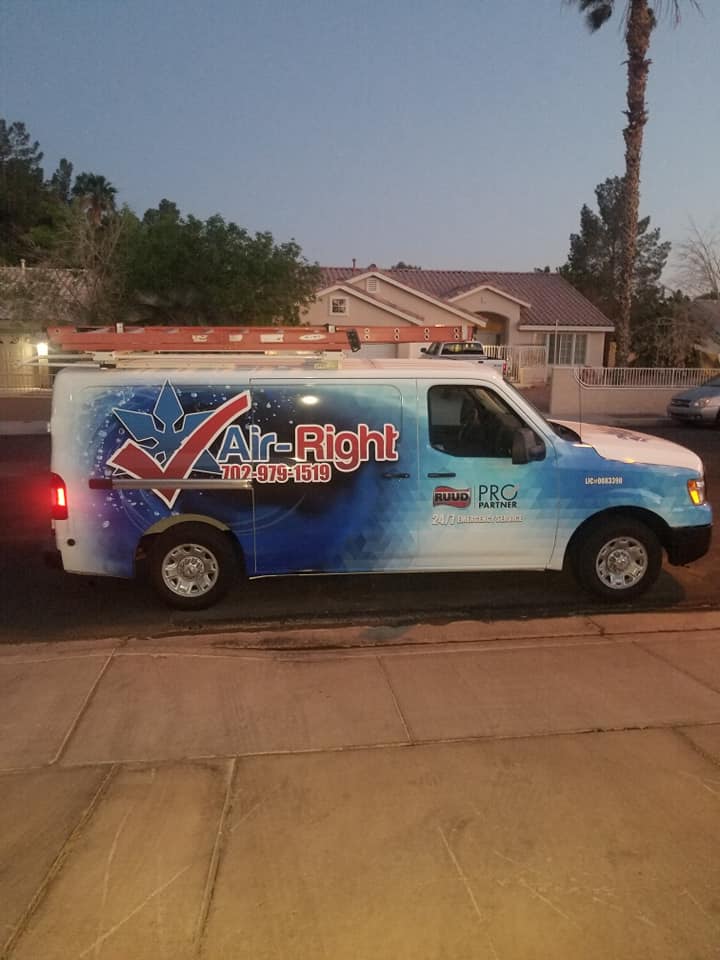
Seasonal Home Maintenance Checklist: Avoiding 24 Hour Air Conditioning Service in Las Vegas, NV
Air-Right

The Myth of the "Standard" Seasonal Home Maintenance Checklist Most online advice tells you to follow a generic seasonal home maintenance checklist that involves changing your filter every 90 days and hosing off your…
The Myth of the "Standard" Seasonal Home Maintenance Checklist
Most online advice tells you to follow a generic seasonal home maintenance checklist that involves changing your filter every 90 days and hosing off your outdoor unit once a spring. That might work in mild climates, but as our team at Air-Right knows all too well, following generic national advice in the desert is a recipe for disaster. The reality of maintaining a home in our region requires a completely different approach, specifically when it comes to your cooling system.
Generic checklists fail to account for the extreme thermal load placed on air conditioners in the desert. When July arrives, we see residential HVAC systems running almost continuously. A well-maintained system is the only barrier between a comfortable living space and a dangerous indoor heatwave. If you want to keep your Air Conditioning running smoothly and avoid needing 24 Hour Air Conditioning Repair in Las Vegas, you have to treat maintenance as a critical safety measure, not just a weekend chore.
Understanding which tasks are safe for homeowners to tackle and which require a licensed professional is the foundation of system longevity. In our years of serving the Las Vegas Valley, we've seen many homeowners attempt to push their equipment through another season without a thorough inspection, assuming that if cold air is blowing today, the system is fine. However, minor inefficiencies that go unnoticed in 80-degree weather will rapidly compound into catastrophic failures when the temperature climbs to 110°F+.
The goal of proper pre-season preparation is to identify and resolve these underlying stress points before the system is under maximum load. By moving away from a "standard" checklist and adopting a desert-specific approach, you protect your investment, lower your monthly energy costs, and ensure your home remains a safe refuge during the hottest months of the year.
How the Desert Climate Accelerates HVAC Wear and Tear
The specific environmental factors of our region cause standard wear and tear to happen twice as fast as it does in other parts of the country. High winds and blowing dust are a constant reality in the Las Vegas Valley. This airborne particulate matter acts as an abrasive on moving parts and, more importantly, quickly clogs outdoor condenser coils. When our technicians pull up to a home where those coils are blanketed in dust, we know the system's ability to transfer heat is severely reduced, forcing the compressor to work much harder to achieve the same indoor temperature.
Continuous operation during peak summer months puts immense strain on the compressor and electrical components. Unlike air conditioners in temperate climates that cycle on and off predictably, we find that desert systems often run for hours at a time without a break. This sustained operation generates significant internal heat within the motors and capacitors. Over time, this thermal stress degrades electrical connections and weakens starting components, leading to sudden failures if they aren't regularly tested and tightened.
Because of these factors, standard 90-day filter replacement advice is entirely inadequate for homes in dusty, arid environments. Restricted airflow is the number one cause of system strain. When a filter is left in place too long, the blower motor has to draw more amperage to pull air through the clogged media. This not only spikes your energy bill but can also cause the indoor evaporator coil to freeze over, shutting down the entire cooling process.
The unique combination of high temperatures and airborne particulates creates a worst-case scenario for airflow if not properly managed. Dust acts as an insulator where you least want it, trapping heat inside the equipment and preventing the efficient exchange of thermal energy. Understanding how these local climate factors accelerate degradation is the first step in building a maintenance routine that actually protects your equipment.
Safe DIY Maintenance vs. Professional Tune-Up Requirements
Clearly dividing maintenance tasks is necessary to ensure safety and system integrity. While there are several important steps homeowners should take, our Air-Right team strongly warns against attempting dangerous electrical or refrigerant work without proper licensing, which can result in severe injury, voided warranties, or total system destruction. Just recently, one of our Air-Right technicians went above and beyond during a pre-summer service check for a local homeowner, identifying a failing capacitor that would have otherwise left the family stranded without cooling during a heatwave.
Investing in AC Maintenance and Tune-Ups offers a long-term financial benefit by avoiding premature unit replacement. A professional tune-up restores lost efficiency, catches small electrical anomalies before they fry major components, and ensures the system is safely calibrated for the months ahead.
The breakdown of responsibilities:
| Maintenance Task | Who Should Perform It | Why It Matters |
|---|---|---|
| Replacing indoor air filters | Homeowner (DIY) | Maintains proper airflow and prevents blower motor strain. Must be done every 30 days in dusty climates. |
| Clearing debris around the outdoor unit | Homeowner (DIY) | Ensures the condenser has the necessary physical space to exhaust hot air away from the home. |
| Checking and balancing refrigerant levels | Licensed Professional | Incorrect refrigerant charge forces the compressor to overwork and can permanently damage the system. |
| Inspecting and tightening electrical connections | Licensed Professional | Prevents arcing, burned wires, and sudden loss of power to the unit during continuous operation. |
| Deep cleaning internal evaporator coils | Licensed Professional | Requires specialized chemicals and access to the sealed indoor unit to restore optimal heat transfer. |

High-Priority Checklist: Protecting Your Compressor Under Heavy Load
To keep your system running efficiently, our technicians recommend a specific, actionable checklist focused purely on the cooling system's survival. The compressor is the heart of your air conditioner, and it is also the most expensive component to replace. Protecting it means minimizing the resistance it faces while pumping refrigerant through the lines.
Air Filter Replacement: Upgrading for Desert Dust
The quick fix: Check and replace your filter on the first of every month.
Upgrading to the correct MERV rating for dust without restricting airflow is a delicate balance. A pattern we see often is homeowners using ultra-high-efficiency filters left in too long. In a climate where the system runs constantly, we recommend a mid-range MERV filter changed frequently over a high-range filter that restricts airflow. A clean filter ensures the evaporator coil receives enough warm air to prevent condensation from freezing into a block of ice.
Condenser Clearance: The Two-Foot Rule
The quick fix: Trim back all vegetation and remove stored items near the outdoor unit.
Ensuring a minimum of two feet of clearance around the outdoor unit is non-negotiable. The condenser's job is to release the heat absorbed from inside your home out into the atmosphere. If patio furniture, overgrown bushes, or yard debris block the sides of the unit, the hot air is recirculated right back through the coils. This drastically reduces cooling capacity and forces the system to run longer cycles to achieve the set temperature.
Thermostat Calibration: Verifying Settings
The quick fix: Ensure the thermostat is set to "Auto" rather than "On" to allow the blower to rest.
Verifying settings helps prevent the system from short-cycling. Short-cycling occurs when the unit turns on and off rapidly without completing a full cooling cycle. This is incredibly damaging to the compressor, as the startup phase draws the most electrical current and causes the most mechanical wear. Ensuring your thermostat is accurately reading the room temperature and communicating properly with the equipment keeps cycle lengths optimal.
Drain Line Inspection: Preventing Water Backups
The quick fix: Monitor the drip pan and the outdoor drain pipe for slow drainage.
Checking for condensation backups is critical because standing water can trigger safety switches that shut the entire system down. As your air conditioner cools the air, it also removes humidity. This moisture drips into a pan and flows out through a PVC drain line. Dust and algae can easily clog this line. We regularly respond to calls where a clogged line has caused the pan to overflow, triggering built-in safety float switches that cut power to the unit to prevent water damage, leaving the home without cooling until our team clears the line.
Recognizing When a Minor Issue Becomes a True AC Emergency
Even with the most diligent preventative maintenance, mechanical failures can still happen. Bridging the gap between routine upkeep and the necessity of immediate service is about knowing what symptoms to look for. Our dispatchers frequently help customers identify warning signs early, which can mean the difference between a simple part replacement and a catastrophic compressor failure.
If you notice warm air blowing from the vents, unusual grinding noises, or frequent tripped breakers, the system is actively failing. Warm air often indicates a refrigerant leak or failed compressor valves. Grinding or screeching noises point directly to failing motor bearings. If your system trips the electrical breaker, do not keep resetting it. A tripping breaker is a critical safety mechanism indicating the system is pulling a dangerous amount of electrical current, often due to a grounded compressor or a failing capacitor.
Understanding the safety risks of complete power failure during peak heat is vital. During a brutal 110°F+ weekend heatwave, one of our customers experienced a total AC power failure. Because they reached out to our team immediately for a prompt, professional 24/7 emergency response, our Air-Right technicians were dispatched the same day, diagnosing the electrical fault and restoring cooling before the house reached dangerous indoor temperatures. Waiting until Monday is simply not an option when the ambient temperature poses a health risk.
If you are unsure whether your situation warrants an immediate call, understanding What Qualifies as a True AC Emergency can help you make an informed decision. Generally, if the system is completely unresponsive, making violent noises, or producing a burning electrical smell, you need one of our professionals on-site immediately.
Serving the Greater Metro Area Quickly
At Air-Right, our emergency dispatch protocols are designed for rapid response when the heat is at its worst. When a call comes in for a complete failure, our priority is restoring safety and comfort as fast as physically possible. This means utilizing smart routing and prioritizing calls based on the severity of the situation and the vulnerability of the household.
Ensuring our technicians arrive with fully stocked trucks is a major part of this rapid response. Time spent driving back and forth to a supply house is time your home spends heating up. By carrying universal capacitors, contactors, fan motors, and standard refrigerant types, we are able to resolve a massive percentage of common compressor and electrical failures in a single visit, right there on the spot.
Frequently Asked Questions About Desert HVAC Maintenance
Whether you are managing a property in the city or need AC Repair Services in Henderson, understanding the specific demands of desert climate HVAC care can help you protect your system. Here are the most common questions our customers ask us as they prepare for the heat.
How do you prepare your AC for summer?
Start by scheduling a comprehensive pre-summer professional inspection with our team to calibrate the system. Beyond that, clear the area around your outdoor condenser, replace your indoor air filters, and test the system on a warm spring day before the extreme heat arrives. Running it early allows us to catch any performance issues before peak season begins.
What HVAC maintenance can I do myself?
Homeowners can safely handle airflow and exterior clearance tasks. This includes changing the air filter every 30 days, gently washing away loose dirt from the outside of the condenser cabinet with a standard hose (never a pressure washer), and ensuring all indoor supply and return vents are fully open and unobstructed by furniture.
When should I call a professional for AC maintenance?
We recommend booking a licensed technician at least once a year, ideally in the spring, for a full tune-up. Additionally, you must call a pro immediately if you hear grinding noises, notice a spike in your energy bills, see ice forming on the refrigerant lines, or if the system struggles to reach the temperature set on the thermostat.
How often should I change my air filter during peak summer?
In our experience with dusty, arid environments, you should check and likely replace your air filter every 30 days during peak cooling months. Continuous blower operation pulls a massive volume of airborne particulates through the return ducts, clogging standard filters much faster than manufacturer guidelines suggest.
What is included in an annual AC tune-up?
When our technicians perform a professional tune-up, it goes far beyond a visual inspection. We test the capacitance of electrical components, measure the amp draw of the compressor and fan motors, clear the condensate drain line, check refrigerant pressures to ensure proper charge, and tighten all high-voltage electrical connections.
Secure Your Comfort: Don't Wait for a Total System Breakdown
Staying ahead of system wear and tear is the only reliable way to ensure your home remains comfortable through the harshest months of the year. We can't overstate this: the extreme thermal load placed on your equipment cannot be ignored, and hoping a struggling system will simply make it through another season is a gamble you do not want to take.
Waiting for a breakdown during peak heat is a severe safety risk, especially when temperatures hold steady at 110°F+. If your system is making strange noises, blowing lukewarm air, or simply running non-stop without satisfying the thermostat, do not wait. Call our team at Air-Right to book an inspection or emergency repair immediately to secure a clear, actionable path to reliable cooling.
Need Help?
Contact us today to discuss your needs. Our team is ready to help.
Related articles


Ready to Get Started?
Whether you need a repair, maintenance, or a new installation, our expert team is here to help.