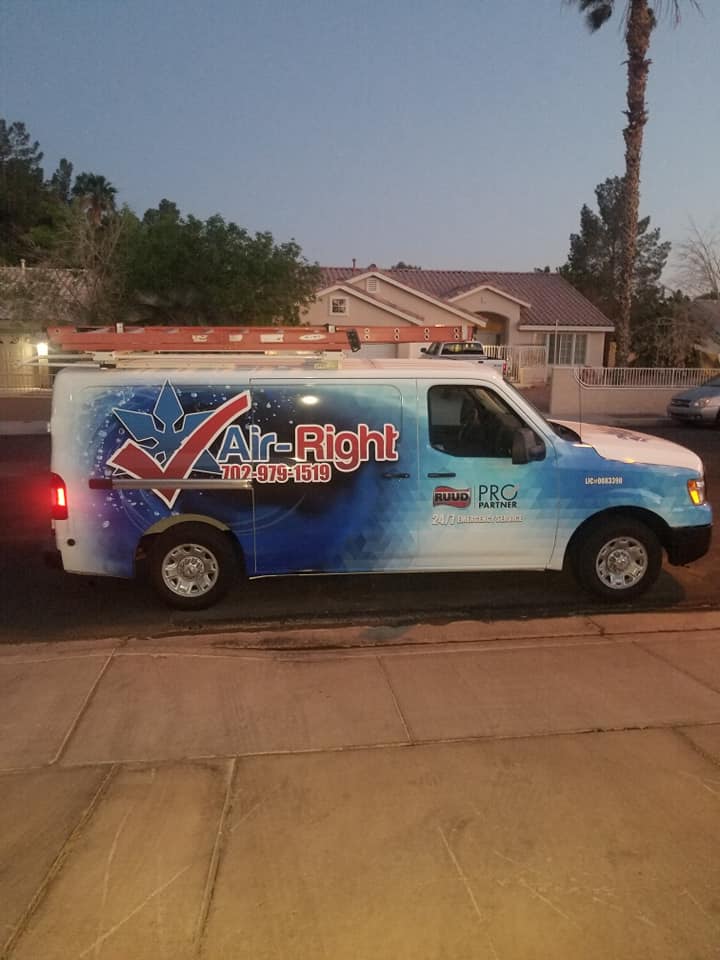
The 20-Degree Rule vs. True Breakdowns: When to Call for 24 Hour Air Conditioning Service in Las Vegas, NV
Air-Right

Sweating at 80 Degrees: Is Your AC Broken or Just Maxed Out? There is a common misconception that your air conditioner should always be able to keep your house at a crisp 70 degrees, no matter what it looks like…
Sweating at 80 Degrees: Is Your AC Broken or Just Maxed Out?
There is a common misconception that your air conditioner should always be able to keep your house at a crisp 70 degrees, no matter what it looks like outside. If you are looking for reliable home maintenance tips and troubleshooting, the first thing our team at Air-Right wants you to know is that residential cooling systems have physical limits. When you are watching the indoor thermostat climb while the AC runs non-stop on a brutal 115-degree Las Vegas summer afternoon, panic usually sets in. You might assume the system has completely failed and that you are in for an expensive replacement.
Need help right away? Explore our Air Conditioning Services or schedule a Las Vegas AC repair service today.
The reality is that your equipment might just be maxed out. Before you pay for an emergency dispatch fee, it helps to understand the critical difference between a system operating at its physical limits and one that needs an immediate mechanical repair. Peak summer (July/August) in Las Vegas tests every component of your home, and understanding these system limits can save you unnecessary stress and money. A house that hovers at 80 degrees during a historic heatwave is often a sign of a system working exactly as designed, rather than a system that is broken.
Understanding the 20-Degree Rule in Residential HVAC Systems
To understand why your system struggles on the hottest days of the year, you have to look at how these units are engineered. Standard residential HVAC systems are designed for a maximum 20-degree temperature differential between the outdoor air and the indoor air. This is an industry-wide engineering standard based on typical climate data, and it means that an air conditioner is not a magic freezing box. Instead, it is a heat transfer machine with a finite capacity for moving thermal energy from inside your house to the outside environment.
Standard national HVAC rules are pushed to their absolute limits in the Mojave Desert. In our years of keeping Las Vegas cool, we see this math play out constantly. Let us walk through what this looks like in practice. If it is 115 degrees outside, your air conditioner is fighting an immense thermal load. Under these conditions, an indoor temperature of 95 degrees at the return vent and 75 degrees at the supply register is actually peak performance. The system is successfully achieving that 20-degree temperature differential. When the outdoor temperature spikes to 110 or 115 degrees, an indoor temperature of 80 degrees means the system is actually over-performing its baseline design specifications.
Continuous operation in these extreme conditions is normal. Homeowners often worry when they hear the condenser running for hours on end without shutting off. However, when the heat load exceeds the system's design capacity, the thermostat will never reach its set point, meaning the system has no reason to cycle off. This continuous running is not necessarily a sign of mechanical failure; it is simply the machine doing everything it can to keep up with the desert sun.
How the Heat Exchange Process Works
To make sense of this limit, it helps to know how refrigerant absorbs and rejects heat. Your air conditioner does not actually create cold air; it removes heat from the indoor air. Warm air from your house blows across the cold evaporator coil inside, where the refrigerant absorbs the heat. That heated refrigerant then travels to the outdoor unit (the condenser), where a fan blows outdoor air across the coils to release the heat into the atmosphere.
Here is the catch: heat naturally flows from warmer areas to cooler areas. When the outdoor air is a scorching 115 degrees, it is incredibly difficult for the hot refrigerant to release its heat into an environment that is already boiling. The extreme ambient heat reduces the system's ability to reject heat efficiently, which creates a bottleneck in the cooling process. The system is still working, but the physics of heat transfer slow down dramatically.
How to Verify Your AC is Working at Capacity (Not Failing)
Before you assume the worst, there are a few simple checks you can perform to determine the health of your cooling system. These actionable, non-technical steps will help you verify if your system is healthy but overwhelmed by the Peak summer (July/August) in Las Vegas, or if it has genuinely stopped functioning.
- Check the air coming from the supply registers: Place your hand over the vents in your living areas. If the air blowing out feels significantly cooler than the ambient room air, the compressor is working and the refrigerant cycle is active. If the air is warm or room-temperature, you have a mechanical issue.
- Verify the air filter is clean: A clogged air filter is the number one cause of poor cooling performance. Restricted airflow means less air passes over the indoor coil, reducing the system's ability to absorb heat. This exacerbates heat load struggles and can even cause the indoor coil to freeze over. Pull the filter out and hold it up to a light; if you cannot see light through it, replace it immediately.
- Check the thermostat settings: It sounds overly simple, but verify that the thermostat has not been accidentally switched to "fan only" mode or bumped to a higher set point. Ensure it is set to "cool" and "auto." If the fan is set to "on," it will blow continuously even when the compressor cycles off, circulating uncooled air through the house.
- Observe the outdoor unit: Walk outside and look at the condenser. Ensure the large fan at the top is spinning rapidly and blowing hot air upward. Check the sides of the unit to ensure they are not obstructed by overgrown shrubs, accumulated debris, or dust. The system needs maximum airflow to reject heat; any blockage will severely reduce its cooling capacity.
Signs of a True AC Emergency: When to Call for Immediate Help
While an 80-degree house might just be a symptom of extreme weather, there are clear mechanical failures that require deploying a 24/7 emergency technician. In 110-plus degree weather, a true mechanical failure is a severe safety hazard, particularly for vulnerable family members, elderly residents, or pets. If your system is experiencing a genuine breakdown, the 20-degree temperature differential goes out the window, and the indoor temperature will rise rapidly to match the outdoors.
- Complete power failure to the unit: If the thermostat is blank, or if the indoor blower and outdoor condenser are completely silent while the rest of the house has electricity, the system has lost power. This could be a blown fuse, a tripped breaker, or a failed internal component.
- Warm air blowing from the supply registers: If the airflow is strong but the air feels warm or hot, the compressor is likely not running. This points to a failed capacitor, a dead compressor, or a severe loss of refrigerant.
- Loud, unusual mechanical noises or burning smells: A screeching sound usually indicates a failing compressor or high-pressure buildup. Grinding sounds point to failing motor bearings. An electrical burning smell means a component is overheating and requires immediate shutdown to prevent fire risks.
- Ice buildup on the equipment: If you see ice forming on the indoor evaporator coils or coating the copper refrigerant lines outside, shut the system off immediately. This is caused by either severely restricted airflow or a refrigerant leak, and continuing to run the system will destroy the compressor.
During a brutal stretch of 110-degree weather last July, our Air-Right emergency response team helped a local homeowner who experienced a complete AC power failure. We dispatched a technician to provide a major same-day repair, resolving the power issue before the house became dangerously hot. If you notice any of these severe symptoms, it is time to seek professional AC repair in Henderson or your local area.
Electrical vs. Refrigerant Failures
It is helpful to distinguish between an electrical fault and a refrigerant cycle failure. A tripped circuit breaker is something a homeowner can safely check once. If the breaker for the AC is flipped, you can reset it. However, if it trips again immediately, do not force it—this indicates a dangerous electrical short or a failing motor that is drawing too much amperage.
Refrigerant failures, on the other hand, are entirely mechanical. Air conditioners do not "consume" refrigerant; it circulates in a closed loop. If the system is low on refrigerant, it means there is a leak. This requires professional diagnosis and repair, not just a quick top-off, because the underlying hole must be sealed to restore the system's cooling capacity.
Side-by-Side: Design Limit vs. Mechanical Breakdown
When the heat is oppressive, you need to make a fast, confident decision. This quick-reference comparison helps you weigh the symptoms of a maxed-out system against a failing system. Remember that the 20-degree temperature differential is your baseline for normal operation during extreme weather.
| Symptom Category | Maxed-Out System (Design Limit) | Failing System (Mechanical Breakdown) |
|---|---|---|
| Airflow Temperature | Air is cool, but the house stays warm | Air is completely warm or room temperature |
| Airflow Strength | Normal, steady airflow from vents | Very weak airflow or no air coming out at all |
| Operation Cycle | Running constantly without shutting off | Short-cycling (turning on and off rapidly) or dead |
| System Noises | Normal humming and fan sounds | Screeching, grinding, or buzzing sounds |
| Outcome | House hovering steadily at 80-82 degrees | House temperature rising uncontrollably |

Immediate Steps to Reduce Your Home's Heat Load
If you have determined that your system is simply struggling to keep up with the Peak summer (July/August) in Las Vegas, there are immediate, non-mechanical steps you can take to help it catch up. By reducing the amount of heat entering your home, you lower the thermal load, making it easier for the air conditioner to maintain a comfortable temperature.
- Close all blinds, shades, and blackout curtains: Solar heat gain through windows is one of the largest contributors to indoor heat. Pay special attention to south and west-facing windows during the afternoon peak. Blocking direct sunlight can drop the ambient temperature in a room significantly.
- Avoid using heat-generating appliances: Ovens, stovetops, dishwashers, and clothes dryers generate massive amounts of latent heat and humidity. Delay using these appliances until late in the evening or early morning when the outdoor temperatures are lower.
- Ensure ceiling fans are turning counter-clockwise: Ceiling fans do not lower the temperature of a room, but they do create a wind-chill effect that makes occupants feel cooler. Ensure the fan is pushing air straight down. Remember to turn fans off when you leave the room to save electricity.
- Keep interior doors open: Your HVAC system relies on balanced airflow. Closing doors to bedrooms or offices traps air and prevents it from returning to the central intake vent. This starves the system of air and makes it work harder. Keep doors cracked open to promote proper return airflow throughout the house.
Taking these steps can often bridge the gap during the hottest part of the day. For more comprehensive strategies, review our guide on what to do when your AC quits during a heatwave to keep your family safe and comfortable.
Why Honest Diagnostics Matter in an HVAC Emergency
When your house is uncomfortably hot, stress levels run high, and it is easy to make rushed decisions. This highlights the danger of misdiagnosed repairs during high-stress heatwaves. Some less scrupulous contractors might use the panic of an 80-degree house to push for an immediate, expensive system replacement, ignoring the fact that the system is simply hitting its 20-degree temperature differential limit.
A thorough diagnostic check can reveal simple electrical issues rather than catastrophic failures. For example, a failed dual-run capacitor will stop the compressor and condenser fan from running, making the entire outdoor unit look dead. To an untrained eye, this looks like a ruined system, but a professional diagnostic will reveal it is just an affordable electrical component that needs swapping. Routine maintenance prevents many of these high-stress situations by catching weak components before they fail under load.
Working with our team at Air-Right means you get a commitment to honest, transparent service. We prioritize customer education, helping homeowners verify a true emergency before deploying a technician, which saves the customer money. Just last peak season, we helped a homeowner who faced a sudden motor failure right in the middle of summer and needed prompt attention. Our Air-Right technician scheduled and completed the repair the very next day, getting the motor replaced without upselling unnecessary equipment. When you prioritize long-term solutions over quick sales, you get a system that lasts longer and performs better. Regular AC maintenance and tune-ups are the best way to ensure your system is ready for the desert heat.
Get Fast, Reliable 24-Hour Air Conditioning Support
If you have run through the checks and determined that your system is truly broken, immediate action is required. Peak summer (July/August) in Las Vegas is unforgiving, and a dead air conditioner is a serious safety concern that cannot wait until Monday morning.
When the airflow is warm, the power is out, or the system is making terrible noises, you need local, round-the-clock availability you can trust. Do not suffer through a dangerous heatwave with a failing system. Reach out to Air-Right for an emergency dispatch and schedule your Las Vegas AC repair service so you can restore comfort and safety to your home as quickly as possible.
Frequently Asked Questions
Why won't my AC cool below 80 degrees in summer?
Your air conditioner is designed to cool the indoor air by a maximum of 20 degrees compared to the outdoor temperature. When it is 110 degrees or hotter outside, an indoor temperature of 80 degrees means the system is operating at its peak physical capacity. It is not necessarily broken; it is simply overwhelmed by the extreme thermal load.
How do I know if my AC is broken or just working hard?
Check the air coming from your supply vents. If the air is blowing strong and feels cool to the touch, the system is working hard to keep up with the heat. If the air is warm, room temperature, or barely blowing at all, you likely have a mechanical breakdown that requires professional repair.
What is the 20 degree rule for air conditioning?
The 20-degree rule refers to the standard design limit of residential HVAC systems, which are engineered to create a 20-degree temperature differential between the outside air and the inside air. Pushing a system beyond this limit in extreme heat will cause it to run continuously without ever reaching a lower thermostat setting.
Is it normal for my AC to run constantly in 115-degree weather?
Yes, continuous operation is completely normal during extreme heatwaves. Because the heat load on the house is greater than the cooling capacity of the system, the indoor temperature will never reach the thermostat set point, so the system will not cycle off. As long as it is blowing cool air, it is doing its job.
Can throwing water on my outdoor AC unit help it cool faster?
While lightly misting the outdoor condenser can temporarily lower the temperature of the air around the coils, it is not a recommended long-term solution. Hard water can leave mineral deposits on the delicate aluminum fins, which eventually restricts airflow and permanently damages the system's efficiency.
Should I turn my AC off if it's struggling to cool the house?
If the system is blowing cool air but just cannot reach the set point, leave it on; turning it off will allow the house to heat up rapidly, making it much harder to cool down later. However, if the system is blowing warm air, making grinding noises, or covered in ice, turn it off immediately to prevent further mechanical damage.
Need Help?
Contact us today to discuss your needs. Our team is ready to help.
Related Articles
- Is It a True Emergency? A Fall Triage Guide for 24-Hour Air Conditioning Service in Las Vegas, NV
- Emergency AC Repair Signs: Navigating Heating-Startup and Fall Maintenance
- Is That Burning Smell an Emergency? Triaging Fall Heating and 24-Hour Air Conditioning Service in Las Vegas, NV
Related articles


Ready to Get Started?
Whether you need a repair, maintenance, or a new installation, our expert team is here to help.