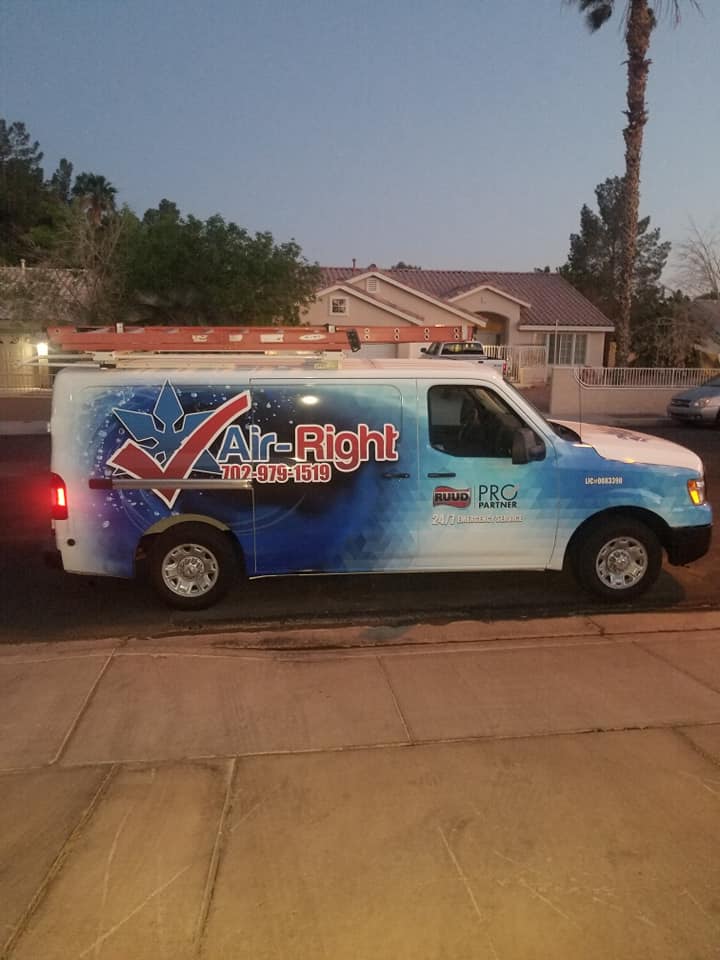
Is It a True Emergency? When to Call for 24-Hour Air Conditioning Service in Las Vegas, NV
Air-Right

Why Is My AC Suddenly Struggling When I Need It Most? Is your air conditioning actually broken, or is it just struggling to keep up with the relentless desert heat? Getting the most common homeowner questions answered…
Why Is My AC Suddenly Struggling When I Need It Most?
Is your air conditioning actually broken, or is it just struggling to keep up with the relentless desert heat? Getting the most common homeowner questions answered about cooling failures is critical when you are facing 105+ degree afternoon temperatures and your vents start blowing warm air. That sudden drop in cooling performance creates immediate panic. Your system is running continuously, the noise of the blower motor is echoing through the hallway, but the temperature on the thermostat keeps climbing. In the intense climate of the Las Vegas valley, a house without functional cooling heats up to dangerous levels rapidly, making this a problem you cannot ignore.
If you need professional help right away, our team at Air-Right offers comprehensive air conditioning services to get your system back online. However, before you panic, it helps to understand exactly what is happening inside your equipment.
The immediate discomfort: When your home feels like an oven, the first instinct is to assume the entire HVAC system has failed. Sometimes, that is exactly what has happened. Other times, the issue is a simple airflow restriction that you can safely resolve yourself. The critical decision point is determining whether you are dealing with a clogged filter or a serious component failure that requires a licensed professional.
A rapid evaluation process: Extreme indoor heat quickly becomes a safety hazard, especially for vulnerable family members and pets. You need a safe, DIY-free triage process to evaluate the situation. This protects your household from the heat and protects your expensive HVAC equipment from further damage caused by running a compromised system.
Understanding the 20-Degree Rule in Extreme Desert Heat
The underlying problem: In our years of servicing Las Vegas neighborhoods, we find many homeowners assume their air conditioner can hold a steady 72 degrees indoors regardless of the weather outside. In reality, residential air conditioners face physical design limits. When the late-summer Las Vegas sun beats down on your roof, the structural heat absorption makes your AC work overtime just to hold a baseline temperature.
The physical cause: Our Air-Right technicians often explain the "20-degree rule" to customers. This generally means that residential air conditioners are designed to cool a home by about 20 to 25 degrees compared to the outdoor temperature. If you are experiencing 105+ degree afternoon temperatures, a system running continuously to maintain 80 degrees inside might actually be operating at its maximum design capacity. It is battling an immense thermal load, not necessarily failing.
The practical solution: To prevent unnecessary panic, you must distinguish between a system that is maxed out and a system that is broken. Continuous operation during peak afternoon heat is often normal. The equipment is simply trying to keep up with the heat transferring through your attic, windows, and walls.
How to test your system: Monitor the temperature of the air coming directly from your supply vents, not just the reading on your wall thermostat. If the air blowing out of the vent feels distinctly cold, your system is likely working properly but struggling against the extreme outdoor heat. If the air blowing from the vent feels lukewarm or completely warm, you have a mechanical or airflow problem.
| Symptom | Likely Cause | Action Required |
|---|---|---|
| Cold air from vents, but house is 80°F | System maxed out by extreme thermal load | Close blinds, wait for sunset to evaluate |
| Weak airflow, barely cold | Restricted airflow or frozen evaporator coil | Check filter, turn system off to thaw |
| Lukewarm or hot air from vents | Compressor failure or electrical issue | Turn off immediately, call a professional |
Safe Triage: What Homeowners Can Check Themselves
Before calling for emergency service, there is a safe, non-technical checklist you can run through. These basic steps help rule out simple airflow or power issues. If you are troubleshooting an AC not cooling in triple-digit heat, stick to these safe checks and never attempt to open electrical panels or handle refrigerant lines yourself.
- Verify your thermostat settings: This sounds obvious, but our dispatchers find it is the most common false alarm. Ensure the thermostat is explicitly set to "cool" and not just "fan." Check that the fan setting is on "auto" rather than "on." If the fan is set to "on," it will continue blowing air even when the outdoor compressor cycles off, which feels like warm air coming from the vents.
- Inspect and replace the air filter: Severe dust accumulation restricts airflow. When the blower motor cannot pull enough warm indoor air across the cold evaporator coils, those coils freeze solid. A frozen coil blocks all airflow and stops the cooling process entirely. Especially during late-August end-of-season cooling, we frequently discover filters that are completely clogged from months of continuous use.
- Check your indoor vents: Walk through your home and ensure all supply and return vents are open and unobstructed. Closing vents in unused rooms does not save energy; it actually increases static pressure inside the ductwork, forcing the blower motor to work harder and reducing overall cooling efficiency. Move any furniture or rugs blocking the airflow.
- Inspect the electrical panel: Check your main electrical panel for a tripped breaker. You can safely reset a tripped breaker once. However, if the breaker trips a second time immediately after resetting it, leave it off. A breaker that trips repeatedly indicates a serious electrical short or a failing compressor that is drawing too much amperage. This requires a licensed professional.
Signs of Heat-Stressed Component Failure
If you have completed the safe triage checklist and the system is still blowing warm air, you are likely dealing with a heat-stressed component failure. Relentless daily operation degrades internal components over time. By the time late-August end-of-season cooling rolls around, the equipment has endured thousands of hours of runtime. This makes end-of-season breakdowns common, and we see that they are usually more complex than minor early-season startup glitches.
Airflow issues vs. mechanical failure: A dirty filter issue usually presents as weak airflow or a frozen indoor coil. A failing compressor or blower motor presents entirely different symptoms. If the outdoor unit is completely silent while the indoor fan blows warm air, the compressor is not running. If you hear the outdoor unit humming loudly but the fan blade is not spinning, you likely have a failed capacitor.
Warning signs to watch for: Pay attention to the sounds and smells coming from your equipment. Loud grinding or screeching noises usually point to failing motor bearings or a dying compressor. A burning electrical smell or the scent of melting plastic indicates overheating wires or a failing contactor. If you notice any of these signs, turn the system off immediately at the thermostat.
The danger of misdiagnosis: Accurately diagnosing heat-stressed components requires specialized tools and training. For example, our team recently provided a second opinion for a local homeowner after another company incorrectly diagnosed a faulty wiring issue as a bad motor. An Air-Right technician arrived quickly, correctly identified the wiring problem, and resolved the issue without an expensive, unnecessary motor replacement. This highlights why you should strictly avoid DIY electrical or refrigerant work. Always rely on licensed technicians who understand the legal and safety requirements of handling high-voltage HVAC equipment.
Go/No-Go Checklist: When to Call for Emergency AC Service
Making the decision to call for after-hours service can be stressful. Use this clear go/no-go checklist to determine if your situation requires an immediate dispatch for 24 hour air conditioning repair in Las Vegas.
GO (Call for emergency service immediately):
- Rapid temperature rise: Call immediately if the indoor temperature is rising rapidly during 105+ degree afternoon temperatures and vulnerable individuals, such as the elderly, infants, or pets, are inside the home.
- Dangerous sounds or smells: Call immediately if you smell burning plastic, ozone, or smoke coming from the vents or the outdoor unit. Loud, destructive metal-on-metal noises also require immediate shutdown and professional attention.
- Complete loss of cooling: Call immediately if the system is blowing completely warm air, the outdoor unit is not turning on, and your basic filter and thermostat checks did not resolve the issue.
- Electrical failure: Call immediately if your AC breaker trips multiple times or if you experience a complete AC power failure during extreme heat. Our emergency dispatch team recently helped a Las Vegas homeowner who experienced this exact scenario during 110° weather on a weekend; our technician provided a major same-day repair, getting the system functioning before the house became dangerously hot.
NO-GO (Schedule standard daytime service):
- Slight struggling: Schedule standard service if the system is blowing cold air but struggling slightly to reach the target temperature during peak afternoon hours.
- Minor noises: Schedule standard service for occasional rattling or minor vibrations that do not affect the cooling output.
Knowing exactly when to make the call provides tremendous peace of mind, ensuring you get rapid response availability when your family's safety is on the line.

The Toll of Non-Stop Operation on Your System
Why do our technicians see so many systems fail late in the summer? The answer lies in the cumulative wear and tear of running a mechanical system for 90+ consecutive days without a meaningful break. When an air conditioner cycles on and off repeatedly through months of extreme heat, the internal components endure massive friction and thermal stress.
Late-summer stress vs. early-season glitches: In May or June, AC problems are often related to a system sitting idle all winter. You might see a dusty sensor or a sticky contactor. By the time you reach late-August end-of-season cooling, the problems are structural. Capacitors have swollen from the heat. Motor bearings have lost their lubrication. Compressor valves have weakened from pumping high-pressure refrigerant day after day.
The value of preventative care: You can mitigate the risk of catastrophic end-of-season breakdowns through proactive care. Having a professional clean the condenser coils, check the refrigerant charge, and test the electrical components reduces the strain on the system. When the equipment runs efficiently, it doesn't have to work as hard, which directly extends the lifespan of the most expensive components.
Preparing for the final stretch: At Air-Right, we highly recommend scheduling routine AC maintenance to prepare your equipment for the final stretch of the cooling season. Thorough system evaluations catch failing capacitors and worn contactors before they cause the entire system to shut down on the hottest day of the year.
Frequently Asked Questions About Las Vegas AC Emergencies
Is an AC blowing warm air in August considered an emergency?
Yes, if the indoor temperature is rising rapidly during peak heat, it is considered an emergency. This symptom indicates a complete loss of cooling capacity rather than a minor inefficiency. When facing extreme desert temperatures, a house can become dangerously hot in a matter of hours, making immediate repair necessary to protect the occupants.
When should I call for 24-hour AC service in Las Vegas?
You should call for 24-hour service when indoor temperatures pose a health risk to occupants, especially the elderly or infants. You must also call immediately if there are signs of electrical failure, such as burning smells, smoke, or repeated breaker trips. Do not wait until morning if you suspect an electrical short or a severe mechanical failure.
How long can a house go without AC in 100-degree weather?
Indoor temperatures can reach dangerous levels within just a few hours during 100-degree weather. While proper attic insulation and energy-efficient windows delay the heat transfer, structural heat absorption eventually overwhelms the interior. Once the walls and furniture absorb the heat, it becomes incredibly difficult to cool the house back down even after the AC is repaired.
Should I turn off my AC if it is blowing warm air?
Yes, you should turn the system off immediately at the thermostat. Continuing to run a compromised system can cause further damage to the compressor or blower motor. If the unit is blowing warm air, leaving it running wastes electricity and risks turning a minor repair into a catastrophic system failure.
How do I know if my AC compressor is failing from heat stress?
Look for signs like hard starting, loud humming, or the outdoor fan running while the compressor itself remains silent. You might also notice the system tripping the breaker repeatedly. However, only a licensed technician can accurately diagnose a true compressor failure versus a bad dual-run capacitor, as the symptoms are often identical to the untrained eye.
Get Fast Relief for Your Home's Cooling Crisis
Dealing with a broken air conditioner during late-August end-of-season cooling is stressful, but you do not have to face it alone. If you have run through the safe triage steps and your system is still blowing warm air, a professional diagnostic from our team is the safest and most effective next step. Rapid help is available for legitimate cooling emergencies, ensuring your home returns to a safe, comfortable temperature as quickly as possible. Do not let a struggling system turn into a complete breakdown—reach out to our local experts at Air-Right today to get your cooling crisis resolved.
Need Help?
Contact us today to discuss your needs. Our team is ready to help.
Related Articles
- Is That Burning Smell an Emergency? A Triage Guide for 24-Hour Air Conditioning Service in Las Vegas, NV
- Is That Burning Smell a True Emergency? A Guide to 24 Hour Air Conditioning Service in Las Vegas
- Is It a True Emergency? A Fall Triage Guide for 24-Hour Air Conditioning Service in Las Vegas, NV
Related articles


Ready to Get Started?
Whether you need a repair, maintenance, or a new installation, our expert team is here to help.