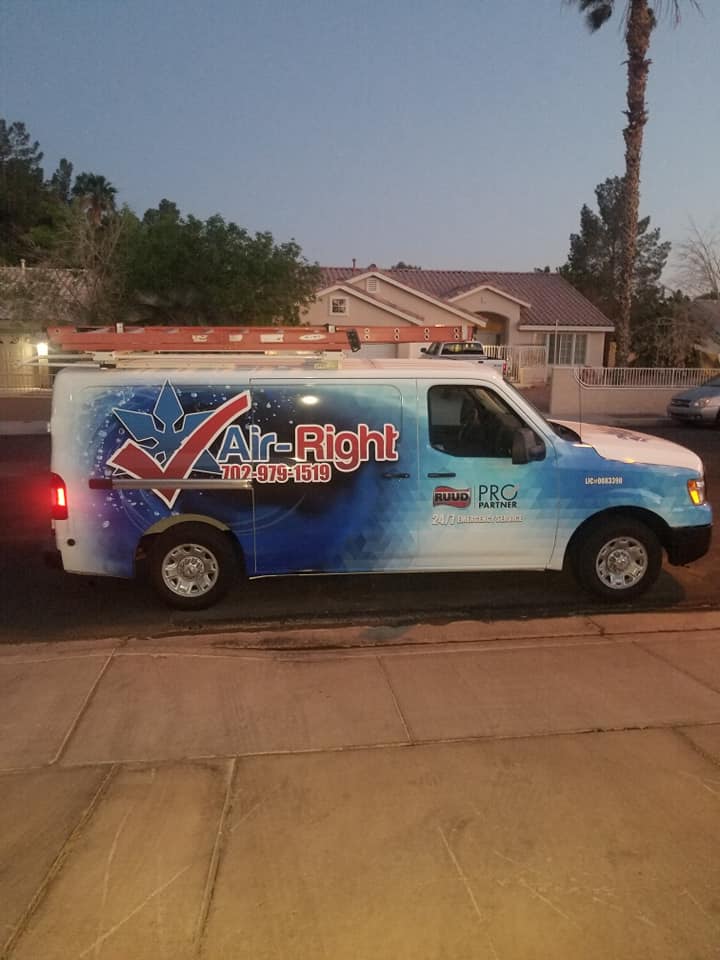
Is It a True Emergency? A Triage Guide for 24-Hour Air Conditioning Service in Las Vegas, NV
Air-Right

Surviving the Late-Summer Heat: When AC Trouble Strikes in September September in the Las Vegas valley may signal the approach of autumn on the calendar, but your thermometer tells a much different story. Here at…
Surviving the Late-Summer Heat: When AC Trouble Strikes in September
September in the Las Vegas valley may signal the approach of autumn on the calendar, but your thermometer tells a much different story. Here at Air-Right, our team has helped countless homeowners navigate this exact seasonal shift. If you are searching for reliable home maintenance tips and troubleshooting advice, understanding how to handle a struggling cooling system during this transition is absolutely essential. After enduring months of 110°+ summer ambient temperature stress, your air conditioner has likely logged hundreds of hours of continuous operation. That relentless workload takes a severe, cumulative toll on moving parts, electrical components, and airflow dynamics.
For comprehensive cooling solutions to protect your home, explore our Air Conditioning services.
The core decision many homeowners face right now is whether a sudden drop in cooling performance requires immediate, middle-of-the-night intervention, or if the system can safely wait for a comprehensive transition-season checkup. Because prolonged triple-digit desert heat turns a broken air conditioner into a genuine safety hazard rather than a mere inconvenience, knowing how to triage your system's symptoms is critical. Homes in our region absorb massive amounts of solar radiation during the day. When an AC unit fails, indoor temperatures do not just drift up slowly; they spike, rapidly creating a dangerous environment. By understanding the signs of hidden heat stress, you can make an informed decision about when to call for emergency help and when to schedule proactive maintenance.
Defining an HVAC Emergency in the Las Vegas Desert
Not every strange noise or minor temperature fluctuation warrants an urgent dispatch at 2:00 AM, but certain situations demand immediate professional attention. The intense thermal mass of a Las Vegas home means that without active cooling, indoor temperatures can easily exceed 90°F within a few hours. This rapid heat accumulation is especially dangerous for households with infants, elderly residents, or individuals with health conditions that impair their ability to thermoregulate.
One of our Air-Right customers experienced this firsthand recently when they suffered a total AC power failure during a brutal weekend of 110° weather. Recognizing the immediate safety risk, our team stepped in to assist, providing a major same-day repair that restored cooling before the house became dangerously hot. True emergencies are characterized by a total loss of functionality or signs of immediate electrical danger, whereas minor performance drops—like a system taking longer to cool the house by a degree or two—are uncomfortable but generally do not pose a direct safety threat. If you are facing a critical failure, you need a team with reliable 24/7 availability across the valley to handle true cooling emergencies without delay. For immediate intervention, rely on our 24-Hour AC Repair Service in Las Vegas.
When to Call for Immediate Help
If you observe any of the following symptoms, shut your system down at the thermostat and reach out for emergency service right away:
- Total power failure: The unit will not turn on at all, and the indoor temperature is rapidly rising during extreme weekend or afternoon heat.
- Electrical odors: A burning, fishy, or sharp ozone smell coming from your vents or the outdoor unit indicates melting wires or failing electrical components.
- Sparking or smoke: Any visible electrical arcing or smoke near the outdoor condenser or indoor air handler is a severe fire hazard.
- Vulnerable residents: If the home is rapidly heating and occupants include elderly family members or infants, a broken AC is an immediate medical liability.
4 Safe Triage Steps Before Calling for Immediate Repair
Before you pick up the phone, there are a few safe, homeowner-level checks you can perform. Sometimes, what appears to be a catastrophic failure is actually a minor oversight that you can correct yourself. However, it is vital to remember that air conditioners utilize high-voltage electricity. You must explicitly leave any internal component checks, wiring repairs, or panel removals to licensed professionals. If you want to learn more about the specifics of troubleshooting an AC not cooling in triple-digit heat, start with these basic steps:
- Verify the thermostat settings: It sounds overly simple, but always double-check that the thermostat is actually set to "cool" and that the fan is set to "auto." A thermostat accidentally bumped to "heat" or "fan only" will blow warm air, mimicking a total compressor failure.
- Inspect the air filter: A completely clogged air filter restricts airflow so severely that the system cannot breathe. This causes the internal temperature of the equipment to rise, often triggering a safety switch that shuts the entire system down to prevent overheating.
- Check the circuit breaker: Look at your home's main electrical panel to see if the breaker labeled for the AC has tripped. You can safely flip it back on once. The critical warning: Do not repeatedly reset a breaker that continues to trip. A tripping breaker is doing its job by protecting your home from a massive electrical short.
- Look for ice on the coils: Step outside and look at the copper refrigerant lines attached to your condenser, or check the indoor evaporator coil if it is visible. If you see ice forming, turn the system off immediately. An iced-over system cannot cool your home and will eventually destroy the compressor if left running.

Hidden Heat Stress: How Continuous Operation Degrades Capacitors and Contactors
Our technicians at Air-Right often find that even if your air conditioner survived the peak of July and August, the invisible damage inflicted by 110°+ summer ambient temperature stress frequently reveals itself as we move into the September early fall transition. Two of the most common casualties of this prolonged heat are dual run capacitors and contactors. These electrical components are the workhorses of your outdoor condensing unit.
A dual run capacitor acts much like a powerful battery. It stores a massive electrical charge and delivers a jolt of energy to start the compressor and the fan motor, then provides a steady stream of power to keep them running smoothly. Continuous operation in high ambient temperatures causes the chemical paste inside these capacitors to degrade, swell, and eventually fail. When a capacitor weakens, you might notice your system hard starting (a noticeable dimming of the house lights when the AC kicks on), a loud humming sound from the outdoor unit, or the system running without actually cooling the air.
Similarly, the contactor is a mechanical relay that acts as the gateway for high-voltage electricity to reach the compressor. Over months of heavy use, the metal connection points can become pitted, burned, or fused shut. When this happens, the AC may refuse to turn on, or worse, refuse to turn off, running continuously until it destroys itself. Because these electrical parts degrade silently, a late-summer or early-fall AC maintenance inspection is the most effective way to catch weakened components before they fail entirely and leave you stranded.
Airflow Issues and Frozen Coils: The Impact of Desert Dust
Beyond the sheer heat, the regional environment of the Las Vegas valley creates a unique stress test for your HVAC system. In our experience, high winds and fine desert particulate matter combine to assault your outdoor equipment, leading to a chain reaction of airflow problems by late summer.
How Desert Dust Chokes Your Condenser
The outdoor condenser unit features thousands of tiny aluminum fins designed to release the heat pulled from inside your home. Throughout the summer, high winds drive fine desert dust deep into these fins. When combined with occasional moisture, this dust forms a restrictive blanket that prevents heat from escaping. As a result, the compressor has to work twice as hard and run twice as long to achieve the same cooling effect, driving up your energy bills and accelerating mechanical wear.
The Chain Reaction Leading to Frozen Coils
When airflow is severely restricted—whether by a dirty condenser outside or a clogged air filter inside—the delicate balance of your system's refrigerant cycle is broken. The evaporator coil inside your home gets too cold because there isn't enough warm air passing over it to absorb the cooling energy. The ambient humidity in the air then freezes directly onto the coil. Surprisingly, you can have a completely frozen block of ice inside your HVAC system even when it is over 100 degrees outside.
Why You Must Turn a Frozen System Off
If you discover ice on your system, your immediate triage step must be to turn the thermostat to "off" while leaving the fan switch to "on." A technician cannot accurately diagnose refrigerant pressures or repair a frozen system until the ice has completely melted. Forcing a frozen system to keep running will eventually cause liquid refrigerant to flow backward into the compressor, destroying the heart of your air conditioner.
Electrical Failures vs. Motor Burnout: Why Professional Diagnosis Matters
When an air conditioner starts making terrifying grinding noises or stops blowing cold air altogether, it is easy to assume the worst. Many homeowners fear that their expensive compressor or blower motor has completely burned out. However, the symptoms of a catastrophic motor failure often perfectly mimic the symptoms of a simple electrical issue. This is why attempting to diagnose the problem yourself, or relying on an inexperienced handyman, can lead to massive unnecessary expenses.
For example, last fall, a local customer reached out to Air-Right with an urgent repair need after another individual incorrectly diagnosed their system as needing a brand-new draft motor. One of our professional technicians arrived quickly, tested the electrical loads, and identified that the actual issue was just a burnt wire. By accurately pinpointing the root cause, our technician saved the customer a significant amount of money and restored the system much faster than if they had waited for a replacement motor to be ordered. If you need a second opinion or accurate troubleshooting, trusted Summerlin AC repair professionals will always test the electrical sequence before condemning a major mechanical part.
A bad capacitor, a melted wire, or a failing contactor can all cause a motor to overheat, hum loudly, or refuse to spin. A licensed technician uses specialized multimeters to test the microfarads of a capacitor and the voltage drops across a contactor. Guessing at the problem without these tools is dangerous due to the high voltage present in the cabinet, and replacing parts based on a hunch usually results in the new parts failing immediately because the underlying electrical short was never resolved.
Transitioning to Fall: Emergency Action vs. Preventive Tune-Ups
As we navigate the September early fall transition, deciding your next step depends entirely on what your triage efforts revealed. If your system is dead, sparking, or creating a dangerous environment, you need emergency service. If it is running but struggling, you need a prompt tune-up. The table below breaks down the differences to help you guide your decision.
| Observed Symptom | Likely Diagnosis | Recommended Action |
|---|---|---|
| Total loss of power to the AC; indoor temps rising rapidly. | Tripped primary breaker, blown fuse, or failed contactor. | Emergency Service. Do not reset a tripping breaker multiple times. |
| Burning plastic or sharp ozone smells near the vents/unit. | Melting wires or failing electrical components. | Emergency Service. Turn the system off immediately to prevent fire. |
| System runs, but air from vents is only slightly cool. | Low refrigerant, dirty coils, or a failing capacitor. | Prompt Tune-Up. Schedule a transition-season inspection soon. |
| AC runs longer than normal, struggling to reach the set temperature. | Heavy desert dust buildup on condenser coils restricting airflow. | Prompt Tune-Up. Requires professional chemical coil cleaning. |
| Ice forming on the indoor coil or outdoor copper lines. | Severe airflow restriction or a refrigerant leak. | Turn system off to thaw. Schedule professional diagnosis. |
Frequently Asked Questions About Las Vegas AC Emergencies
Is a broken AC considered an emergency?
Yes, in Las Vegas during the summer or early fall, a broken AC can quickly elevate indoor temperatures to unsafe levels, especially for vulnerable individuals. Because homes here absorb so much thermal energy, the interior can reach 90°F or higher within a matter of hours. If you have elderly family members, infants, or pets in the home, you should treat a total cooling failure as a medical necessity and call for 24-hour service.
What should I check before calling for AC repair?
Verify your thermostat settings, check the air filter for severe clogs, and ensure the circuit breaker hasn't tripped. Often, a thermostat bumped to "fan only" or a filter so dirty that it suffocates the system will mimic a major breakdown. Checking these simple, safe items first can occasionally save you the cost of a late-night service call, provided you never open the electrical panels yourself.
How do I know if my AC compressor is bad?
Signs include the system blowing warm air, loud grinding or clattering noises, or the outdoor unit frequently tripping the circuit breaker. However, because a small, failing capacitor can cause the exact same symptoms as a dead compressor, you should never assume the compressor is ruined without a professional electrical diagnosis. A technician must test the amp draw and electrical windings to confirm a compressor failure.
Why is my AC running but not cooling?
This is often caused by a dirty air filter, frozen evaporator coils, low refrigerant levels, or a failing capacitor. When the system runs without producing cold air, it means the indoor blower is moving air, but the heat transfer process has stopped. Continuing to run the system in this state wastes electricity and can cause catastrophic damage to the outdoor unit.
Why is my AC struggling at the end of summer?
Months of continuous operation in high heat degrade electrical components and allow desert dust to accumulate on coils, reducing efficiency. By the time September arrives, parts like dual run capacitors have endured hundreds of hours of 110°+ summer ambient temperature stress. This cumulative wear and tear means the system has to work much harder to produce the same amount of cooling.
Can I pour water on my AC unit to cool it down?
While lightly misting the outdoor condenser coils can temporarily help dissipate heat, it is not a solution for a failing system and should not replace professional maintenance. If your system is overheating to the point where it shuts down, spraying it with a hose only masks the underlying issue, which is usually a severely clogged coil or a failing fan motor that requires expert repair.
Secure Your Comfort Before the Heating Season Begins
There is immense peace of mind that comes from knowing your HVAC system is operating safely and efficiently. As we move through the September early fall transition, you have a brief window to address the hidden heat stress your equipment endured all summer. Whether your triage results indicate you need to call for immediate emergency repair to restore a dead unit, or you simply need to schedule a comprehensive fall tune-up to clean away desert dust, taking action now prevents unexpected breakdowns later.
Addressing these lingering issues ensures your home remains perfectly cool during late-season heatwaves while simultaneously preparing your system for the upcoming shift to heating mode. If you are experiencing a true cooling crisis, or if you want to catch weakened parts before they fail, reach out to our team at Air-Right for immediate, professional assistance. A proper diagnosis today guarantees a comfortable, safe home tomorrow.
Need Help?
Contact us today to discuss your needs. Our team is ready to help.
Related Articles
- Troubleshooting Your Las Vegas, NV HVAC System for the October Transition
- Seasonal Home Maintenance Checklist: Avoiding the Need for 24-Hour Air Conditioning Service in Las Vegas, NV
- Is It a True Emergency? A Triage Guide for 24-Hour Air Conditioning Service in Las Vegas, NV
Related articles


Ready to Get Started?
Whether you need a repair, maintenance, or a new installation, our expert team is here to help.