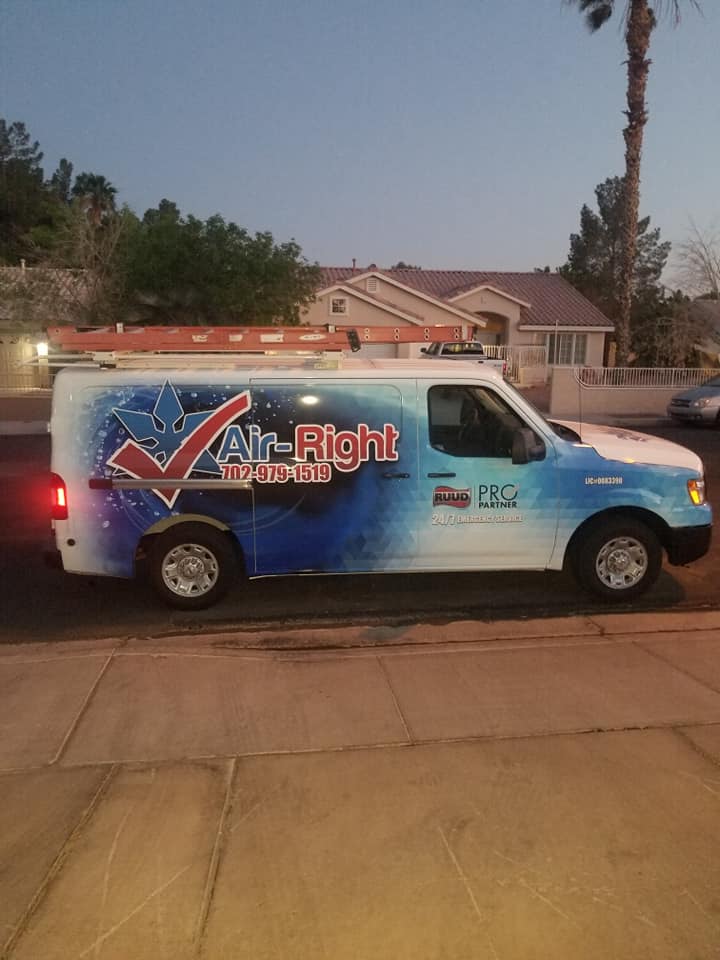
Troubleshooting Your Las Vegas, NV HVAC System for the October Transition
Air-Right

The High Stakes of the October HVAC Transition in the Desert When your system struggles to switch from intense summer cooling to fall heating, finding reliable home maintenance tips and troubleshooting becomes your…
The High Stakes of the October HVAC Transition in the Desert
When your system struggles to switch from intense summer cooling to fall heating, finding reliable home maintenance tips and troubleshooting becomes your immediate priority. October temperature drops in the desert are notorious for catching homeowners completely off guard. You go from enduring triple-digit heat directly into chilly desert nights, and that abrupt shift places an enormous, sudden demand on your heating equipment. Flipping your thermostat from "cool" to "heat" for the very first time on a cold evening is a critical moment of truth for your system.
The concrete problem many homeowners face is the hidden wear and tear inflicted by the relentless summer months. Your cooling equipment has likely been running for ten to fifteen hours a day, fighting against extreme thermal loads. By the time autumn arrives, the internal components are deeply fatigued. Simply demanding that this exhausted system instantly switch gears and provide safe, efficient heating can trigger underlying issues that have been quietly developing since July. This leaves you at a significant decision point: do you cross your fingers, risk a sudden breakdown on the first freezing night, or take a proactive approach?
Guessing about the condition of your equipment rarely ends well in our climate. Securing a professional inspection is the most reliable way to bridge the gap between seasons. For comprehensive support, exploring professional Air Conditioning services ensures your entire system is evaluated properly before the cold fully sets in. At Air-Right, our team has seen exactly how taking action now prevents minor summer fatigue from evolving into a major winter emergency.
How Extreme Thermal Cycling Weakens Components Over Summer
The Las Vegas Valley summer is unrelenting, and continuous operation in extreme heat does far more than just raise your energy bills. It actively degrades the internal mechanics of your HVAC system. Components like capacitors, contactors, and electrical wiring are subjected to blistering ambient temperatures, compounded by the heat generated from their own continuous operation. By the time the season changes, a system that seemingly "survived" the summer might actually be hanging on by a thread, ready to fail precisely when you demand heating.
One of the most destructive forces at play is extreme thermal cycling. This occurs when daytime highs soar well into the triple digits, only to plummet dramatically at night. The constant expansion and contraction of metal components, wiring harnesses, and electrical contacts create microscopic stress fractures and loosen connections. Over months of daily thermal cycling, these minor shifts compound into significant mechanical vulnerabilities.
When you need reliable AC Repair Service in Las Vegas, our technicians at Air-Right often trace fall heating failures back to these exact weakened components. A failing capacitor might have gone unnoticed during the final weeks of summer, but it will prevent the blower motor from engaging when you turn on the furnace. Understanding this connection is vital for proactive care.
The Hidden Electrical Toll
The electrical toll of the desert climate is often invisible until the system simply refuses to turn on. The degradation happens gradually across several key areas:
- Capacitor degradation: Prolonged exposure to high temperatures causes the fluid inside capacitors to break down or bulge, eventually leading to a complete loss of electrical charge.
- Wiring vulnerabilities: Constant thermal expansion and contraction can cause terminal connections to loosen, creating dangerous electrical arcing or complete power loss.
- Contactor pitting: The electrical switches that control your compressor and motors take a heavy beating, developing pitted surfaces that fail to conduct electricity efficiently.
| Summer Wear Factor | Impact on Components | Resulting Fall Heating Symptom |
|---|---|---|
| Continuous High Heat | Degrades capacitor fluids and structural integrity | Blower motor hums but fails to push warm air |
| Thermal Expansion/Contraction | Loosens electrical terminal connections | System intermittently shuts down or trips breakers |
| Heavy Operational Hours | Wears down contactor pads and motor bearings | Grinding noises or delayed system startup |
The Risk of Trapped Desert Dust During Fall Startup
One of the most alarming experiences during the October temperature drops is turning on your heater and immediately noticing a harsh, burning smell filling your home. While this often causes panic, it is usually a direct result of heavy, ultra-fine desert dust that has accumulated throughout the summer. The Las Vegas Valley is prone to high levels of airborne particulate matter, and this unique dust is notoriously difficult to capture with standard filtration.
Throughout the intense cooling season, this fine dust bypasses basic one-inch filters, settling deep within your ductwork, coating the blower motor, and heavily blanketing the furnace heat exchanger. When you activate the heating cycle for the first time, the heat exchanger rapidly warms up, literally baking the settled dust. This phenomenon of trapped dust igniting is what causes that temporary, distinct burning odor.
Beyond the smell, this presents a significant indoor air quality (IAQ) risk. Circulating baked particulate matter throughout your living space can irritate allergies, trigger asthma, and leave a fine layer of soot on your furniture. Upgrading your filtration and ensuring your home is properly sealed is critical. For instance, optimizing your Attic Insulation R-Value for Desert Homes can help reduce the amount of outdoor dust infiltrating your living space in the first place.
To mitigate these risks, homeowners should check and upgrade their filters specifically to handle fine desert dust before the first freeze. High-efficiency pleated filters are far better equipped to capture this particulate matter, ensuring that your first heating cycle is clean, safe, and odor-free.
Safe Troubleshooting Steps for Your Thermostat and Airflow
When your system fails to transition smoothly, taking a measured approach is essential. There are several safe, straightforward steps you can take to identify the problem before calling in the experts. However, it is vital to recognize the boundary between safe observation and dangerous DIY electrical work.
Our team at Air-Right is committed to honest diagnostics, ensuring you never pay for unnecessary major replacements when a simple fix is all that is required. For example, during a previous fall season, we responded to a homeowner who reached out after another company misdiagnosed their heater and quoted an expensive new motor. An Air-Right technician arrived within 90 minutes, diagnosed that the problem was actually just a minor wiring issue, and resolved it efficiently—saving the customer from a massive, unnecessary expense.
Follow these safe troubleshooting steps if your heat refuses to engage:
- Verify your thermostat programming: Ensure the system is actually set to "Heat" and that the temperature setpoint is at least three degrees higher than the current room temperature. Check that any smart scheduling hasn't reverted to a summer cooling profile.
- Inspect vents and registers: Walk through your home and ensure all supply and return vents are fully open and unobstructed. Blocked vents severely restrict airflow, causing the system to overheat and shut down prematurely.
- Check the air filter: A heavily clogged filter from summer dust storms will choke the blower motor. If the filter is dark gray or opaque, replace it immediately with a fresh, high-quality pleated filter.
- Listen for unusual noises: Stand near the indoor unit when it attempts to start. Note any clicking, humming, or grinding sounds. Communicating these specific noises to your technician drastically speeds up the diagnostic process.
When to Call a Professional
While checking filters and thermostats is safe, you must draw a hard line when it comes to the internal mechanics. Never attempt to open the furnace cabinet, bypass safety switches, or handle high-voltage electrical components. If you notice the system short-cycling (turning on and off rapidly every few minutes) or if a burning odor persists beyond the first ten minutes of operation, turn the system off at the thermostat and call for professional diagnostics immediately.

Assessing System Age and Extreme Desert Wear
Troubleshooting can only take you so far if the underlying equipment has simply reached the end of its usable life. In the Las Vegas Valley, the aging process of HVAC units is heavily accelerated by the extreme environment. A system operating in this climate endures significantly more operational hours per year than a similarly aged system in a milder, temperate region. What might be considered a "middle-aged" ten-year-old unit elsewhere is often deeply fatigued and nearing the end of its lifecycle here.
Understanding this accelerated wear helps you make pragmatic decisions about your home comfort. Signs of a deeply fatigued system include frequent breakdowns, steadily rising energy bills despite regular filter changes, and a compressor that groans or struggles to start. When the core components begin to fail systematically, continuing to pour money into patchwork repairs becomes a losing battle.
Upgrading to modern, high-efficiency equipment designed specifically to handle local climate extremes offers long-term peace of mind. If you find yourself constantly resetting breakers or dealing with weak airflow, exploring AC Installation and Replacement might be the most cost-effective path forward.
During a sudden winter furnace failure, our team recently helped a local customer who experienced a complete system shutdown that left their home freezing. Our dispatch team scheduled a fast technician visit, and we arrived promptly to inspect the unit. Because our technicians accurately assessed the age and condition of the failing components, we found and fixed the immediate problem within about 20 minutes, while providing a clear, honest assessment of the system's remaining lifespan.
| System Age (Desert Climate) | Expected Condition | Recommended Action |
|---|---|---|
| 1 to 5 Years | Peak efficiency, minor wear | Routine bi-annual maintenance and filter changes |
| 6 to 9 Years | Moderate fatigue, increasing wear on electrical parts | Proactive part replacements (capacitors, contactors) |
| 10+ Years | Heavy fatigue, high risk of major component failure | Begin planning for full system replacement |
Why Proactive Maintenance Outperforms Emergency Heating Repairs
There is a stark contrast between the stress of an urgent, mid-winter heating failure and the quiet peace of mind that comes from a scheduled fall tune-up. Waiting for the October temperature drops to reveal a hidden mechanical flaw is a gamble that often results in shivering through a cold weekend while waiting for an emergency repair slot. Proactive care fundamentally shifts the balance of power back to the homeowner.
A professional pre-winter inspection is highly detailed. It goes far beyond simply swapping a filter. Technicians meticulously inspect the heat exchanger for microscopic, dangerous cracks that could leak carbon monoxide. They test all safety limits and pressure switches to ensure the furnace will shut down safely if a problem occurs. They also clear out the baked-on desert dust from the blower assembly, restoring proper airflow and protecting your indoor air quality.
Investing in AC Maintenance and Tune-Ups actively extends the lifespan of your equipment. By catching a small, inexpensive failing component—like a weakened capacitor—in October, you prevent it from destroying a major motor in December.
Even with the best maintenance, older systems eventually give out, but having a trusted local expert makes all the difference. For example, our installation team recently helped a Sun City Anthem homeowner who had an aging system from 2000 that finally suffered a catastrophic compressor failure during the fall. We quickly stepped in and replaced the tired equipment with two new 3-ton systems, securing reliable heating backed by strong warranties. With deep local expertise and fast dispatch times for urgent heating failures, you are never left out in the cold.
Secure Your Comfort Before the Cold Arrives: Home Maintenance Tips and Troubleshooting
Preparing your HVAC system for the seasonal shift is not just about comfort; it is about protecting your investment and ensuring the air your family breathes is clean and safe. The October temperature drops will expose any weaknesses left behind by the harsh summer, making proactive home maintenance tips and troubleshooting essential for every desert homeowner.
Our local experts at Air-Right are ready to handle this transition safely and efficiently, ensuring your heating equipment fires up perfectly on the very first try. Don't wait for a freezing night to discover your furnace is struggling. Schedule a comprehensive inspection and diagnostic visit today to secure reliable, efficient warmth for the months ahead.
Frequently Asked Questions
Why does my heater smell like burning dust when I turn it on?
Your heater smells like burning dust because ultra-fine desert particulate matter settles on the heat exchanger during the summer months. When the furnace fires up for the first time in the fall, this trapped dust literally bakes off the metal surfaces. While the smell usually dissipates within an hour, persistent odors should be investigated by a professional to rule out electrical issues.
How do I prep my HVAC for the Las Vegas winter?
Prepping your HVAC involves clearing away outdoor debris, swapping out summer-clogged filters, and updating your thermostat schedules. Because of the extreme thermal wear from the summer, it is also highly recommended to schedule a professional tune-up. A technician will calibrate the system specifically for the demands of the desert winter.
Should I get an HVAC inspection before turning on my heat?
Yes, securing an inspection before turning on the heat is the safest approach. A professional will check the heat exchanger for dangerous cracks and ensure all safety switches are fully operational. This proactive step prevents sudden breakdowns and protects your home from potential carbon monoxide risks.
What is routine HVAC maintenance for a desert climate?
Routine maintenance in a desert climate requires bi-annual professional visits due to the extreme operating hours and heavy dust loads. It includes deep-cleaning the blower motor, testing all electrical components stressed by thermal cycling, and verifying refrigerant levels. Frequent filter changes—often monthly during peak seasons—are also a mandatory part of desert maintenance.
How can I safely troubleshoot my thermostat if the heat won't engage?
Safely troubleshoot your thermostat by first verifying it is set to "Heat" and that the target temperature is definitively higher than the room's ambient temperature. Check the batteries if the display is blank or unresponsive. If the settings are correct and the furnace still fails to engage, avoid opening any equipment panels and call a licensed technician to diagnose the wiring.
Need Help?
Contact us today to discuss your needs. Our team is ready to help.
Related Articles
- Seasonal Home Maintenance Checklist: Avoiding the Need for 24-Hour Air Conditioning Service in Las Vegas, NV
- Is It a True Emergency? A Triage Guide for 24-Hour Air Conditioning Service in Las Vegas, NV
- Is That Burning Smell an Emergency? Fall Triage Guide for 24 Hour Air Conditioning Service in Las Vegas, NV
Related articles


Ready to Get Started?
Whether you need a repair, maintenance, or a new installation, our expert team is here to help.