The Ultimate Guide to How Desert Dust Affects Filter Lifespan
Air-Right

<p>Learn how desert dust affects filter lifespan and discover proven ways to protect your HVAC system in Las Vegas.</p>
Why Desert Dust Is Your HVAC Filter’s Biggest Enemy in Las Vegas
Understanding how desert dust affects filter lifespan is one of the most important things a Las Vegas homeowner can do to protect their HVAC system and keep energy bills under control. In most parts of the country, a standard air filter lasts 60 to 90 days. In the Mojave Desert, that same filter can be completely saturated in as little as 30 days — and during a dust storm or peak wind event, even sooner.
Quick Answer: How Desert Dust Affects Filter Lifespan
| Condition | Typical Filter Lifespan |
|---|---|
| Mild, non-desert climate | 60–90 days |
| Desert climate (normal conditions) | 30 days |
| Desert climate (peak wind events or dust storms) | As little as 2–4 weeks |
| Desert climate with pets or allergies | Check every 2 weeks |
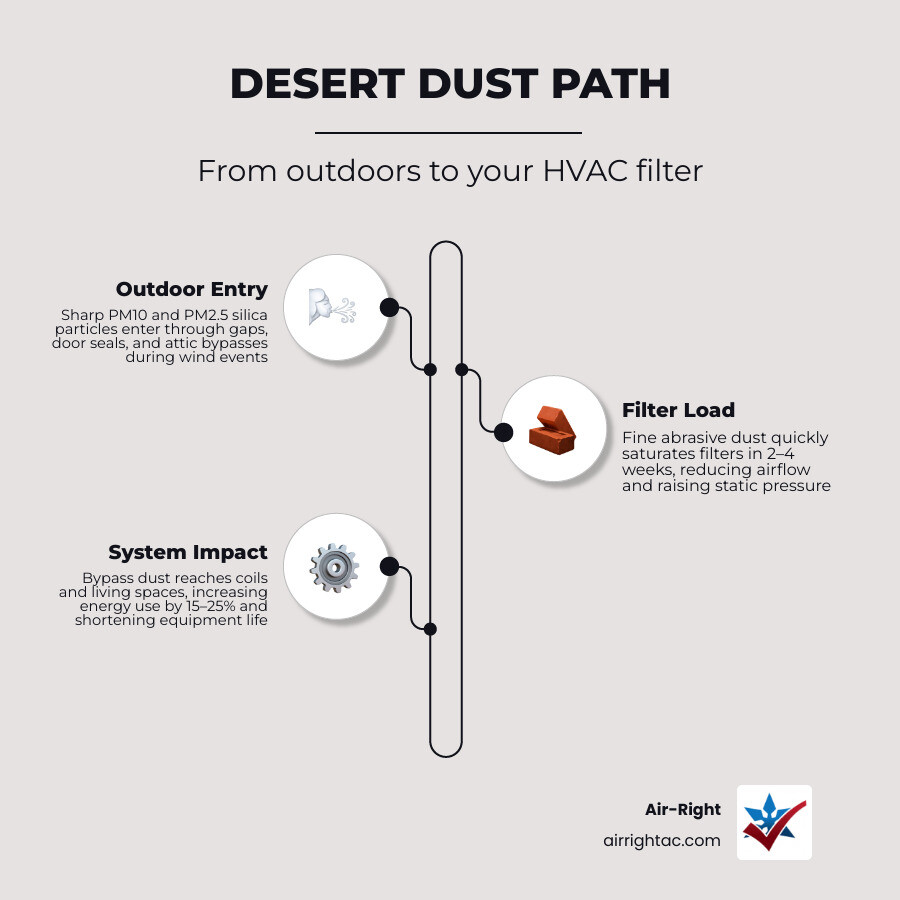
Here is why this matters: desert air carries an unusually high concentration of fine particles — silica, mineral fragments, and microscopic PM2.5 and PM10 matter — that hit your filter hard and fast. Unlike regular household dust, these particles are sharp, lightweight, and stay airborne for days at a time because the dry desert air gives them nothing to absorb and settle. They work through every gap they can find, and your HVAC filter is the first major barrier standing between that airborne grit and your home’s mechanical components.
The result? Filters load up faster, airflow drops sooner, and systems that go without timely maintenance end up drawing significantly more energy — research shows a dirty filter can increase energy consumption by 15% to 25% compared to a clean one. Over a long Las Vegas cooling season, that adds up fast.
This guide covers everything you need to know: what makes desert dust so different, how quickly it clogs filters, what that does to your system and your health, and what a smart maintenance schedule actually looks like for Southern Nevada homes.
What Makes Desert Dust Different From Regular Household Dust?
Household dust is a mixed bag. It usually contains skin cells, fibers, pet dander, pollen, and bits of debris generated indoors. Desert dust in Las Vegas, Henderson, and Boulder City is different. It contains more mineral particles, including silica and other hard fragments, along with PM10 and PM2.5 particles that are much finer than what many homeowners picture when they think of “dust.”
That difference matters because fine mineral dust behaves differently in the air and inside filters. It is smaller, sharper, more abrasive, and more likely to stay suspended long enough to get pulled into your return air system.
How desert dust affects filter lifespan at the particle level
A lot of desert dust falls in the roughly 2 to 10 micron range. By comparison, human skin cells are often around 20 to 24 microns. Smaller particles can work deeper into filter media and plug tiny pathways faster than larger debris.
That means how desert dust affects filter lifespan comes down to more than just “more dirt.” It is also about pore blocking. Fine particles fill the spaces in the filter media, increasing resistance to airflow. Sharp mineral fragments can also create abrasive loading, especially if the filter is low quality or poorly fitted.

Why desert dust stays airborne longer and infiltrates tighter homes
Desert climates are dry, windy, and full of pressure changes. In Southern Nevada, spring winds, dust storms, and monsoon outflows can keep particles suspended for long periods. Low humidity means dust does not absorb much moisture, so it settles more slowly.
Even fairly tight homes are not airtight. Dust gets in through:
- Door gaps
- Window seals
- Recessed lighting openings
- Attic bypasses
- Duct leaks
- Return-air leaks
- Garage-to-house pathways
- Open doors during windy periods
So yes, even with the windows closed, dust still finds a way. Desert dust is basically the world’s least invited houseguest.
Why desert dust is harder on HVAC and engine filters than normal dust
Mineral dust is especially hard on filters because silica is abrasive. In engine applications, research shows particles in the 1 to 20 micron range are among the most damaging for wear. That same fine range is also tough on HVAC filtration because it loads the media fast and can bypass weak seals.
In severe dust conditions, engines and HVAC systems both experience a form of “severe service.” One research example found a tracked diesel engine operating in 1 g/m3 dust concentration could ingest more than 170 kg of dust over 1000 km. Residential HVAC systems are obviously different, but the lesson is the same: high dust concentration changes maintenance intervals dramatically.
How Quickly Desert Dust Clogs Filters and Changes Replacement Schedules
The national “change it every 90 days” rule is not a safe default for desert homes. In our climate, a 30-day inspection cycle makes much more sense, and many homes need replacement every four weeks or sooner.
How desert dust affects filter lifespan in HVAC systems during normal vs dusty months
In Las Vegas-area homes, filter life depends on more than outdoor dust alone. It also changes with:
- Spring wind events
- Summer AC runtime
- Nearby construction
- Household occupancy
- Pets
- Allergy sensitivity
- Duct leakage
- Filter type and size
Here is a practical comparison:
| Environment | Typical Check Interval | Typical Replacement Timing |
|---|---|---|
| Mild, non-desert home | Every 60 days | 60-90 days |
| Las Vegas area, normal dust | Every 30 days | Around 30 days |
| Dusty season or wind advisories | Every 2 weeks | 2-4 weeks |
| Desert home with pets or heavy occupancy | Every 2 weeks | Often under 30 days |
| Higher-capacity media filter system | Monthly check | Often longer, depending on pressure drop |
If you want more local context, see How Desert Dust and Heat Change Your AC Service Schedule.
How fast engine and cabin air filters load up in desert driving
Desert dust is not just a home issue. Vehicle filters also load up faster in Southern Nevada. In dusty driving conditions, engine air filters may need inspection much sooner than standard service intervals. Severe-duty guidance often points to replacement in the 5,000 to 7,500 mile range for very dusty use, while some engine air filters in severe service may be changed in the 7,500 to 15,000 mile range depending on vehicle design and use. Cabin air filters often need attention in the 12,000 to 15,000 mile range or earlier if airflow drops.
The same desert conditions that choke HVAC filters can reduce engine breathing and cabin airflow too.
Why a fixed calendar often fails in desert climates
A calendar helps, but a rigid schedule is not enough in a place where one dust storm can do a week’s worth of loading in a day.
A smarter approach includes:
- Monthly inspections as a baseline
- Extra checks after wind events
- Keeping a filter-change log
- Watching for visible gray buildup
- Monitoring airflow and comfort
- Using pressure-drop readings when available
As filters load, static pressure rises. Research notes that a 100% increase in static pressure across the filter can cause a major drop in airflow at the registers. That is why dynamic scheduling beats guessing.
What Clogged Filters Do to Performance, Energy Use, and Equipment Life
A filter does not fail all at once. It gradually loads up, airflow falls, and the whole system starts compensating. That is where the real trouble begins.
Measurable HVAC impacts of a dirty filter
A dirty filter can cause:
- Higher static pressure
- Lower CFM airflow
- Longer run times
- Reduced cooling delivery
- Higher blower amperage
- Poor temperature split performance
- More energy use
Research indicates a dirty filter can increase HVAC energy draw by 15% to 25% compared with a clean filter. In a long Las Vegas summer, that extra effort puts real strain on the system.
How neglected filters shorten component lifespan
Restricted airflow does not just reduce comfort. It stresses components that are expensive and important to system life, including:
- Blower motors
- Evaporator coils
- Condenser coils
- Capacitors and electrical parts
- Compressors
When airflow drops too far, evaporator coils can get too cold and freeze. Dirty indoor conditions can also let more dust settle on the evaporator coil, where it acts like insulation and reduces heat transfer. Outdoors, dusty condenser coils raise operating pressure and temperature. Together, those issues force longer run times and more start-stop cycles, both of which shorten equipment life.
For related reading, see Why Your AC Needs a Checkup Before the Next Heatwave and Maintenance Secrets to Keep Your AC from Quitting on You.
What homeowners notice first when filter loading gets severe
Most homeowners notice symptoms before they see the filter itself:
- Weak airflow from vents
- Rooms that stay warmer than others
- Longer cooling cycles
- More dust on furniture shortly after cleaning
- Higher utility use
- Musty or stale smells
- More sneezing, coughing, or irritated eyes
If your home feels dusty again one day after cleaning, your filter may already be waving a tiny white flag.
How Desert Dust Impacts Indoor Air Quality and Health Inside the Home
Desert dust affects comfort and HVAC performance, but it also changes what you breathe indoors.
How desert dust affects filter lifespan and indoor air quality together
Once a filter becomes saturated, it loses effectiveness. Airflow drops, and depending on filter fit and system design, some dust may bypass the filter edges or keep recirculating through the system. That can lead to:
- Dust settling around registers
- More buildup in ducts and return grilles
- Higher particle levels in bedrooms and living areas
- Faster dust accumulation on surfaces
- Poorer indoor air quality overall
This is one reason filter maintenance and indoor air quality are closely linked, especially in desert homes.
Health effects linked to fine desert particles in arid regions
Fine dust can irritate the eyes, nose, throat, and lungs. PM10 and especially PM2.5-sized particles are small enough to reach deeper into the respiratory system, making them more concerning for sensitive groups.
Common symptoms during dusty periods include:
- Sore throat
- Stuffy or runny nose
- Dry cough
- Itchy or watery eyes
- Sinus irritation
- Headache
- Increased asthma symptoms
- More breathing trouble for people with COPD
People with allergies, asthma, older adults, young children, and anyone with existing respiratory issues tend to notice dust events the most.
What increases indoor dust levels even with windows closed
Closed windows help, but they do not solve everything. Dust infiltration often rises because of weaknesses in the home’s envelope and air distribution system, such as:
- Worn weather-stripping
- Poor door sweeps
- Leaky duct joints
- Attic penetrations
- Gaps around plumbing or wiring
- Insulation voids
- Return leaks pulling dusty attic air
Improving the building envelope can reduce how fast filters load. Our article The Cold Hard Truth: Signs Your Home Needs Better Insulation explains why those hidden gaps matter.
Which Filters and Maintenance Strategies Work Best in Dusty Desert Environments?
The best filter in the desert is not simply “the highest rating you can buy.” It is the best match for your HVAC system, duct design, and dust conditions.
Best MERV ratings for desert homes without choking airflow
For many Las Vegas-area homes:
- MERV 8 to 11 often works well for basic protection with good airflow
- MERV 13 is often a strong choice for dusty environments if the system can handle it
- HEPA-level filtration is excellent for particle capture, but it is usually too restrictive for standard residential HVAC systems unless the system is specifically designed for it
Research-based guidance commonly favors pleated MERV 13 filters in dusty climates because they capture fine particles effectively without the extreme restriction of true HEPA. But compatibility matters. If the blower, duct system, or filter rack is not designed for that resistance, airflow can suffer.
A proper fit matters too. Even a good filter does a poor job if air slips around it.
When media filters, pre-filters, and whole-home filtration make sense
Higher-capacity media filters can be especially useful in desert homes because they generally hold more dust than thin 1-inch filters. In some systems, media filters may last longer while maintaining acceptable pressure drop, though they still need regular inspection.
Depending on the home, good options may include:
- Deep media filter cabinets
- Upstream pre-filters for peak dust periods
- Whole-home air cleaners
- Electrostatic filtration options
- Portable HEPA room purifiers for bedrooms or high-use spaces
These upgrades can make a big difference in homes with heavy dust exposure, allergy concerns, or recurring wind-event problems. For more on climate-specific planning, see Beating the Heat with a Desert-Proof Maintenance Plan.
Professional practices that extend filter life and reduce dust bypass
Good maintenance is not just changing the filter. It also means reducing the amount of dust getting to the filter and making sure all incoming air actually goes through it.
Helpful professional practices include:
- Pressure-drop testing across the filter
- Checking total system static pressure
- Inspecting duct joints and returns
- Sealing filter cabinets
- Cleaning outdoor coils and removing sand buildup
- Tracking maintenance records
- Checking airflow and temperature performance
These steps can extend effective filter life and improve overall performance. They also support the kind of maintenance timing discussed in How Desert Dust and Heat Change Your AC Service Schedule.
Seasonal Dust Events, Smart Scheduling, and Homeowner Prevention Steps
In Southern Nevada, your filter schedule should change with the weather.
How weather patterns change your filter replacement schedule
Different parts of the year create different dust loads:
- Spring often brings stronger winds and more airborne dust
- Summer means long AC runtimes, so more air passes through the filter
- Dust storms and outflow events can spike filter loading suddenly
- Nearby construction can create local dust surges
- Shoulder seasons may allow slightly longer intervals, but only if inspection supports it
A practical rule: inspect after any noticeable dust event, even if the filter is “not due yet.”
Practical ways to reduce dust infiltration into HVAC systems and living spaces
Homeowners can reduce dust loading by limiting how much gets indoors in the first place:
- Keep windows closed during windy periods and dust advisories
- Replace worn weather-stripping and door sweeps
- Seal gaps around penetrations and attic access points
- Use damp dusting instead of dry dusting
- Vacuum with a HEPA-equipped vacuum
- Avoid leaving doors open unnecessarily on windy days
- Make sure return-air pathways are intact and sealed
- Keep the area around the outdoor unit clear of debris and drifting dust
None of these steps eliminates dust, but together they can slow filter loading and improve indoor air quality.
A smarter maintenance plan for Las Vegas-area homes
For most homes in Las Vegas, Henderson, and Boulder City, we recommend a plan that is flexible rather than rigid:
- Inspect standard filters monthly
- Check every 2 weeks during dusty seasons or if you have pets or allergies
- Replace after major wind events if visibly loaded
- Schedule professional tune-ups twice a year
- Keep a simple filter log with dates and observations
- Ask for airflow and static-pressure evaluation if filters seem to clog unusually fast
If you want help building a maintenance routine that fits your home, see More info about ac services.
Frequently Asked Questions about How Desert Dust Affects Filter Lifespan
How often should you change your AC filter in the desert?
For many Southern Nevada homes, every 30 days is the safest baseline for standard filters. During dust storms, spring winds, heavy summer runtime, or in homes with pets or allergy concerns, check every 2 weeks and replace as needed. Media filters may last longer, but they still need inspection.
Is MERV 13 always the best choice for desert dust?
Not always. MERV 13 is often a very good option in dusty climates because it captures fine particles well, but only if your HVAC system can maintain proper airflow with it installed. In some homes, MERV 8 to 11 may be a better fit. The right answer depends on blower strength, duct design, filter size, and total static pressure.
What happens if you ignore filter maintenance in a dusty area?
You can expect reduced airflow, higher energy use, weaker comfort, more indoor dust, greater blower strain, possible frozen coils, and increased risk to major components like the compressor. Neglect also worsens indoor air quality, especially during long desert cooling seasons.
Conclusion
Desert dust is not ordinary dust, and that is the whole story behind how desert dust affects filter lifespan. In Las Vegas-area homes, fine mineral particles, low humidity, high winds, and long cooling seasons combine to clog filters much faster than standard recommendations assume.
The good news is that the solution is straightforward: inspect more often, use the right filter for your system, reduce dust infiltration where possible, and schedule maintenance based on real conditions instead of a generic calendar. That approach helps protect airflow, improve indoor air quality, and support longer equipment life.
If you want a smarter filter and maintenance plan for your home in Las Vegas, Henderson, or Boulder City, explore More info about ac services.
Need Help?
Contact us today to discuss your needs. Our team is ready to help.
Related Articles
- Is It a True Emergency? A Triage Guide for 24-Hour Air Conditioning Service in Las Vegas, NV
- Is That Burning Smell an Emergency? Fall Triage Guide for 24 Hour Air Conditioning Service in Las Vegas, NV
- Beyond 24-Hour Air Conditioning Service in Las Vegas: Heat Pump vs. Gas Furnace Options for Fall Upgrades
Related articles


Ready to Get Started?
Whether you need a repair, maintenance, or a new installation, our expert team is here to help.