The Average Lifespan of an AC in Extreme Heat
Air-Right

<p>Discover how desert climate affects AC lifespan in Las Vegas—8-12 years vs. national 15-20. Learn maintenance tips to extend life in extreme heat.</p>
Why the Desert Is So Hard on Your Home’s Air Conditioner
Understanding how desert climate affects AC lifespan starts with one simple reality: your system in Las Vegas, Henderson, or Boulder City works far harder than almost anywhere else in the country.
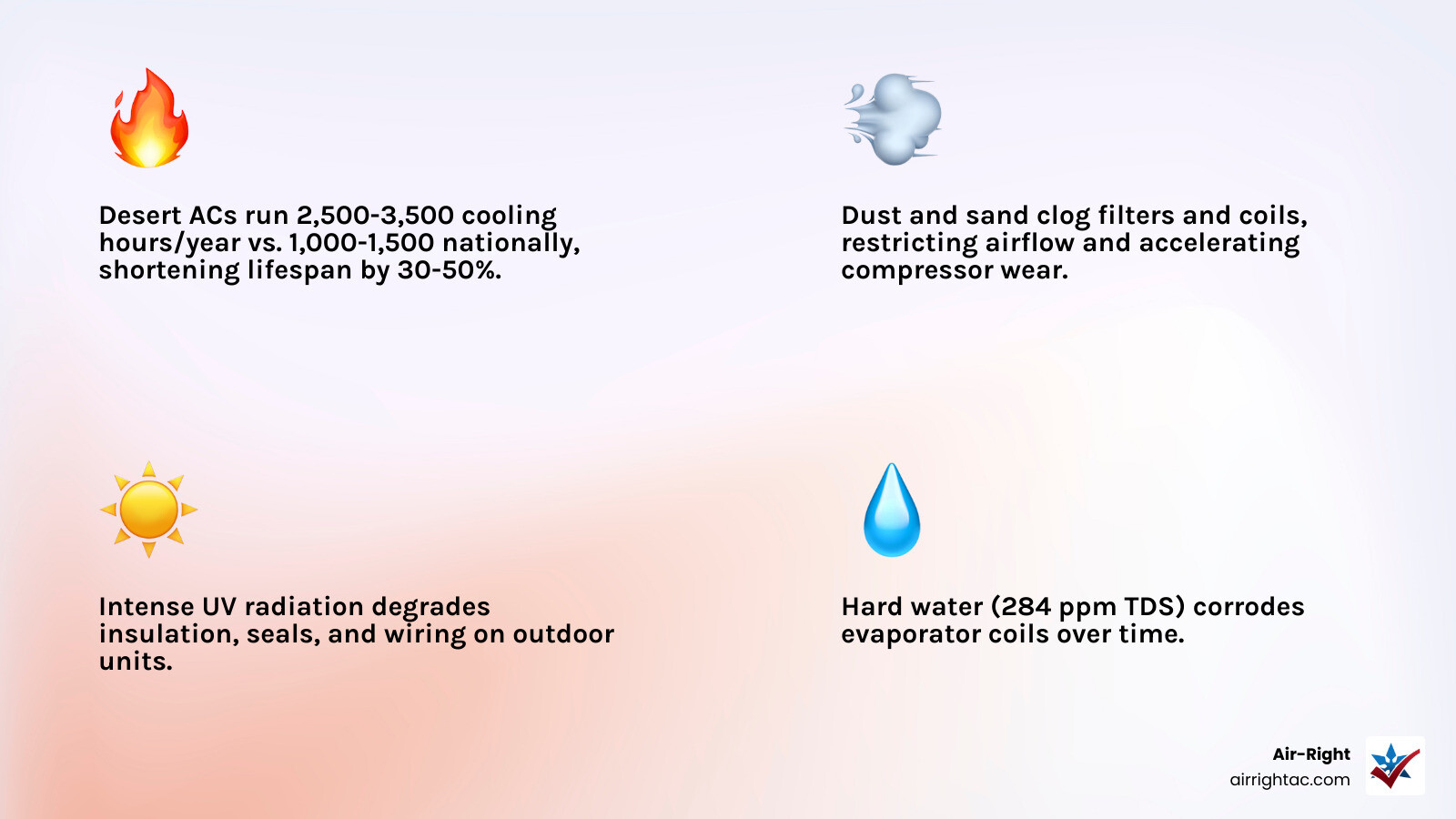
In moderate climates, a central AC unit might log 1,000 to 1,500 cooling hours per year. In the Las Vegas desert, that number jumps to 2,500 to 3,500 hours — and in some high-desert areas, even higher. That kind of nonstop runtime, combined with 100°F+ temperatures, blowing dust, intense UV exposure, and hard water, adds up to serious wear on every component in your system.
The result? While the national average AC lifespan is 15 to 20 years, desert systems in Las Vegas typically last just 10 to 14 years — and in the harshest conditions, that window can shrink even further.
Here is a quick summary of how desert climate shortens AC lifespan:
- Extreme heat forces the compressor and fan motors to run longer and harder every single day
- Dust and sand clog filters, coat coils, and restrict airflow — accelerating component wear
- UV radiation breaks down insulation, seals, and wiring on outdoor units
- Temperature swings in spring and fall cause repeated on/off cycling that stresses the system
- Hard water (Las Vegas municipal water averages 284 ppm total dissolved solids) corrodes evaporator coils over time
- Low humidity dries out rubber seals and belts faster than in coastal or humid climates
- Nonstop summer runtime burns through lubricants and electrical components well ahead of schedule
The good news is that with the right maintenance habits and a few smart upgrades, you can get closer to the high end of that desert lifespan range — and avoid getting blindsided by a breakdown during the worst heat of summer.
How Desert Climate Affects AC Lifespan
When we talk about how desert climate affects ac lifespan, we are looking at a perfect storm of environmental stressors. In Southern Nevada, the air conditioning system isn’t just a luxury; it is a vital piece of safety equipment. Because it serves such a critical role, the duty cycle—the amount of time the system is actually running—is significantly higher than in more temperate regions.
In areas like Las Vegas or Arizona, the system often faces weeks or even months where the thermometer never dips below 100°F during the day. This creates a massive “thermal gradient,” which is a fancy way of saying your AC has to work incredibly hard to move heat from your 75°F living room into a 115°F backyard.
How desert climate affects ac lifespan compared to moderate climates
The gap between a desert AC and a coastal or “moderate” climate AC is startling. While a homeowner in a mild climate might enjoy 20 years of service from their unit, desert residents should prepare for a much shorter timeline.
| Region Type | Typical AC Lifespan |
|---|---|
| National Average (Moderate) | 15 – 20 Years |
| Las Vegas (Extreme Heat) | 10 – 14 Years |
| High Desert (Utah/New Mexico) | 12 – 15 Years |
| West Texas / Coachella Valley | 7.5 – 12 Years |
On average, the desert climate shaves 5 to 7 years off the life of a standard central AC unit. In extreme cases, like West Texas, life expectancy can drop by as much as 50% compared to the national average.
Why nonstop summer runtime wears systems out faster
Think of your AC like a car. If you drive 10,000 miles a year, your engine will last a long time. If you drive 40,000 miles a year, it’s going to wear out much sooner.
In moderate climates, units see about 1,000 to 1,500 cooling hours annually. In the Las Vegas Valley, we see systems logging 2,500 to 3,500 hours. In some high-desert regions, that number can even spike to 5,000 hours. These long cycles lead to:
- High Head Pressure: The hotter it is outside, the higher the pressure inside the system, which puts a massive strain on the compressor.
- Lubricant Breakdown: High heat causes the oil that lubricates the compressor to thin out and degrade faster.
- Motor Fatigue: Fan motors that run nearly 24/7 during July and August simply reach their mechanical end-of-life sooner.
The desert-specific stressors homeowners don’t always notice
It isn’t just the heat on the thermometer. How desert climate affects ac lifespan also involves “hidden” factors. For example, the intense UV radiation in Nevada can make the plastic and rubber components of your outdoor unit brittle.
Furthermore, the significant temperature swings between our scorching days and cooler desert nights cause the metal components in your system to expand and contract rapidly. This “thermal cycling” can eventually lead to tiny cracks in the coils, resulting in refrigerant leaks. Additionally, the low humidity in our area can dry out rubber seals and belts, much like how the desert air dries out your skin.
Which AC Parts Fail First in Desert Conditions
Because the desert environment is so aggressive, certain parts of your AC are “on the front lines” and tend to fail before others.
Compressor, capacitors, and motors under extreme heat
The compressor is the “heart” of your system. In a Las Vegas summer, it is pumping high-pressure refrigerant through the heat of the day. If the outdoor temperature exceeds the design limits of the unit (often around 115°F), the compressor can overheat, leading to a premature shutdown or a total mechanical failure.
Capacitors are also highly vulnerable. These small, cylindrical components provide the electrical “shove” needed to start your motors. They are extremely sensitive to heat. When it gets too hot, they can bulge or “pop,” leaving you with a system that hums but won’t start.
How dust, sand, and particulates damage coils and airflow
Dust is the silent killer of desert ACs. During a dust storm, fine particulates are sucked into the outdoor condenser coil. This creates a “blanket” of dirt that prevents the system from releasing heat efficiently.
When your coils are dirty, the system has to run longer and under higher pressure to achieve the same cooling effect. This doesn’t just raise your power bill; it actively kills your compressor. For more on this, check out How Desert Dust and Heat Change Your AC Service Schedule.
How UV, dry air, and temperature swings accelerate wear
While we often focus on the mechanical parts, the “infrastructure” of the unit suffers too. UV rays can degrade the insulation on the refrigerant lines, causing them to lose efficiency. The dry air can cause seals to shrink, leading to slow refrigerant leaks that are hard to find. These small issues, if ignored, lead to the “big” failure of the compressor or the evaporator coil.
Desert AC Maintenance That Adds Years to System Life
While the desert is tough, it isn’t a death sentence for your AC. Proactive maintenance is the only way to fight back against the environment and ensure your system hits that 14-year mark rather than failing at year 8.
How often filters should be changed in dusty desert homes
In a moderate climate, you might get away with changing your filter every three months. In Las Vegas, that’s a recipe for disaster. We recommend checking your filters every 30 days during the peak of summer. If you live near a busy road, have pets, or if we’ve had a particularly active dust storm season, you might even need to change them more frequently. A clogged filter restricts airflow, forcing the indoor blower motor to work harder and potentially causing the evaporator coil to freeze up.
How often coils should be cleaned and inspected
Your outdoor condenser coils should be cleaned at least once a year—ideally in the spring before the first heatwave hits. If your home is in a particularly windy or dusty area of Henderson or Boulder City, a second cleaning in the fall is a smart move. Keeping those coils shiny and clear of debris allows for maximum heat transfer. See Why Your AC Needs a Checkup Before the Next Heatwave for more details on what a professional tune-up should cover.
Best ways to reduce strain in extreme heat
There are several “home hacks” to help your AC survive the desert:
- Shade the Unit: Providing shade for your outdoor condenser can lower the surrounding air temperature, but be careful not to block the airflow. The unit needs to “breathe” to release heat.
- Smart Thermostats: Use a smart thermostat to maintain steady temperatures. Avoid “extreme setbacks” (like letting the house get to 85°F while you are at work and then asking the AC to drop it to 72°F at 5:00 PM). This creates a massive load on the system during the hottest part of the day.
- Insulation and Sealing: Improving your attic insulation and sealing leaky ducts ensures that the cold air your AC works so hard to produce actually stays in your home.
Signs Your Desert AC Is Failing Prematurely
Knowing the warning signs can save you from a total system collapse in the middle of a 110-degree afternoon.
Early warning signs homeowners in Las Vegas should not ignore
If your system is starting to struggle, it will usually “tell” you before it dies completely. Watch out for:
- Rising Energy Bills: If your bill is significantly higher than the same month last year (and rates haven’t changed), your system is likely losing efficiency.
- Frequent Repairs: If you are calling us every few months for a new capacitor or a fan motor, the system is likely reaching its end-of-life.
- Inconsistent Cooling: Hot spots in certain rooms or a system that never seems to reach the thermostat setting are red flags.
- Loud Noises: Grinding, squealing, or “hard starting” (where the lights flicker when the AC kicks on) are signs of mechanical distress. Check our guide on How to Tell When Your Air Conditioner Needs Repair for more info.
What it means when the system blows air but not cold air
This is a classic desert symptom. If your vents are moving air but it feels “room temperature” or warm, you might have a frozen evaporator coil, a refrigerant leak, or a failed compressor. This is often caused by a combination of dirty coils and extreme outdoor heat. For a deeper dive into this specific problem, read My AC is Ghosting Me: Why Your Unit Blows Air But No Coldness.
When a heatwave turns a weak system into an emergency
In the desert, an AC failure isn’t just an inconvenience—it can be a health risk, especially for seniors or those with medical conditions. When demand on the power grid is high and temperatures are at their peak, a system that was “barely hanging on” will often give out. If you find yourself in this situation, don’t panic. We’ve put together The Ultimate Survival Guide for When Your AC Quits During a Heatwave to help you stay safe.
Repair or Replace an Aging AC in Extreme Heat?
Deciding whether to sink more money into an old unit or invest in a new one is a tough call. In the desert, the math changes because a breakdown in July is so much more punishing than a breakdown in a cooler climate.
How desert climate affects AC lifespan when the unit is already 10+ years old
Once a desert AC hits the 10-year mark, it is effectively a “senior citizen.” Even if it is still running, its efficiency has likely dropped significantly. An older unit might have a SEER (Seasonal Energy Efficiency Ratio) of 10 or 12, whereas new units start at 14 or 15 and go much higher. In our climate, that efficiency gap translates to hundreds of dollars in savings every summer.
The 50% rule and other smart replacement guidelines
A good rule of thumb is the 50% Rule: if the cost of a repair is more than 50% of the value of a new system, it’s time to replace. However, in Las Vegas, we also suggest considering the “Age + Repair Cost” rule. If the age of the unit multiplied by the repair cost exceeds $5,000, replacement is often the smarter financial move.
If you are on the fence, check out How to Decide If Your AC Deserves a Second Chance and Signs Your AC Needs Replacing Not Just Fixing.
What to look for in a new AC for desert climates
If you are replacing your unit, don’t just buy the cheapest one available. Look for:
- High SEER Ratings: We recommend a SEER of 16 or higher for the Las Vegas climate to maximize your energy savings.
- Variable-Speed Compressors: Unlike standard compressors that are either “on” or “off,” variable-speed models can ramp down to lower speeds. This is perfect for the desert because it allows the system to run longer at a lower intensity, which removes more heat and puts less strain on the parts.
- Heat-Resistant Components: Some manufacturers offer units specifically designed for the Southwest with enhanced coatings on the coils to resist corrosion and better insulation for electrical parts.
Frequently Asked Questions About How Desert Climate Affects AC Lifespan
How long should an AC last in Las Vegas, Arizona, or other desert climates?
In Las Vegas, the average is 10 to 14 years. In high desert regions like Salt Lake City or parts of New Mexico, you might get 12 to 16 years. This is significantly shorter than the 15 to 20 years expected in moderate coastal regions.
Does hard water or low humidity affect AC lifespan?
Yes. Las Vegas water is notoriously “hard,” with high levels of dissolved solids (around 284 ppm). If you use a misting system near your AC or if your evaporator coil is constantly exposed to this water, it can lead to accelerated corrosion. Low humidity also dries out the rubber components and seals within the unit.
Can shading the outdoor unit and improving insulation really help?
Absolutely. Shading the unit can reduce the workload on the compressor by a measurable margin. However, the biggest “bang for your buck” is often attic insulation. By keeping the heat out of your home in the first place, your AC doesn’t have to cycle nearly as often, which directly extends its mechanical life.
Conclusion
The desert is a beautiful place to live, but it is undeniably tough on machinery. Understanding how desert climate affects ac lifespan is the first step in protecting your investment. By staying on top of monthly filter changes, scheduling biannual professional tune-ups, and knowing when to trade in an aging system for a high-efficiency model, you can stay cool even when the Las Vegas sun is at its most relentless.
At Air-Right, we pride ourselves on providing Las Vegas, Henderson, and Boulder City homeowners with clear, no-pressure recommendations. Whether you need a quick repair to get through a heatwave or a full system replacement to lower your bills, we are here to help.
Need Help?
Contact us today to discuss your needs. Our team is ready to help.
Related Articles
- Is It a True Emergency? A Triage Guide for 24-Hour Air Conditioning Service in Las Vegas, NV
- Is That Burning Smell an Emergency? Fall Triage Guide for 24 Hour Air Conditioning Service in Las Vegas, NV
- Beyond 24-Hour Air Conditioning Service in Las Vegas: Heat Pump vs. Gas Furnace Options for Fall Upgrades
Related articles


Ready to Get Started?
Whether you need a repair, maintenance, or a new installation, our expert team is here to help.