How to Keep Your Desert Home from Turning Into a Giant Oven
Air-Right

<p>Discover which insulation upgrade saves more in the desert. Compare spray foam vs fiberglass for Las Vegas attics, cut cooling costs 40-50%!</p>
Which Insulation Upgrade Saves More in the Desert? Here’s What Las Vegas Homeowners Need to Know
Which insulation upgrade saves more in the desert depends on your goals and budget — but here’s the short answer:
| Insulation Type | Cooling Cost Reduction | Best For |
|---|---|---|
| Closed-Cell Spray Foam | 40-50% | Maximum long-term savings, new builds, major renovations |
| Blown-In Cellulose + Air Sealing | 20-35% | Budget-conscious upgrades, retrofit projects |
| Blown-In Fiberglass + Air Sealing | 20-35% | Cost-effective attic upgrades |
| Radiant Barrier (added to existing) | 10-15% additional | Boosting any existing insulation system |
Bottom line: Spray foam delivers the highest energy savings over time. But for most Las Vegas homeowners on a budget, blown-in fiberglass or cellulose paired with proper air sealing offers the fastest payback.
If you live in Las Vegas, Henderson, or Boulder City, you already know what a relentless desert summer feels like. Your AC runs non-stop. Your energy bills climb every July. And no matter how cold you set the thermostat, some rooms just never feel comfortable.
What most homeowners don’t realize is that the problem usually isn’t the AC unit itself — it’s what’s happening in the attic. On a 115°F Las Vegas afternoon, attic temperatures can soar to 150–160°F. That superheated air doesn’t stay in the attic. It radiates down through your ceiling, forces your HVAC system to work harder, and quietly drains hundreds of dollars from your wallet every summer.
The right insulation upgrade can cut your cooling costs by 20–50%. But not all insulation performs the same way in extreme desert heat — and choosing the wrong type means leaving real money on the table.
Why Desert Climates Demand Specialized Insulation Strategies
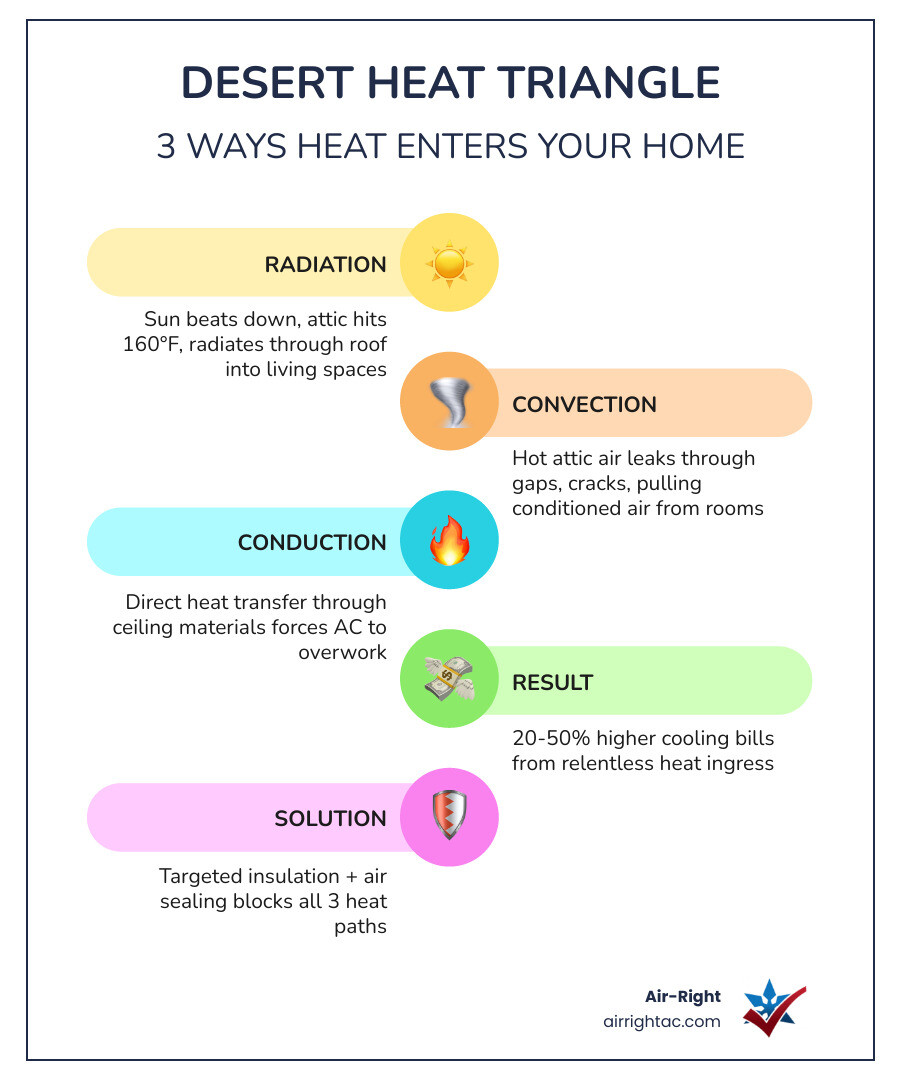
Living in Southern Nevada isn’t like living in the Midwest or even the South. Our environment presents a unique set of challenges that standard insulation isn’t always prepared to handle. When we talk about which insulation upgrade saves more in the desert, we have to look at the “Desert Heat Triangle”: radiation, convection, and conduction.
The 160°F Attic Reality
In cities like Henderson and Boulder City, the sun beats down on your roof for 14 hours a day in the peak of summer. Because most roofs are dark or made of heat-absorbing materials, your attic becomes a pressurized chamber of heat. When that attic hits 160°F, standard insulation starts to struggle. We’ve seen cases where fiberglass R-values actually degrade slightly when temperatures reach these extremes, making the material less effective exactly when you need it most.
Thermal Cycling and HVAC Strain
The desert is known for dramatic temperature swings. It might be 110°F during the day and drop to 75°F at night. This rapid “thermal cycling” causes building materials to expand and contract, which can lead to settling in older insulation. Furthermore, when your attic is a furnace, your AC ducts (which often run through the attic) are sitting in that heat. If your insulation is thin, your air conditioner has to work 30-40% harder just to keep the air cool before it even reaches your living room.
Monsoon Humidity and UV Exposure
While we are mostly dry, the monsoon season brings humidity spikes that can impact insulation performance. Moisture-heavy air can lead to material saturation or even mold if the insulation isn’t breathable or moisture-resistant. Additionally, the intense UV radiation in Las Vegas can degrade materials over decades, making a 20-year-old insulation layer far less effective than it was on day one.
To understand how these factors apply specifically to local homes, you can check out our Henderson Attic Insulation Guide.
Comparing Materials: Which insulation upgrade saves more in the desert?
When we compare insulation types for our local climate, we look at how they resist heat flow (R-value) and how they handle air movement.
| Material | R-Value per Inch | Heat Performance | Air Sealing Ability |
|---|---|---|---|
| Closed-Cell Spray Foam | 6.5 – 7.0 | Excellent | Built-in Air Barrier |
| Blown-In Cellulose | 3.2 – 3.8 | Good | High Density (Reduces Airflow) |
| Blown-In Fiberglass | 2.5 – 3.7 | Fair | Poor (Requires Manual Sealing) |
| Radiant Barriers | N/A | Superior (Reflects Heat) | None |
For a deeper dive into these options, see The Ultimate Guide to Attic Insulation in Henderson NV.
Spray Foam: The Premium Solution for Maximum Savings
If you’re looking for the absolute highest percentage reduction in cooling costs, closed-cell spray foam is the winner. It typically achieves a 40-50% reduction in energy consumption compared to a home with poor insulation.
Why does it perform so well? Unlike other materials, spray foam expands to fill every tiny crack and crevice. It creates a seamless air-tight seal and acts as a vapor barrier. In the desert, this is crucial because it keeps the 160°F attic air from ever touching your drywall. While the initial investment is higher than other options, the long-term performance and structural integrity it adds to your home are unmatched.
Blown-In Cellulose and Fiberglass: Budget-Friendly Efficiency
For many homeowners in Las Vegas, blown-in materials are the go-to choice.
- Cellulose: Made from recycled paper treated with fire retardants, cellulose is denser than fiberglass. This density helps it seal gaps better and slow down the movement of hot air. It often provides a 20-30% reduction in cooling costs.
- Fiberglass: This is the most common material used in Southern Nevada. It’s budget-friendly and effective when installed to the correct depth (R-49 or higher). However, fiberglass is naturally porous, meaning heat can still “drift” through it if it isn’t paired with professional air sealing.
If you’re looking for a cost-effective way to boost your comfort, we offer Affordable Attic Insulation Services in Boulder City NV that focus on these high-value materials.
The Secret Weapon: Why air sealing determines which insulation upgrade saves more in the desert
Here is a professional secret: You can have three feet of the best insulation in the world, but if your attic isn’t air-sealed, you’re still losing money.
Air infiltration accounts for roughly 40% of a home’s energy loss. Think of your home like a cooler: insulation is the thick foam walls, but air leaks are like leaving the lid slightly cracked. The cold air escapes, and the desert heat pours in.
Common Attic Bypasses
When we inspect homes in Henderson, we look for “attic bypasses”—hidden holes that let air move between your living space and the attic. These include:
- Recessed Lighting: Older “can” lights are often unsealed, acting like chimneys that suck cold air out of your rooms.
- Plumbing and Electrical Stacks: Gaps around pipes and wires are major culprits for energy loss.
- Attic Hatches: Most attic doors are just a piece of drywall or plywood with zero insulation or weatherstripping.
- Duct Penetrations: Where your AC vents come through the ceiling, there are often large gaps hidden behind the decorative grilles.
By sealing these leaks before adding new insulation, you ensure that the material can actually do its job. This is why we emphasize Finding a Reliable Attic Insulation Contractor in Henderson NV who won’t just “blow and go,” but will take the time to seal your home properly.
Assessing which insulation upgrade saves more in the desert for pre-1984 homes
If you live in an older Las Vegas ranch-style home or a property built before 1984, your insulation is likely outdated. Back then, building codes were much more relaxed. Many of these homes were built with only R-13 or R-19 insulation in the attic. Today, the recommendation for our climate is R-49 or higher.
The Concrete Block Challenge
Many older homes in Southern Nevada use concrete block construction. While these walls are sturdy, they have terrible thermal resistance. They act like a “thermal bridge,” absorbing heat all day and radiating it into your home long after the sun goes down. For these homes, upgrading wall insulation (often via injection foam) or adding a radiant barrier to the attic can make a massive difference in comfort.
Upgrading an older home can feel like a big task, but it’s the best way to Stop Baking Your Brain with Better Las Vegas Attic Insulation.
Recommended R-Values and ROI for Southern Nevada
The Department of Energy places Las Vegas, Henderson, and Boulder City in Climate Zone 2. For this zone, the minimum recommendation is R-38, but for maximum savings, we recommend aiming for R-49 to R-60.
Understanding ROI (Return on Investment)
Insulation is one of the few home upgrades that actually pays you back.
- Fiberglass/Cellulose: These upgrades often pay for themselves in energy savings within 3 to 5 years.
- Spray Foam: Because the initial investment is higher, the payback period is typically 5 to 7 years, but the monthly savings are significantly larger.
- HVAC Lifespan: Better insulation means your AC cycles less often. This can add years to the life of your air conditioner, saving you thousands in premature replacement costs.
The Power of Radiant Barriers
In the desert, a radiant barrier is like a “secret weapon.” It’s a reflective foil applied to the underside of your roof rafters. It doesn’t stop heat conduction, but it reflects up to 97% of radiant heat back out through the roof. When we combine a radiant barrier with R-49 blown-in insulation, we often see attic temperatures drop by 20-30°F. This synergy is often the answer to which insulation upgrade saves more in the desert for homeowners who want a high-performance system without the cost of full spray foam.
Frequently Asked Questions about Desert Insulation
Can a home be over-insulated in Las Vegas?
Technically, you can hit a point of “diminishing returns.” For example, moving from no insulation to R-49 provides a massive jump in savings. Moving from R-60 to R-80 provides very little additional benefit and might not justify the cost. The bigger risk is trapping moisture. If you add too much insulation without maintaining proper attic ventilation (like soffit and ridge vents), you can trap heat and moisture, which leads to roof deck damage. We focus on a “balanced” approach: high R-value plus excellent ventilation.
How does monsoon season affect my insulation choice?
During the humid months of July and August, moisture can seep into the attic. Traditional fiberglass can lose some effectiveness if it becomes damp. Closed-cell spray foam is the most moisture-resistant option, but cellulose is also treated with minerals that help it resist mold. The key is ensuring your attic is “breathing” correctly through proper vents so moisture doesn’t settle in the first place.
What is the best time of year to upgrade insulation?
While we work year-round, the best time to upgrade is between October and March. Why? Because during a Las Vegas summer, an attic can hit 160°F by 10:00 AM. This makes installation dangerous for technicians and can lead to rushed work. In the cooler months, we can spend more time ensuring every gap is sealed and every corner is covered. Plus, upgrading in the winter means you’re fully prepared before the first 100-degree day hits in May.
Conclusion
At Air-Right, we’ve spent years helping Southern Nevada residents stay cool without breaking the bank. As a licensed, bonded, and insured team serving Las Vegas, Henderson, and Boulder City, we take pride in providing clear, no-pressure recommendations.
Whether you decide that premium spray foam is the right move for your forever home or you want the high-value impact of blown-in fiberglass and air sealing, our goal is the same: to turn your “giant oven” back into a comfortable sanctuary.
The desert sun isn’t going anywhere, but your high energy bills can. By choosing the right insulation strategy, you’re investing in your home’s value, your HVAC system’s longevity, and your family’s comfort for decades to come.
Start saving on your cooling costs today and see why your neighbors trust us to handle the heat.
Need Help?
Contact us today to discuss your needs. Our team is ready to help.
Related Articles
- Is It a True Emergency? A Triage Guide for 24-Hour Air Conditioning Service in Las Vegas, NV
- Is That Burning Smell an Emergency? Fall Triage Guide for 24 Hour Air Conditioning Service in Las Vegas, NV
- Beyond 24-Hour Air Conditioning Service in Las Vegas: Heat Pump vs. Gas Furnace Options for Fall Upgrades
Related articles


Ready to Get Started?
Whether you need a repair, maintenance, or a new installation, our expert team is here to help.