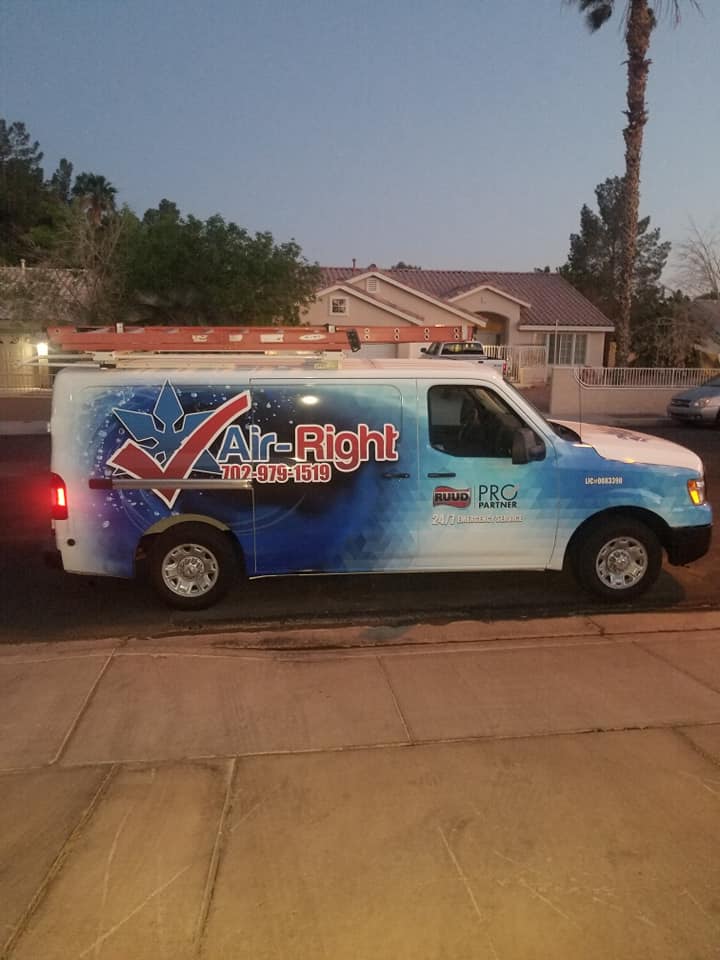
Is It a True Emergency? A Homeowner's Guide to 24-Hour Air Conditioning Service in Las Vegas, NV
Air-Right

Is Your Struggling AC a True Emergency or Just Exhausted? Is your air conditioner actually broken, or is it simply struggling to keep up with the relentless desert heat? When you face a suddenly warm house, relying on…
Is Your Struggling AC a True Emergency or Just Exhausted?
Is your air conditioner actually broken, or is it simply struggling to keep up with the relentless desert heat? When you face a suddenly warm house, relying on local service expertise and area tips can help you determine the right course of action. At Air-Right, our team has spent years diagnosing struggling systems across the Las Vegas Valley, and we know exactly how the intense August late-summer wear impacts your equipment. By the time the back-to-school transition begins, your cooling system has likely been running non-stop for months. It is completely normal to feel anxious when your vents start blowing lukewarm air as the afternoon sun beats down on your roof.
The key decision you have to make is whether your system is experiencing typical seasonal fatigue that can wait for a scheduled check-up, or if you are looking at an impending compressor failure that requires immediate intervention. Understanding the specific symptoms of a failing system prevents unnecessary panic and ensures you get the right level of help exactly when you need it. For immediate assistance, schedule an AC Repair Service in Las Vegas.
Understanding the 20-Degree Rule in Extreme Desert Climates
To accurately judge your system's performance, you first need to understand the physical limits of residential cooling equipment. As Air-Right technicians explain to customers daily across the Las Vegas Valley, summer temperatures routinely push HVAC systems to their absolute maximum capacity. This is where the 20-degree rule comes into play.
The 20-degree rule defined: Residential air conditioning systems are engineered to cool a home by approximately 20 degrees Fahrenheit below the outside ambient temperature. If the temperature outside hits 110 degrees, your air conditioner is working at 100% capacity just to keep your indoor temperature at 90 degrees. If your thermostat is set to 72 degrees on a 110-degree afternoon, your system will run continuously without ever reaching that target.
This limitation is heavily compounded by the urban heat island effect. Concrete, asphalt, and dense building materials absorb massive amounts of solar radiation during the day. As the sun goes down, these surfaces slowly release that trapped heat back into the environment. Because the ambient temperature rarely drops enough overnight to provide relief, your air conditioner is forced to run continuously without a recovery period.
When your system runs non-stop under these extreme thermal loads, it is simply doing exactly what it was designed to do: rejecting as much heat as physically possible. Continuous operation during a triple-digit heatwave is a sign of a system working at its absolute limit, which is fundamentally different from a mechanical failure. Recognizing this distinction is the first step in avoiding an unnecessary emergency service call.

Normal System Fatigue vs. Impending Compressor Failure
After enduring months of triple-digit temperatures, August late-summer wear takes a cumulative toll on your equipment. Prolonged operation accelerates the degradation of critical electrical components, particularly capacitors and contactors. However, there is a distinct line between a tired system that needs a tune-up and one that is actively destroying its own compressor.
In our experience at Air-Right, catching mechanical fatigue early often prevents a minor repair from escalating into a catastrophic breakdown. Before you panic, compare your system's symptoms against the typical indicators of wear versus failure.
| Symptom Category | Normal Fatigue (Schedule a Tune-Up) | Impending Failure (Call for Emergency Service) |
|---|---|---|
| Airflow & Temperature | Cooling slowly; slightly weaker airflow from vents. | Blowing completely warm air; no airflow at all. |
| System Sounds | Standard hum, slightly louder fan noise due to dust. | Loud screeching, metal-on-metal grinding, or heavy banging. |
| Electrical Signs | Slight dimming of house lights when the AC kicks on. | Acrid burning smells; rapidly tripping circuit breakers. |
| Cycle Length | Running continuously during the hottest part of the day. | Short cycling (turning on and off every few minutes). |
Signs It Can Wait for Normal Business Hours
If your system is still producing cool air but seems to be taking longer than usual to reach your target temperature, you are likely dealing with normal fatigue. A slightly weaker airflow usually points to a dirty filter or a dusty evaporator coil rather than a dead compressor. As long as there are no unusual smells or alarming mechanical noises, the situation can typically be handled during normal business hours. Scheduling routine AC Maintenance and Tune-Ups is usually all that is required to restore lost efficiency and prepare the unit for the remainder of the season.
Indicators of a Critical Breakdown
Conversely, critical breakdowns announce themselves aggressively. A complete loss of power to the unit, especially during peak heat, is a major red flag. Acrid, burning electrical smells coming from your vents indicate melting wire insulation or a failing blower motor. Loud screeching or banging from the outdoor unit usually means the compressor is locking up or the fan blades are striking the housing. If you notice any of these signs, shut the system off immediately at the thermostat to prevent further damage.
When to Call for 24-Hour Air Conditioning Service in Las Vegas
Not every cooling hiccup warrants a midnight dispatch, but certain situations pose a rapid health and safety risk that requires immediate intervention. When the Las Vegas Valley experiences extreme thermal loads, an un-air-conditioned home can reach dangerous internal temperatures in a matter of hours.
Working with a dedicated local team means you get fast, reliable 24/7 emergency response specifically calibrated for sudden system failures caused by extreme heat. For example, our Air-Right dispatchers recently fielded a call from a homeowner who experienced a complete AC power failure on a weekend when temperatures spiked to 110 degrees. Because of the immediate danger posed by the heatwave, our team rerouted a technician that same day, directly assisting the owners to get the system repaired and functioning again before the indoor temperature reached critical levels.
You should immediately request after-hours dispatch if you observe any of the following:
- Complete system shutdown during a heatwave: If the unit has no power and resetting the breaker once does nothing, you are facing an electrical failure that puts your household at risk.
- Sparks, smoke, or burning odors: Any smell of burning plastic, ozone, or visible smoke from the vents or the outdoor unit is a severe fire hazard. Shut off the power immediately.
- Rapid indoor water leaks: If water is pouring from your indoor unit or ceiling, the condensate drain is likely severely backed up or the coil has frozen and is rapidly thawing, threatening drywall and structural damage.
- Blowing completely warm air: If the thermostat is set to cool but the vents are blowing hot air, the compressor or refrigerant circuit has likely failed entirely.
- Loud metal-on-metal grinding: This indicates a mechanical failure inside the compressor. Allowing it to run will destroy the unit.
If you encounter these severe symptoms, do not wait for the morning. Reach out for Summerlin AC Repair or service in your specific neighborhood to address the danger promptly.
Safe Homeowner Checks Before the Technician Arrives
Before you make the call, there are a few safe, non-technical troubleshooting steps you can perform. Sometimes, what appears to be a major breakdown is actually a simple oversight. Performing these checks can save you the cost of an emergency diagnostic fee, provided you never attempt to open electrical panels or handle refrigerant lines yourself.
By late August, late-summer wear has often pushed minor neglected maintenance issues to their breaking point. Before calling Air-Right, here is what our team recommends you safely check:
- Verify the thermostat settings: Ensure the thermostat is explicitly set to "Cool" and the fan is set to "Auto." Sometimes, a brief power flicker can reset digital thermostats to their default state, or the fan may be set to "On," which blows unconditioned air between cooling cycles.
- Inspect the air filter: A severely clogged filter is the most common culprit for a struggling system. It suffocates the air handler, causing the indoor evaporator coil to freeze solid. If the filter is caked in dust, replace it immediately.
- Check all indoor vents: Walk through your home and ensure all supply and return vents are fully open and unobstructed. Blocking vents with heavy furniture or rugs increases static pressure, forcing the blower motor to work much harder than necessary.
- Examine the breaker box: Check your main electrical panel for a tripped switch. If the AC breaker is tripped, flip it entirely off, then back on. The critical rule: If it trips again immediately, stop. Repeatedly resetting a tripping breaker can cause an electrical fire or permanently destroy the compressor.
- Look for ice on the refrigerant lines: Step outside and look at the copper pipe connecting to your outdoor unit. If it is encased in white ice, your system is frozen. Turn the thermostat off and turn the fan to "On" to help it thaw before the technician arrives.
If these basic checks do not resolve the issue, you can learn more about How to Fix AC Not Cooling in Triple-Digit Heat or simply wait for your scheduled professional to arrive.
The Value of Accurate Professional Diagnosis
Guessing at the root cause of an HVAC failure is a dangerous and costly game. Symptoms of minor, easily repairable issues frequently mimic the signs of catastrophic failures. A dead capacitor, which is a straightforward and common repair, will cause the outdoor fan to stop spinning and the compressor to overheat—the exact same outward symptoms as a completely destroyed compressor.
Professional diagnostics ensure that the actual root cause is identified and resolved, rather than just treating the surface symptom. For example, our Air-Right technicians recently responded to a local customer who faced an urgent situation where they believed their system required a complete motor replacement due to a persistent malfunction. Upon arrival, our responding technician took the time to properly test the electrical loads and correctly identified the problem as a simple wiring fault. By fixing the true issue, the customer avoided an unnecessary and expensive motor replacement.
Furthermore, attempting DIY repairs on high-voltage equipment is incredibly dangerous. Residential air conditioners utilize 240 volts of electricity and store massive, lethal charges in their capacitors even after the power is turned off. Beyond the physical danger, opening the sealed refrigerant circuit or modifying internal electrical components without a license will instantly void your manufacturer warranty across the Las Vegas Valley.
An honest, professional assessment protects your investment. It provides you with the exact data you need to make an informed decision about whether to repair an aging unit or prepare for a replacement.
Frequently Asked Questions About AC Emergencies
What is considered an AC emergency?
An AC emergency is any situation where a cooling failure poses a health risk or indicates a dangerous electrical malfunction. Complete loss of cooling during extreme heat, electrical burning smells, sparking, and significant indoor water leaks all require immediate attention. If the outdoor unit is making loud metal-on-metal grinding noises, shut it down and call for emergency service to prevent total compressor destruction.
Why is my AC running constantly but not cooling the house?
This is often due to the 20-degree rule during extreme heatwaves. If it is 110 degrees outside, your system will run continuously just to keep the house at 90 degrees. However, if the air coming from the vents is warm, it could indicate low refrigerant, a failing compressor, or a severely clogged filter restricting airflow. August late-summer wear makes these components particularly vulnerable.
How do I know if my AC compressor is broken?
A broken compressor typically presents with severe electrical or mechanical symptoms. If your system trips the circuit breaker repeatedly the moment it turns on, the compressor is likely shorted to ground. Other signs include loud rumbling or screeching noises from the outdoor unit, or warm air blowing from the indoor vents despite the outdoor fan spinning normally.
What temperature is considered too hot for a house without AC?
Indoor temperatures exceeding 90 degrees can pose serious health risks, particularly for vulnerable individuals. When indoor temperatures climb into the 90s, the body's ability to cool itself diminishes rapidly. High indoor humidity levels can exacerbate this danger, making it feel even hotter and increasing the risk of heat exhaustion for elderly residents, infants, and pets.
Can a dirty filter cause my AC to stop cooling in late summer?
Yes, restricted airflow from a dirty filter can cause the indoor evaporator coil to freeze solid. When the coil freezes, air can no longer pass through it, forcing the system to blow warm air or shut down entirely. Changing your filter is the most critical preventative step you can take to maintain efficiency and prevent unnecessary service calls.
How long should I wait for my AC to cool down before calling for service?
You should allow the system to run for a few hours if you just turned it on, but do not wait if it is blowing warm air. If the air coming from the vents is noticeably cooler than the room temperature, the system is working and just needs time to remove the thermal mass from the home. If the air is warm or the system is making strange noises, turn it off and call a professional immediately.
Get Reliable Help for Your Home's Cooling System
Guessing whether an issue is a true emergency or just normal seasonal fatigue is stressful, especially when the Las Vegas Valley heat is bearing down on your home. You do not have to make that determination alone. Reaching out to a local expert for a definitive diagnosis ensures your home remains safe and comfortable without the anxiety of wondering if your system is about to fail completely. If you are concerned about your equipment's performance, contact the Air-Right team today to schedule an evaluation of your Air Conditioning system and get the honest answers you deserve.
Need Help?
Contact us today to discuss your needs. Our team is ready to help.
Related Articles
- Troubleshooting Your Las Vegas, NV HVAC System for the October Transition
- Seasonal Home Maintenance Checklist: Avoiding the Need for 24-Hour Air Conditioning Service in Las Vegas, NV
- Is It a True Emergency? A Triage Guide for 24-Hour Air Conditioning Service in Las Vegas, NV
Related articles


Ready to Get Started?
Whether you need a repair, maintenance, or a new installation, our expert team is here to help.