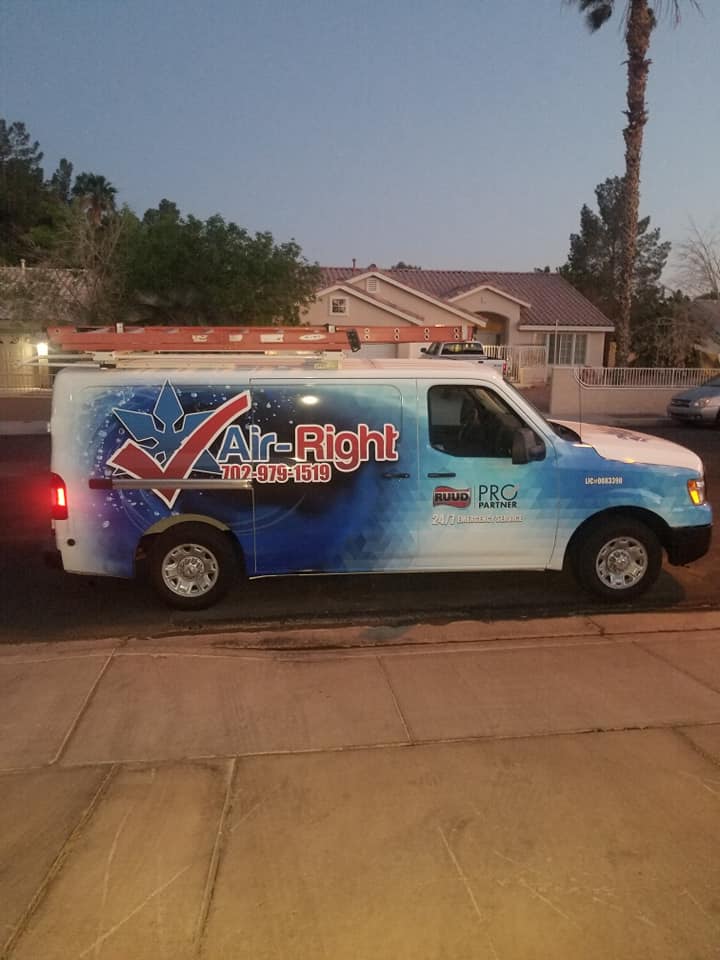
24-Hour Air Conditioning Service in Las Vegas: Diagnosing Cooling Failures in Extreme Heat
Air-Right

When Your AC Runs Continuously But the House Stays Hot Your air conditioning system is running nonstop, but the indoor air remains uncomfortably warm. During the extreme heat of peak summer, one of the most common…
When Your AC Runs Continuously But the House Stays Hot
Your air conditioning system is running nonstop, but the indoor air remains uncomfortably warm. During the extreme heat of peak summer, one of the most common homeowner questions answered by our Air-Right technicians is why an HVAC system operates continuously without actually lowering the indoor temperature. This specific symptom—a system that runs but fails to cool—indicates that the equipment is consuming maximum electrical power while providing zero mitigation against the outside heat.
The immediate stress of this situation is palpable, especially in a desert climate where outdoor temperatures routinely exceed 100 degrees. Under these conditions, an underperforming air conditioner is not merely a matter of physical discomfort; it is a severe health and safety risk. The indoor environment can become dangerous within a matter of hours if the cooling cycle is interrupted.
The Need for a Structured Diagnostic Hierarchy
Resolving this issue requires a structured, objective diagnostic hierarchy to determine the appropriate next steps. Homeowners need to know exactly what is happening inside their equipment before deciding how to proceed. The primary goal of this diagnostic process is to identify whether the issue stems from a minor airflow restriction that can be safely addressed, or if it is a critical mechanical failure requiring professional intervention.
By following a step-by-step evaluation, you can avoid unnecessary panic while ensuring that true emergencies receive immediate attention. For residents relying on comprehensive air conditioning services, understanding this baseline diagnostic process is the first step in restoring a safe, comfortable home environment.
The Reality of Cooling Failures During Peak Summer in Las Vegas
The severity of a cooling failure is entirely dependent on the outside environment. In the Las Vegas valley, the climate dictates a much faster timeline from a minor cooling issue to a full-blown emergency. When ambient temperatures climb into the triple digits, the physics of heat transfer work aggressively against your home's thermal envelope.
The Physics of Heat Transfer Failure
Heat naturally moves from warmer spaces to cooler spaces. Your air conditioner's job is to absorb heat from inside the house and reject it outside. During peak summer, the extreme heat severely taxes HVAC systems, pushing compressors and condenser coils to their absolute operational limits. If the system loses its ability to absorb indoor heat—whether due to restricted airflow or a lack of refrigerant—the outdoor heat will quickly penetrate the home's insulation.
Rapid temperature rise is the immediate consequence. A house that loses its cooling capacity when it is 110 degrees outside will not stay cool for long. The indoor temperature can jump 10 to 15 degrees in just a few hours, turning a comfortable living room into a stagnant, hazardous space.
| Outdoor Ambient Temperature | Status of AC System | Estimated Indoor Temp Rise (First 3 Hours) |
|---|---|---|
| 90°F - 95°F | Running but not cooling | 4°F - 6°F increase |
| 100°F - 105°F | Running but not cooling | 7°F - 10°F increase |
| 110°F+ (Extreme Desert Heat) | Running but not cooling | 12°F - 18°F increase |
The urgency of these situations cannot be overstated. In one instance our team responded to, a local property experienced a complete AC power failure during a 110-degree July weekend. Because the indoor environment became hazardous so rapidly, the situation required a major same-day repair by our technicians to restore safe conditions. A system that runs continuously without cooling is stuck in a loop of maximum energy consumption and zero output, accelerating wear and tear on the internal components.
Go/No-Go Diagnostics: Evaluating the Thermostat Target vs Actual Temperature
Before inspecting the physical equipment, you must establish a foundational objective metric to diagnose the severity of the cooling failure. The most reliable data point you have is the differential between your thermostat target vs actual temperature. This simple reading acts as the definitive trigger for moving through the diagnostic checklist.
How to Read the Temperature Differential
- Check the set point: Note the exact temperature your thermostat is programmed to reach (e.g., 74°F).
- Check the actual reading: Look at the current ambient temperature displayed on the thermostat screen (e.g., 80°F).
- Monitor the gap over time: Document both numbers, wait exactly two hours without opening doors or windows, and check the numbers again.
Defining an acceptable differential versus a clear system failure is straightforward. If the actual temperature is slowly dropping toward the target, the system is functioning but struggling to keep up with the extreme heat load. However, if the gap is widening over a two-hour period during peak heat—meaning the target remains 74°F but the actual temperature climbs from 80°F to 83°F—this confirms that the system is no longer capable of cooling. This metric definitively proves that the air conditioner is running but failing to remove heat, signaling that you must move to the next phase of troubleshooting.

Safe Homeowner Checks: Identifying Airflow Restrictions
Once you have confirmed a widening gap between the thermostat target vs actual temperature, the next step is to separate safe, top-of-funnel homeowner checks from complex mechanical diagnostics. The most common non-mechanical reason an AC runs without cooling is restricted airflow.
The 15% Efficiency Drop
Your air conditioner requires a massive volume of warm indoor air to flow over the indoor evaporator coil. If this airflow is choked off, the system cannot absorb heat. Safe inspection of air filters is the first physical check you should perform. According to energy guidelines, a severely dirty filter can reduce system efficiency by up to 15%. More importantly, restricted airflow causes the temperature of the evaporator coil to drop below freezing. The ambient moisture in the air then freezes directly onto the coil, creating a solid block of ice that halts the cooling process entirely.
Next, you should check for blocked return vents. Ensure no heavy furniture, rugs, or curtains are obstructing the large intake grilles in your hallways or living areas. Airflow restrictions can also be highly localized. Our Air-Right technicians recently resolved a persistent cooling issue that spanned over six years for a local homeowner, where a specific room simply would not cool. The underlying cause was eventually identified by our team as a hidden break in the ductwork preventing airflow; once repaired, cold air finally reached the room.
If you have verified that the filter is clean, the return vents are clear, and the exterior unit is free of debris, you must stop troubleshooting. If these airflow components are clear, the problem is mechanical. For a deeper understanding of what to look for before calling a technician, reviewing a comprehensive Las Vegas AC repair survival guide can help you safely navigate these initial checks.
Recognizing Critical Refrigerant and Mechanical Failures
When airflow issues have been ruled out, a system that runs continuously without cooling is suffering from a critical hardware fault. This establishes the definitive threshold where professional intervention is required. Handling the internal components of an HVAC system requires strict licensing, specialized recovery equipment, and EPA certification.
Signs of a Refrigerant Leak
Air conditioners do not consume refrigerant like a car consumes gas; it circulates in a closed loop. If the system is low on refrigerant, there is a leak. Symptoms of a refrigerant leak include faint hissing or bubbling sounds near the outdoor condenser, ice accumulating on the copper refrigerant lines, and a complete inability to drop the indoor temperature during peak summer. Because the system cannot absorb enough heat without the proper volume of refrigerant, the compressor will run endlessly in a vain attempt to satisfy the thermostat.
Refrigerant issues require specialized equipment to diagnose correctly. Our Air-Right team recently handled a case involving a Las Vegas commercial property where multiple units lost refrigerant unexpectedly. Rather than immediately recommending a full unit replacement, our technicians conducted a thorough diagnostic process to find and repair the specific leak, restoring the system to full operation.
Electrical and Motor Failures
Beyond refrigerant, mechanical failures often involve the electrical components that drive the cooling cycle. Signs of electrical or draft motor failures we see frequently include:
- The outdoor fan is not spinning: The indoor blower is pushing warm air, but the outdoor fan motor has failed, preventing heat rejection.
- Clicking or buzzing sounds: A failing contactor or a blown dual-run capacitor will prevent the compressor from engaging, even though the indoor fan continues to run.
- Tripped breakers: If the system continuously trips the dedicated circuit breaker, there is a dead short or a grounded compressor that requires immediate electrical testing.
Reiterating the safety standards: handling high-voltage electrical components and pressurized refrigerants is exceptionally dangerous. A confirmed mechanical failure is an immediate trigger to secure emergency AC repair service.
The Health and Safety Mandate for 24/7 Emergency Response
Connecting a mechanical failure directly to the need for an immediate, professional response is critical in a desert environment. The loss of cooling in extreme temperatures is not an inconvenience; it is a critical safety vulnerability, particularly for households with elderly residents, young children, or pets.
Preventing Secondary System Damage
Waiting for standard business hours is not a viable option when indoor temperatures are rising rapidly toward 90 degrees or higher. This is why our team at Air-Right provides fast, reliable 24/7 emergency response, which is essential to restore cooling and safety for Las Vegas desert dwellers without delay. A rapid-response infrastructure ensures that certified technicians can be deployed at any hour to mitigate these environmental risks.
Furthermore, immediate action prevents secondary damage to the HVAC system itself. When a system runs continuously with a failed component—such as a bad capacitor or a refrigerant leak—the compressor is forced to work exponentially harder. The compressor is the most expensive component in the entire system. Allowing it to run endlessly without proper cooling can lead to thermal overload and complete compressor burnout. Securing prompt AC repair in Henderson or the surrounding valley stops this cascading damage before it requires a total system replacement.
Professional Mitigation: What to Expect During an Emergency Service Call
When an Air-Right emergency technician arrives at your home, they follow a rigorous, objective diagnostic procedure to pinpoint the exact cause of the failure. Setting clear expectations for this process helps homeowners understand the value of professional mitigation.
The Objective Diagnostic Process
The initial diagnostic steps our licensed technicians take upon arrival go far beyond checking the thermostat target vs actual temperature. They will immediately secure the power to the unit and begin testing the electrical sequence of operations. Using a digital multimeter, the technician will test the microfarad readings of the capacitors, check the continuity of the contactor coils, and measure the amperage draw of the compressor and fan motors.
If the electrical components are functioning, the technician will attach digital manifold gauges to the service valves to measure the refrigerant pressures. They will calculate the superheat and subcooling metrics to determine exactly how much refrigerant is in the system and how well it is absorbing heat. This process is done safely, ensuring no chemical venting occurs.
Once the data is collected, the technician will transparently present the findings and outline the required repairs before any work begins. Proper diagnostic procedures lead to definitive, long-lasting resolutions rather than temporary patches. By addressing the root cause—whether it is replacing a failing blower motor or brazing a leak in the copper line set—the system is restored to its factory specifications.
Restore Your Home's Safety with Immediate Professional Repair
To summarize the diagnostic hierarchy: an air conditioner that runs continuously without cooling is a definitive sign that the system is failing. If you have checked your air filters and ensured your return vents are clear, the issue is mechanical. During peak summer, allowing a compromised system to run endlessly will only accelerate component damage and allow your indoor temperatures to climb to dangerous levels.
Do not delay service during extreme heat. The risks to your family's safety and your equipment's longevity are too high. To dispatch an emergency technician and resolve the underlying mechanical failure, secure professional Las Vegas AC repair service immediately. A certified expert will accurately diagnose the fault, provide a transparent solution, and restore your home's cooling capacity.
Frequently Asked Questions
Why is my AC running constantly but not cooling the house?
Your system is likely suffering from restricted airflow or a mechanical failure that prevents heat absorption. When the AC cannot remove heat from the indoor air, the thermostat is never satisfied, causing the system to run endlessly. Common culprits include severely clogged air filters, frozen evaporator coils, or a significant loss of refrigerant.
When should I call for emergency AC repair in Las Vegas?
You should call for emergency repair the moment you confirm your system is no longer blowing cold air during extreme heat. Because indoor temperatures can rise 10 to 15 degrees in just a few hours during a Las Vegas summer, a total loss of cooling capacity is considered an immediate health and safety risk. Do not wait for standard business hours if your home is rapidly heating up.
How can I tell if my AC has a mechanical failure or an airflow issue?
You can identify an airflow issue by checking your air filters and return vents for heavy dust or blockages. If your filters are completely clean and the vents are unobstructed, but the system still fails to cool, you are dealing with a mechanical failure. Mechanical issues, such as electrical faults or refrigerant leaks, require professional diagnostic tools to isolate and repair.
What is considered an AC emergency in extreme heat?
An AC emergency is defined by any failure that allows the indoor temperature to climb to unsafe levels during periods of extreme outdoor heat. This includes a complete loss of power to the unit, a compressor that will not engage, or a system that runs continuously but blows warm air. In triple-digit weather, these scenarios demand a rapid, 24/7 professional response to prevent heat-related illness.
Can a dirty air filter cause my AC to stop cooling entirely?
Yes, a severely clogged air filter can completely halt the cooling process. By blocking the necessary volume of warm air from reaching the indoor unit, the evaporator coil drops below freezing and turns into a solid block of ice. Once the coil is frozen, air cannot pass through it, resulting in a system that runs constantly but delivers no cold air to the living spaces.
How quickly will a house heat up if the AC fails during a Las Vegas summer?
If the outdoor temperature exceeds 105 degrees, a well-insulated home can see indoor temperatures rise by 10 degrees or more within the first three hours of an AC failure. Homes with older windows or poor insulation will heat up even faster. This rapid temperature spike is why continuous running without cooling must be addressed immediately by a licensed technician.
Need Help?
Contact us today to discuss your needs. Our team is ready to help.
Related Articles
- Is It a True Emergency? A Fall Triage Guide for 24-Hour Air Conditioning Service in Las Vegas, NV
- Emergency AC Repair Signs: Navigating Heating-Startup and Fall Maintenance
- Is That Burning Smell an Emergency? Triaging Fall Heating and 24-Hour Air Conditioning Service in Las Vegas, NV
Related articles


Ready to Get Started?
Whether you need a repair, maintenance, or a new installation, our expert team is here to help.