Comprehensive Guide to Upgrading to a Smart Thermostat in the Desert
Air-Right

<p>Is upgrading to a smart thermostat worth it in the desert? Discover energy-saving features and desert-specific tips for cooler homes and lower cooling bills.</p>
Is Upgrading to a Smart Thermostat Worth It in the Desert? Here’s What Las Vegas Homeowners Need to Know
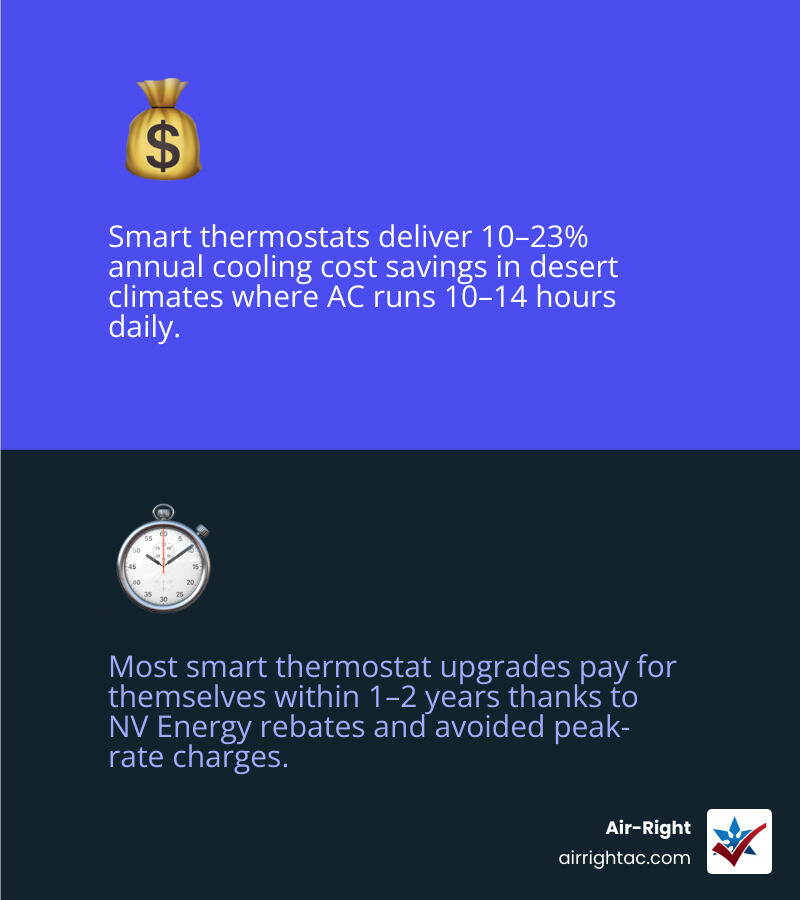
Yes — is upgrading to a smart thermostat worth it in the desert, and the case is stronger here than almost anywhere else in the country. When your AC runs 10 to 14 hours a day through a Las Vegas summer and cooling can eat up 50 to 70% of your electricity bill, even modest efficiency gains add up fast.
Quick Answer: Smart Thermostat ROI in the Desert
| Factor | What It Means for Desert Homeowners |
|---|---|
| Cooling runtime | AC runs far longer here than in moderate climates — more hours means more savings potential |
| Annual savings | Typically 10–23% on cooling costs in desert climates |
| Payback period | Most units pay for themselves within 1–2 years |
| Key desert benefit | Avoids cooling an empty home during the hottest hours of the day |
| Time-of-use rates | Smart scheduling helps dodge peak utility pricing from providers like NV Energy |
| Rebates available | NV Energy offers rebates for qualifying ENERGY STAR-certified smart thermostats |
Most homes in Las Vegas, Henderson, and Boulder City are running their air conditioning harder and longer than homes in almost any other U.S. city. A standard manual thermostat keeps things simple — but simple often means wasteful. It can’t learn your routine, it can’t respond when you’re stuck in traffic, and it has no idea that utility rates spike between 3 and 8 p.m.
Smart thermostats fix all of that automatically. And in a climate where your HVAC system is already under extreme stress, getting smarter about how and when you cool your home isn’t just about comfort — it’s about protecting your system and your wallet at the same time.
Understanding the Technology: Smart vs. Traditional Thermostats
To understand why a smart upgrade makes sense, we first have to look at how much thermostat technology has evolved. Many homes in Southern Nevada still use older digital models, or even manual dial thermostats.
While a traditional thermostat simply acts as an on/off switch based on the current room temperature, smart thermostats introduce advanced automation, internet connectivity, and learning capabilities. Here is how they differ:
- Wi-Fi Connectivity: Smart thermostats connect directly to your home’s wireless network. This allows you to control your heating and cooling from anywhere in the world using a smartphone, tablet, or smart home assistant.
- Learning Algorithms: Instead of requiring you to manually program every hour of the day, high-end smart thermostats track your daily habits. They note when you leave for work, when you return, and what temperatures you prefer for sleeping. Within a week or two, they build a personalized schedule automatically.
- Automatic Scheduling & Geofencing: By utilizing your phone’s GPS location (geofencing), a smart thermostat knows when you leave the house and can automatically transition into an energy-saving “Away” mode. When you cross a pre-set boundary on your way home, it begins pre-cooling so your house is perfectly comfortable the moment you walk through the door.
- Remote Access & Diagnostics: You can monitor your home’s climate in real time. If your system starts short-cycling or fails while you are away, you will receive an instant notification on your phone, allowing you to address the issue before your home turns into an oven.
To see how these devices stack up side-by-side, look at the comparison below:
| Feature | Traditional Thermostat | Programmable Thermostat | Smart Thermostat |
|---|---|---|---|
| Connectivity | None | None | Wi-Fi / Mobile App / Voice Control |
| Scheduling | Manual adjustments only | Rigid schedule (requires manual programming) | Learning algorithms & automatic scheduling |
| Occupancy Detection | None | None | Geofencing & built-in motion sensors |
| Utility Plan Integration | None | None | Automatic peak-rate shifting |
| Diagnostics & Alerts | None | None | Filter reminders & system failure alerts |
| Average Desert Savings | 0% | Up to 10% (if programmed correctly) | 10% to 23% on summer cooling |
Is Upgrading to a Smart Thermostat Worth It in the Desert?
When evaluating whether is upgrading to a smart thermostat worth it in the desert, we have to look closely at the math of desert cooling. In moderate climates, an air conditioner might run for 500 to 1,000 hours a year. In Las Vegas, Henderson, and Boulder City, our cooling systems regularly run for 2,500 to 3,500 hours per year.
Because our air conditioners run so frequently, even a tiny improvement in operating efficiency translates into massive real-world dollar savings. According to the Department of Energy, adjusting your thermostat settings by 7 to 10 degrees for eight hours a day can save you up to 10% annually on heating and cooling. With a smart thermostat, this setback happens automatically every time you step out the door.
In cooling-dominated desert zones, ENERGY STAR-certified smart thermostats deliver a 10% to 15% reduction in cooling energy use. On a typical summer electricity bill in Southern Nevada, that translates directly to saving $25 to $70 per month during the peak of summer. Over a ten-year system lifespan, a single smart thermostat can easily save you $1,200 to $2,000 in utility costs.
However, these savings rely on your air conditioner operating at peak physical health. A smart thermostat can optimize your schedule, but it cannot overcome a dirty coil, low refrigerant, or clogged filters. This is Why Your AC Needs a Checkup Before the Next Heatwave to ensure the physical system can actually deliver the efficiency your smart thermostat is commanding. Additionally, because of our local environment, it is highly valuable to understand How Desert Dust and Heat Change Your AC Service Schedule so you can keep both your thermostat and your system running flawlessly.
Key Features Tailored for Arid Climates
Not all smart thermostat features are created equal, but several are specifically beneficial for desert dwellers. When shopping for a device to handle Southern Nevada’s climate, look for these key capabilities.
Humidity Control and Indoor Air Quality
While the desert is famous for its dry heat, managing indoor humidity is still a major factor in overall comfort. During the summer, we want to keep our indoor humidity balanced to prevent dry skin, respiratory irritation, and static electricity.
Some premium smart thermostats feature dedicated humidity sensors and can integrate directly with whole-home humidifiers. By maintaining indoor humidity levels between 30% and 50%, you can actually make the air feel cooler and more comfortable at a slightly higher temperature setting, allowing you to save even more on cooling. Furthermore, smart thermostats track runtime and prompt you for regular filter changes, which is critical for reducing the heavy desert dust that infiltrates homes in Las Vegas and Henderson.
Geofencing and Remote Sensors for Multi-Story Homes
Desert homes, especially multi-story properties in Henderson and Summerlin, suffer from major temperature imbalances. It is common to find a 5-to-10-degree temperature difference between the downstairs living room and upstairs bedrooms.
Smart thermostats combat this issue through remote wireless sensors. By placing these sensors in occupied bedrooms or hot, west-facing rooms, the thermostat can average the temperatures or prioritize cooling specific rooms during certain times of the day (such as cooling only the bedrooms at night).
Additionally, geofencing ensures that your system never wastes energy cooling an empty house while you are at work or taking a day trip to Lake Mead. However, if your home is poorly insulated, your system will struggle to hold these target temperatures regardless of how smart your thermostat is. To learn if your home is losing cooled air through its walls or attic, read about The Cold Hard Truth: Signs Your Home Needs Better Insulation.
Managing Peak Utility Rates and Time-of-Use Plans
Utility providers like NV Energy offer time-of-use (TOU) plans where electricity rates spike dramatically during peak afternoon hours (typically 3 p.m. to 8 p.m. in the summer).
Smart thermostats feature energy-use forecasting and utility integration that can automatically “pre-cool” your home right before the peak pricing window begins. Once the expensive peak hours hit, the thermostat allows the indoor temperature to rise slightly, minimizing AC compressor runtime when electricity is most expensive. This feature alone can shave a substantial percentage off your summer bills. To maximize these savings, pairing a smart thermostat with insulation upgrades is one of the smartest moves you can make. Discover how to stop wasting money by reading about the Stop Burning Cash with the Best Insulation ROI Upgrades.
Installation and Compatibility Considerations
Before purchasing a smart thermostat, you must ensure it is compatible with your home’s HVAC system. While most modern systems work beautifully with smart options, desert systems have unique characteristics that require careful attention.
- The C-Wire (Common Wire) Requirement: Smart thermostats feature color screens, Wi-Fi radios, and processors that require constant 24V power. This power is delivered through a “C-wire.” Many older homes in the Las Vegas area do not have a C-wire installed. While some thermostats include adapter kits, installing them incorrectly can damage your system’s control board.
- Heat Pump Compatibility: Heat pumps are incredibly common in Southern Nevada because of our mild winters. However, heat pumps require specialized thermostat configuration. If configured incorrectly, your thermostat might constantly engage your expensive auxiliary electric heat strips during the winter, causing your heating bills to skyrocket.
- Multi-Stage and Variable-Speed Systems: High-efficiency AC systems use multi-stage or variable-speed compressors. These systems require specific “communicating” thermostats or advanced wiring configurations to run at their intended efficiency levels.
Why Professional Calibration Matters for Desert HVAC Systems
While many manufacturers market smart thermostats as simple DIY projects, the reality of desert HVAC systems makes professional installation and calibration highly advisable.
A professional technician does not just mount the device on the wall; they calibrate the thermostat to match your specific system type, configure the auxiliary heat lockouts, and verify that the system is not short-cycling. Proper configuration ensures your system runs safely and at peak efficiency. To keep your whole system running perfectly, make sure to check out The Ultimate Desert Dweller’s Guide to HVAC Maintenance.
Is Upgrading to a Smart Thermostat Worth It in the Desert for Older Systems?
Many homeowners wonder if it is worth putting a high-tech thermostat on an older AC unit. The answer is yes. In fact, older, less efficient systems often stand to benefit the most from smart scheduling because their baseline energy consumption is so high.
However, if your older AC unit is already struggling, a smart thermostat won’t magically fix mechanical wear and tear. If your system is showing signs of failure, a smart thermostat’s diagnostics might actually be the first thing to alert you to an emergency. Keep an eye out for system issues and read Don’t Ignore These Red Flags: When to Call for Emergency AC Repair to avoid getting caught in the triple-digit heat.
Frequently Asked Questions About Desert Thermostat Upgrades
Is upgrading to a smart thermostat worth it in the desert if I have a static schedule?
Yes. Even if you work from home or have a highly predictable daily routine, a smart thermostat still provides significant savings. Standard programmable thermostats require rigid schedules that most homeowners eventually override and forget to reset.
Smart thermostats use “Adaptive Recovery” to learn exactly how long it takes your specific home to cool down based on the outdoor temperature. Instead of running the AC unnecessarily early, it calculates the precise moment to start cooling so your home reaches your target temperature exactly on time. Plus, the ability to make manual overrides from your phone when you step out for groceries or dinner ensures you are never cooling an empty house.
How do smart thermostats handle extreme desert temperature swings?
Southern Nevada is famous for temperature swings where a single day can see a 30-to-40-degree difference between nighttime lows and daytime highs.
Smart thermostats handle this beautifully through automatic heat/cool changeover modes. They monitor both indoor temperatures and local outdoor weather reports in real time, seamlessly switching between heating and cooling to maintain a stable indoor environment without any manual intervention from you.
Can a smart thermostat help extend the lifespan of my air conditioner?
Absolutely. By optimizing runtime, reducing short-cycling, and automatically adjusting the temperature when you are away, a smart thermostat reduces the physical wear and tear on your compressor and fan motors.
Furthermore, the automatic filter change reminders and system performance alerts help you catch minor issues before they turn into catastrophic system failures. For more ways to protect your equipment, read these Maintenance Secrets to Keep Your AC From Quitting on You.
Conclusion
Upgrading to a smart thermostat in the desert is one of the easiest, most cost-effective home improvements you can make. With the potential to shave up to 23% off your summer cooling costs, a smart thermostat is an investment that typically pays for itself within the first year or two of installation.
At Air-Right, we are dedicated to helping homeowners in Las Vegas, Henderson, and Boulder City maximize their home comfort and energy efficiency. Whether you need help selecting the perfect smart thermostat, ensuring proper installation and C-wire configuration, or setting up a comprehensive maintenance plan to protect your HVAC system, our licensed, bonded, and insured team is here to help with clear, no-pressure recommendations.
To keep your system running efficiently year-round, explore our HVAC Maintenance Plans: Pros, Cons, and Peace of Mind and find out if a membership is right for you by reading Choosing Between HVAC Memberships and Pay-As-You-Go Service.
Ready to take control of your energy bills and upgrade your home’s comfort? Schedule Service – Residential or visit our Thermostat Installation and Service Portal to book your smart thermostat upgrade today!
Need Help?
Contact us today to discuss your needs. Our team is ready to help.
Related Articles
- Is It a True Emergency? A Triage Guide for 24-Hour Air Conditioning Service in Las Vegas, NV
- Is That Burning Smell an Emergency? Fall Triage Guide for 24 Hour Air Conditioning Service in Las Vegas, NV
- Beyond 24-Hour Air Conditioning Service in Las Vegas: Heat Pump vs. Gas Furnace Options for Fall Upgrades
Related articles


Ready to Get Started?
Whether you need a repair, maintenance, or a new installation, our expert team is here to help.