Maintenance Secrets to Keep Your AC From Quitting on You
Air-Right

<p>Don’t let your AC quit! Learn how to prevent AC emergencies with maintenance for reliable cooling and savings in Las Vegas.</p>
Why Knowing How to Prevent AC Emergencies With Maintenance Could Save Your Summer
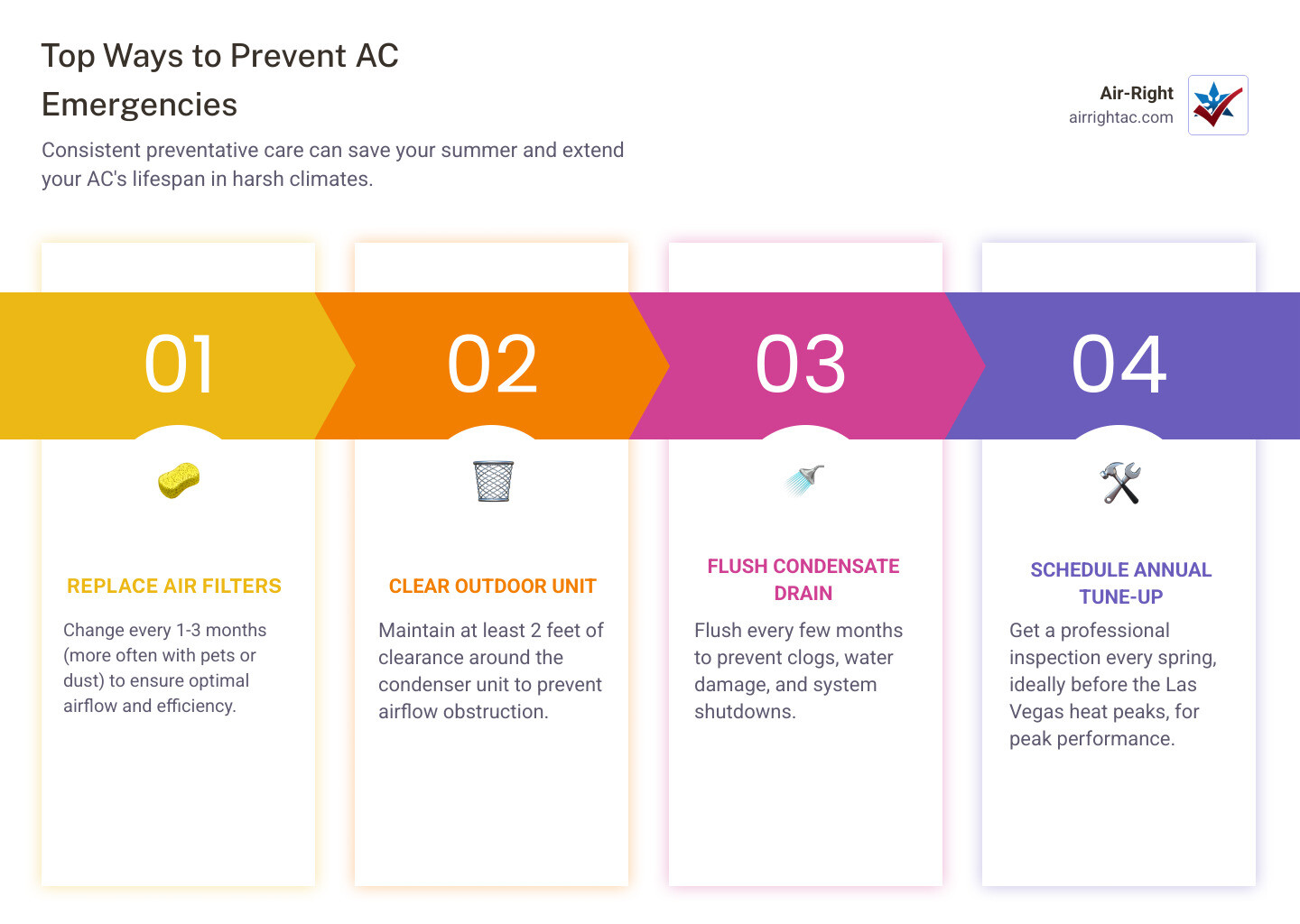
How to prevent AC emergencies with maintenance comes down to a few consistent habits: change your air filter every one to three months, keep the outdoor unit clear of debris, flush the condensate drain line regularly, and schedule a professional tune-up every spring before the Las Vegas heat peaks.
Here is a quick summary of the most important steps:
- Replace air filters every 1-3 months (more often with pets or dust)
- Clear the outdoor condenser unit – maintain at least 2 feet of clearance around it
- Flush the condensate drain line every few months to prevent clogs and water damage
- Schedule a professional AC tune-up once a year, ideally in spring
- Watch for warning signs – strange noises, weak airflow, rising energy bills, or warm air from vents
- Test and calibrate your thermostat to confirm it matches actual indoor temperatures
- Call a technician promptly when you notice anything unusual – small issues become big ones fast
In Las Vegas, your air conditioner is not just a comfort appliance – it is a necessity. Summer temperatures regularly push past 110°F, and when an AC system fails during a heatwave, it stops being an inconvenience and starts being a health risk. Yet most AC breakdowns do not happen without warning. They build slowly, through ignored filters, dusty coils, low refrigerant, and worn components, until the system simply cannot keep up anymore.
The good news is that most AC emergencies are entirely preventable. A central air conditioner is built to last between 12 and 20 years, and with consistent preventative care, you can push that lifespan even further. Skipping maintenance, on the other hand, accelerates wear on every major component – including the compressor, which is one of the most expensive parts in the entire system to replace.
This guide walks you through exactly what maintenance looks like, when to do it, and what warning signs to take seriously before a small problem turns into a full system shutdown.
Why Regular Maintenance is the Best Way to Prevent AC Emergencies
Living in Southern Nevada means our HVAC systems work significantly harder than those in milder climates. In cities like Henderson and Boulder City, the combination of extreme dry heat and wind-blown dust creates a “perfect storm” for mechanical failure. When you understand how to prevent AC emergencies with maintenance, you realize that you aren’t just paying for a service; you are investing in the reliability of your home’s most vital resource.
Combatting the Las Vegas Heat
Our systems often run for hours at a time without a break. This constant operation leads to significant component wear. Without regular lubrication and cleaning, small parts like capacitors or fan motors can overheat. When a capacitor fails, the entire system might grind to a halt right in the middle of a July afternoon. Regular HVAC Maintenance ensures these small parts are tested and replaced before they reach their breaking point.
Extending System Longevity
A central air conditioner typically lasts between 12 and 20 years, but consistent preventative care can extend its life by 5 years or more. By keeping the coils clean and the airflow unobstructed, you reduce the strain on the compressor. Since the compressor is essentially the “heart” of your AC, keeping it healthy is the single best way to avoid a premature—and very expensive—system replacement.
Protecting Your Warranty and Efficiency
Did you know that most AC manufacturers require proof of annual maintenance to keep your system’s warranty valid? If a major part fails and you haven’t had your annual tune-up, the manufacturer might deny your claim. Beyond the warranty, a well-maintained system is simply more efficient. There are many Reasons to Keep Your HVAC Unit Maintained by Experts, but lower energy bills are often the most immediate benefit homeowners notice.
Essential DIY Steps for How to Prevent AC Emergencies With Maintenance
While professional service is vital, there are several tasks we recommend homeowners handle themselves to keep things running smoothly between visits. These simple habits are the foundation of how to prevent AC emergencies with maintenance.
The Power of a Clean Filter
The air filter is your system’s first line of defense. In Las Vegas, dust is a constant battle. A clogged filter blocks airflow, forcing the blower motor to work twice as hard. This can lead to the motor burning out or the evaporator coils freezing over. We suggest checking your filter once a month. If you have pets or allergies, you may need to replace it every 30 days. This is one of the easiest ways to Save on Your Energy Bill while protecting your equipment.
Outdoor Unit Clearance
Your outdoor condenser unit needs to “breathe” to release the heat it pulls from your home. Debris removal is essential. We recommend keeping at least two feet of clear space around the unit. This means trimming back desert shrubs, removing fallen leaves, and ensuring no patio furniture or storage bins are blocking the airflow. If the unit is crowded, it will struggle to shed heat, leading to higher internal temperatures and potential compressor failure.
Monthly Homeowner Checklist:
- Inspect Vents: Ensure supply and return vents are not blocked by furniture, curtains, or rugs.
- Check the Drain Line: Look for water pooling around the indoor unit, which could indicate a clog.
- Thermostat Calibration: Ensure the temperature on your display matches the actual feel of the room.
- Visual Inspection: Look at the refrigerant lines (the copper pipes) to ensure the insulation is intact and there are no visible leaks.
Recognizing the Warning Signs Before a Total System Shutdown
An AC emergency rarely happens “out of the blue.” Usually, the system has been trying to tell you something is wrong for weeks. Learning How to Tell When Your Air Conditioner Needs Repair is a critical skill for any homeowner in Southern Nevada.
Strange Noises and Odors
If you hear banging, grinding, or screeching, turn the system off immediately. These sounds often indicate a loose belt, a failing motor, or a broken component inside the compressor. Similarly, unusual odors—like a burning smell or a musty “dirty sock” scent—suggest electrical issues or mold growth within the coils.
Weak Airflow and Rising Bills
If you notice that some rooms are staying warm while others are cold, or if the air coming out of the vents feels weak, your system is struggling. This often leads to a sudden spike in utility bills as the AC runs longer cycles to compensate for the inefficiency. Getting to Know Common Signs of a Faulty HVAC Unit early can prevent you from being stuck without cooling during a record-breaking heatwave.
Frozen Evaporator Coils
It might seem strange to see ice on an AC unit when it’s 105°F outside, but frozen coils are a common emergency. This usually happens due to restricted airflow (dirty filters) or low refrigerant levels. If you see ice or frost on the copper lines or the indoor coil, the system cannot absorb heat properly and will eventually shut down.
Identifying Early Red Flags: How to Prevent AC Emergencies With Maintenance
- Hot Spots: Rooms that never seem to get cool enough.
- Moisture Accumulation: Water leaking from the unit or excessive humidity inside the home.
- Hissing Sounds: Often a sign of a refrigerant leak, which requires professional repair.
- Electrical Flickering: If your lights dim when the AC kicks on, the system may be drawing too much power.
If your system is On the Fritz Again?, it is time to stop troubleshooting and call in the experts.
What Happens During a Professional AC Tune-Up?
While DIY tasks are great, a professional tune-up is where the deep maintenance happens. At Air-Right, our technicians go through a comprehensive checklist designed to catch the “invisible” issues that lead to emergencies.
Cleaning and Lubrication
We clean the condenser and evaporator coils to ensure maximum heat transfer. Dust on these coils acts like an insulator, preventing the system from cooling efficiently. We also lubricate all moving parts, such as the fan motor, to reduce friction and heat.
System Calibration and Safety
A professional visit includes checking your AC Maintenance Contract details to ensure all safety controls are functioning. We test the thermostat for accuracy and inspect the ductwork for leaks that could be wasting your cooled air in the attic. When you Schedule Cooling Service, you are getting a full diagnostic report on the health of your system.
Professional Inspections: How to Prevent AC Emergencies With Maintenance
- Capacitor Testing: We measure the electrical charge of your capacitors. If they are weak, we replace them before they fail and stop your motor.
- Tightening Connections: Las Vegas vibrations can loosen electrical wires over time. We ensure everything is tight and safe.
- Airflow Measurement: We use specialized tools to ensure the air is moving at the correct speed and volume.
- Condensate Management: We don’t just look at the drain; we flush it and ensure the safety switch is working to prevent indoor flooding.
For total peace of mind, many of our neighbors in the Las Vegas area Schedule Residential Service every spring to ensure they are ready for the peak summer months.
Frequently Asked Questions About Preventing AC Breakdowns
How often should I schedule professional AC maintenance in Las Vegas?
In the Southern Nevada climate, we strongly recommend a professional tune-up once a year, ideally in the spring (March or April). Because our systems run so hard for five to six months straight, an annual check is the minimum required to ensure reliability. If you have an older system (over 10 years old), a secondary check in the fall can help transition the system for the winter months.
Can a dirty air filter actually cause my AC to stop working?
Absolutely. A dirty filter is one of the leading causes of AC “emergencies.” It restricts airflow, which can cause the evaporator coil to drop below freezing. Once the coil is encased in ice, it can’t absorb heat, and the system will either blow warm air or shut down entirely to protect the compressor. Changing your filter is the most cost-effective maintenance secret there is.
What should I do immediately if my AC fails despite regular maintenance?
First, check your thermostat batteries and your circuit breaker. Sometimes a power surge can trip the breaker. If those are fine, turn the system off at the thermostat to prevent further damage and call for service. If you suspect a refrigerant leak (hissing) or an electrical issue (burning smell), shut off the power at the main breaker. While you wait for a technician, keep your blinds closed and stay hydrated.
Conclusion: Secure Your Comfort in the Southern Nevada Heat
At Air-Right, we know that a broken air conditioner is more than just a nuisance—it’s a disruption to your life and safety. By understanding how to prevent AC emergencies with maintenance, you take control of your home’s comfort. Whether you are in Las Vegas, Henderson, or Boulder City, our team is dedicated to providing the expert care your system needs to survive the desert sun.
Our licensed, bonded, and insured technicians provide clear, no-pressure recommendations tailored to your specific home and budget. We don’t just fix problems; we help you prevent them from happening in the first place. From duct insulation to high-efficiency tune-ups, we offer comprehensive AC System Services to keep you cool year-round.
Don’t wait for the first 100-degree day to find out your AC isn’t up to the task. Take the proactive step today and ensure your peace of mind all summer long.
Need Help?
Contact us today to discuss your needs. Our team is ready to help.
Related Articles
- Is It a True Emergency? A Triage Guide for 24-Hour Air Conditioning Service in Las Vegas, NV
- Is That Burning Smell an Emergency? Fall Triage Guide for 24 Hour Air Conditioning Service in Las Vegas, NV
- Beyond 24-Hour Air Conditioning Service in Las Vegas: Heat Pump vs. Gas Furnace Options for Fall Upgrades
Related articles


Ready to Get Started?
Whether you need a repair, maintenance, or a new installation, our expert team is here to help.