Choosing Between Duct and Attic Insulation for a Cooler Home
Air-Right

<p>Discover duct insulation vs attic insulation comparison: Seal leaks, boost efficiency, cut cooling costs in hot Las Vegas attics. Expert guide inside!</p>
Why the Duct Insulation vs Attic Insulation Comparison Matters for Las Vegas Homeowners
A duct insulation vs attic insulation comparison comes down to this: both protect your home from heat transfer, but they work in different places and face very different temperature extremes — and in Las Vegas, getting this wrong costs you real money every month.
Quick Answer:
| Factor | Duct Insulation | Attic Insulation |
|---|---|---|
| Where it works | Around HVAC ducts in the attic | On the attic floor (between attic and living space) |
| Typical R-value | R-6 to R-8 | R-38 to R-49 (code minimum to recommended) |
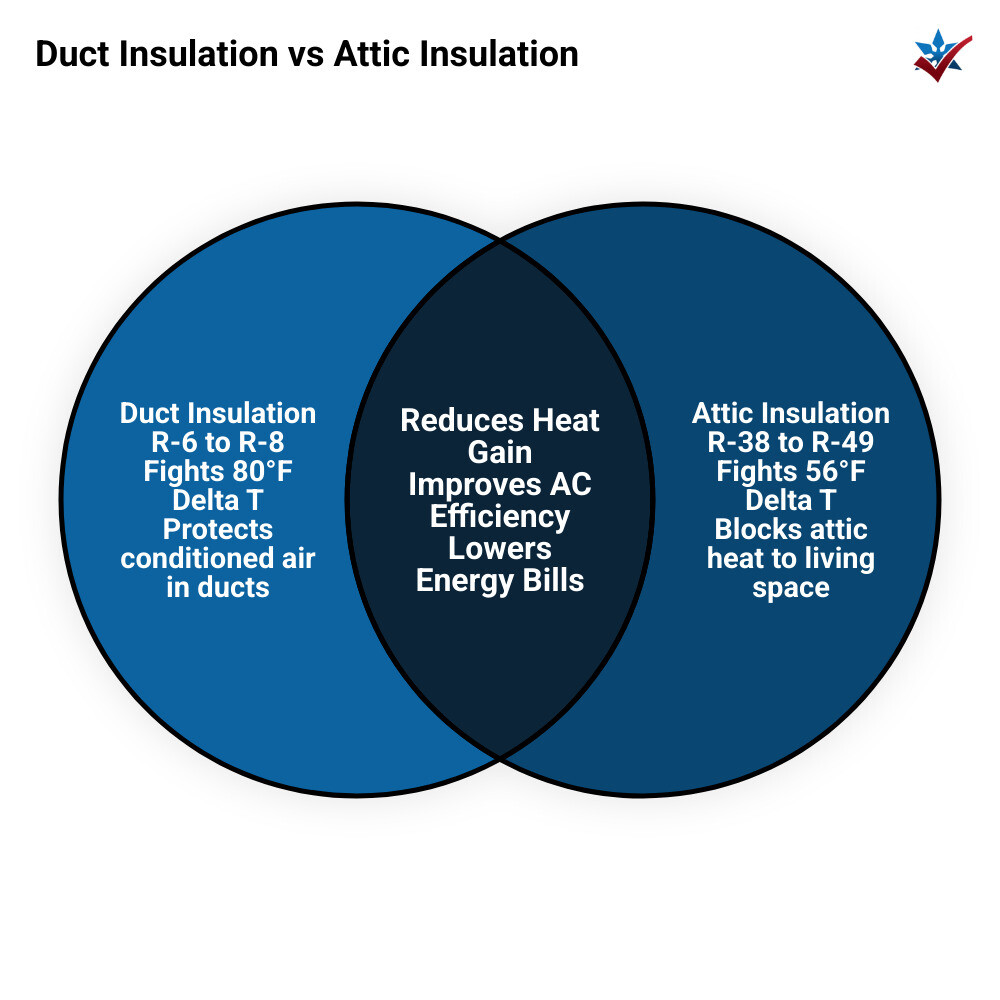
| Temperature difference it fights | Up to 80°F (duct air vs. attic air) | Up to 56°F (attic vs. living space) |
| Primary benefit | Keeps conditioned air cold as it travels to vents | Blocks heat from radiating down into your home |
| Best for | Reducing air temperature loss in ducts | Reducing overall heat gain in living spaces |
| Works best when | Combined with duct sealing | Combined with air sealing |
Here is the problem in plain terms. Your AC unit cools air down to around 45°F. That air then travels through ducts sitting inside an attic that can hit 130°F or higher in a Las Vegas summer. The ducts are typically wrapped in only R-6 or R-8 insulation. Your attic floor, meanwhile, is required to have R-38 or more. That gap in protection means your conditioned air can absorb enough heat to lose up to 20°F before it ever reaches your ceiling vent.
The result? Rooms that never quite cool down, an AC that runs constantly, and energy bills that keep climbing — even if your attic floor insulation looks perfectly fine.
In this guide, we walk through exactly how both types of insulation work, how they compare, and how to prioritize upgrades so your Las Vegas home actually stays comfortable.
The Science of Heat Transfer: Duct Insulation vs Attic Insulation Comparison
To understand the duct insulation vs attic insulation comparison, we have to look at the “Delta T”—the temperature difference between two spaces. In a typical Henderson or Las Vegas summer, your attic is an unconditioned space that acts like an oven. The heat doesn’t just sit there; it tries to move toward anything cooler.
According to our Henderson Attic Insulation Guide, heat transfer occurs in two major ways in your attic: radiation from the roof deck and conduction through the materials. While attic floor insulation stops heat from radiating into your bedrooms, duct insulation has a much harder job. It has to protect 45°F air from 130°F attic air. That is an 80-degree Delta T. By comparison, the temperature difference between your attic and your living room is usually only about 56 degrees.
Key Differences in a Duct Insulation vs Attic Insulation Comparison
The biggest shock for most homeowners is the “R-value mismatch.” Current building codes often require an R-38 for attic floors, yet those same codes might only require R-8 for the ducts sitting in that same heat.
If your home is more than 10 years old, your ducts are likely only R-6 or less. This means while your attic floor is heavily armored, your air ducts are wearing a “thin t-shirt” in a blast furnace. This mismatch causes your AC to lose the battle before the air even reaches the vent. When ducts are under-insulated, they absorb BTUs (British Thermal Units) of heat, forcing the AC to run longer just to maintain a steady temperature.
Comfort Gains from a Duct Insulation vs Attic Insulation Comparison
When we improve duct insulation, the first thing you’ll notice isn’t just a lower bill—it’s the “vent temp.” If your AC is blowing 65°F air into a room that should be receiving 50°F air, you’ll never feel truly cool. High-quality duct insulation maintains the airflow velocity and keeps the air crisp.
Furthermore, better insulation helps with humidity control. In the desert, we don’t deal with much moisture, but any temperature loss in the ducts makes it harder for the system to pull what little humidity exists out of the air. If you are struggling with hot spots, Finding a Reliable Attic Insulation Contractor in Henderson NV is the first step to balancing your home’s thermal envelope.
Why Your Attic Ducts Are Losing the War Against Heat
In Southern Nevada, attics are the most hostile environment in your home. Temperatures can swing from 20°F on a winter night to over 150°F on a July afternoon. Most flex ducts are made of a thin plastic liner, a layer of fiberglass, and a foil outer jacket. Over time, that fiberglass compresses or gets coated in dust, which slashes its effective R-value.
If you are living in Boulder City or Henderson, you know that summer isn’t just a season; it’s a test of endurance. Our Duct Work Replacement in Boulder City: A Survival Guide for Summer highlights that aging ducts often fail because the outer vapor barrier cracks, allowing heat to seep directly into the fiberglass.
The Impact of Aging Ductwork on Efficiency
As ducts age, they don’t just lose R-value; they start to leak. Ductboard and flex duct connections can pull apart as the house settles or as the extreme attic heat dries out old duct tape (which, ironically, is often the worst thing to use on ducts).
A system with 30% leakage is essentially paying to air condition your attic. When you combine leaks with thin insulation, your HVAC system has to work 40-50% harder than it was designed to. This is why Finding the Right Duct Work Company in Henderson Without Breaking a Sweat is vital for long-term savings.
Understanding the Delta T Double Standard
We call it a double standard because we expect R-38 on the floor to keep us cool, but we ignore the R-6 on the ducts. Think of it this way:
- Attic Floor: Fights a 56-degree difference (130°F attic vs. 74°F house).
- Air Ducts: Fight an 85-degree difference (130°F attic vs. 45°F air inside the duct).
The ducts actually need more protection than the floor, yet they usually have five times less. This is where those 20 degrees of “lost cold air” go—they are absorbed by the attic heat through thin insulation.
Step-by-Step: How to Seal and Insulate Attic Ductwork
If you want to win the duct insulation vs attic insulation comparison, you have to start with sealing. You can’t just throw a blanket over a leaky pipe and expect it to work.
According to The Ultimate Guide to Attic Insulation in Henderson NV, air sealing is the foundation of efficiency. Before we add a single inch of insulation, we have to ensure the air stays inside the ducts.
Proper Methods for Sealing Duct Leaks
- Inspect the Joints: We look for “telltale” dust streaks near joints, which indicate air is whistling out of the duct.
- Apply Mastic: Forget duct tape. We use professional-grade mastic—a thick, gooey paste that hardens into a permanent, flexible seal. It lasts 30+ years, unlike tape which fails in the desert heat.
- Secure Flex Collars: For flex ducts, the inner liner must be zip-tied to the metal collar and sealed with mastic before the insulation is pulled over and tied again.
- Pressure Testing: This verifies that we’ve reduced leakage by that critical 30% mark.
Choosing the Best Insulation Materials for Ducts
Not all insulation is created equal for the Las Vegas climate. Here are the top choices we recommend:
- Foil-Backed Duct Wrap: This is the standard for a reason. The foil acts as a radiant barrier and a vapor barrier, while the fiberglass provides the R-value.
- Closed-Cell Spray Foam: This is the “gold standard.” It seals and insulates in one step. It provides a high R-value (R-6 to R-7 per inch) and is immune to the dust and compression issues of fiberglass.
- Rigid Fiber Board: Often used for main plenums and trunks, this provides excellent structural integrity and steady thermal resistance.
- Vapor Barriers: Crucial for preventing condensation, especially if you ever have a humid day or use a swamp cooler.
Maximizing Efficiency: When to Choose Attic Floor Insulation
While duct insulation keeps the air cold inside the pipes, attic floor insulation keeps the heat outside your living space. If your insulation is at or below the level of your floor joists, you are definitely losing money.
In 2026, the recommended target for Las Vegas homes is R-49. Our guide, Stop Baking Your Brain with Better Las Vegas Attic Insulation, explains that increasing your floor insulation from R-19 to R-49 can reduce your cooling costs by up to 30%.
The Role of Attic Ventilation in Duct Performance
Insulation works better when the attic isn’t a stagnant pool of 150-degree air. Proper ventilation—using soffit vents, ridge vents, and baffles—allows fresh air to circulate.
However, be careful with gable fans. If they aren’t balanced correctly, they can actually pull conditioned air out of your house through small cracks in the ceiling, making your AC work harder. Affordable Attic Insulation Services in Boulder City NV can help you determine if your ventilation is helping or hurting your duct performance.
Verifying Improvements and Claiming Incentives
Upgrading your home’s efficiency isn’t just about comfort; it’s about the return on investment.
| Upgrade Type | Typical Energy Savings | Payback Period |
|---|---|---|
| Duct Sealing & R-8 Wrap | 15% – 20% | 2 – 4 Years |
| Attic Floor (R-19 to R-49) | 15% – 30% | 3 – 5 Years |
| Combined System Upgrade | Up to 45% | 4 – 7 Years |
In 2026, federal tax credits allow homeowners to claim up to 30% of the cost of insulation and air sealing (up to $1,200 annually). Local utility rebates in the Las Vegas area can often add another $200 to $800 to those savings.
Frequently Asked Questions about Attic Efficiency
What are the risks of condensation when wrapping existing duct insulation?
In humid climates, wrapping new insulation over old can trap moisture between the two vapor barriers, leading to mold. While Las Vegas is dry, we still follow strict “one vapor barrier” rules. If we add insulation, we ensure the old barrier is perforated or removed so the system can “breathe” while staying thermally protected.
Should I insulate attic ducts myself or hire a professional?
DIY is tempting, but attics in the summer are dangerous. Professionals have high-powered blowers for even distribution and specialized safety gear. More importantly, we can identify hidden problems like “knob and tube” wiring or mold that a homeowner might miss. Professional installation also ensures you meet the R-value requirements needed to qualify for tax credits.
When is duct replacement better than adding more insulation?
If your ducts are over 15 years old, have significant rodent damage, or are undersized for your current AC unit, insulation is just a band-aid. In some cases, relocating ducts to a conditioned space (like a dropped ceiling) is more effective than trying to fight the 150-degree attic heat.
Conclusion
At Air-Right, we believe that a comfortable home starts with a smart duct insulation vs attic insulation comparison. As a licensed, bonded, and insured HVAC contractor serving Las Vegas, Henderson, and Boulder City, we don’t just “add more fluff” to your attic. We provide professional diagnostics to see where your cooling power is actually going.
Whether you need a simple duct seal or a full R-49 attic blow-in, our team provides clear, no-pressure recommendations to help you beat the Nevada heat.
Need Help?
Contact us today to discuss your needs. Our team is ready to help.
Related Articles
- Is It a True Emergency? A Triage Guide for 24-Hour Air Conditioning Service in Las Vegas, NV
- Is That Burning Smell an Emergency? Fall Triage Guide for 24 Hour Air Conditioning Service in Las Vegas, NV
- Beyond 24-Hour Air Conditioning Service in Las Vegas: Heat Pump vs. Gas Furnace Options for Fall Upgrades
Related articles


Ready to Get Started?
Whether you need a repair, maintenance, or a new installation, our expert team is here to help.